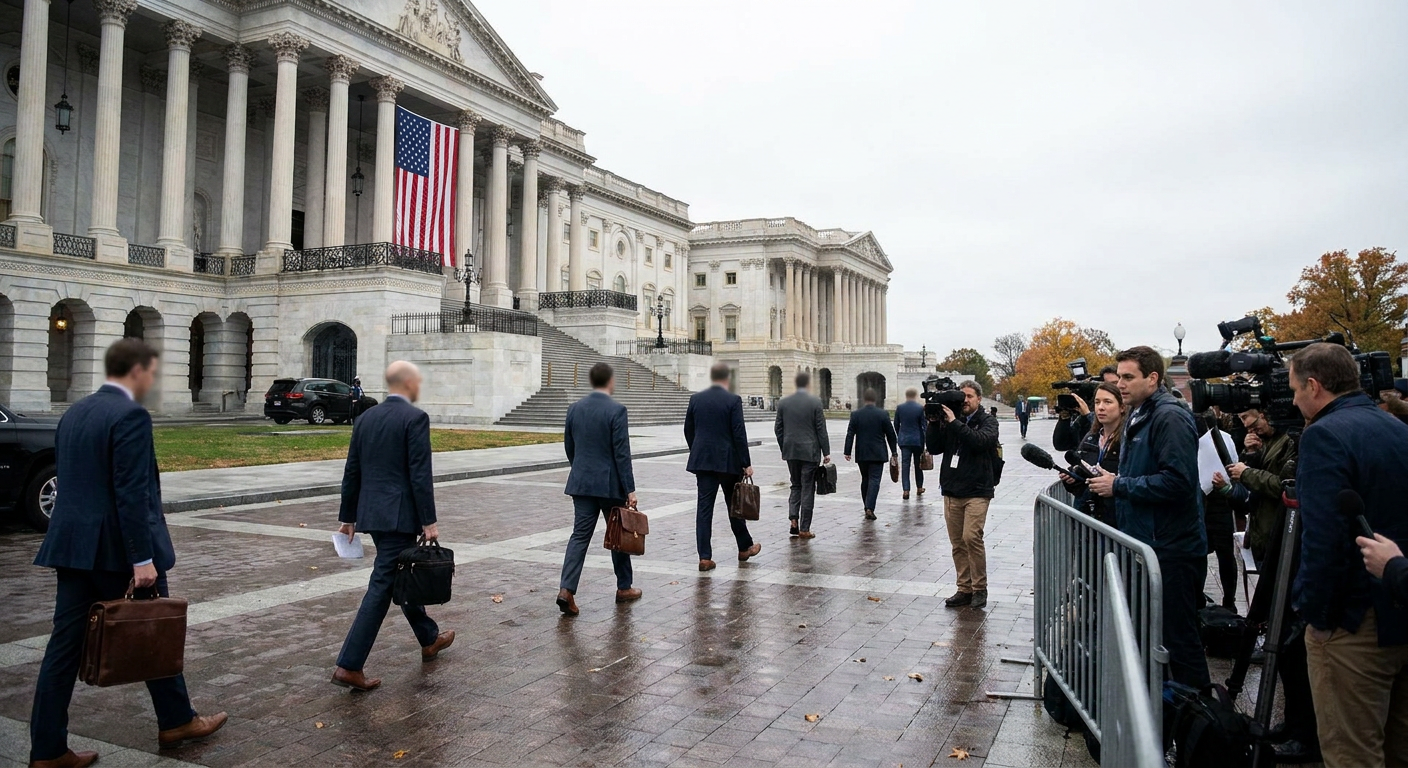
Members of Congress returned to session for their final week of legislative activity before the November midterm elections. Lawmakers are focusing on messaging bills intended to demonstrate responsiveness to voter concerns rather than passing major new laws. The primary requirement for the pre-election period—extending federal government funding—has already been completed, with funding now set to expire in December.
Key topics under discussion include artificial intelligence (AI), cryptocurrency, and regulations for college athlete pay, known as Name, Image, and Likeness (NIL). While there is broad agreement that AI requires legislative attention, members remain divided on the approach. House Minority Leader Hakeem Jeffries (D-NY) called for decisive action, while House Speaker Mike Johnson (R-LA) stated on CNN that the U.S. must manage the technology responsibly without "smothering American innovation."
Legislators are also considering a vote to address energy price increases linked to AI data centers. Additionally, the House may take up Russia sanctions that previously passed the Senate with bipartisan support. However, the sanctions bill faces hurdles in the House; Democrats have expressed concern over new tariff authorities for the president, while some Republicans have questioned the priority of supporting Ukraine's war effort.
The current legislative session affects U.S. taxpayers and utility customers as Congress weighs measures to blunt energy price hikes. For student-athletes, the discussion around NIL regulations could change how compensation is handled within university sports programs.
The political stakes involve the control of both chambers of Congress. According to election forecasts and polling, Democrats are currently favored to win the House and are slight favorites to retain the Senate. This occurs despite the historical trend of the president's party losing ground during midterms, particularly when a president—in this case, Donald Trump—has low favorability ratings. Republican candidates are facing challenges highlighting past policies, such as tax cuts, as voters focus on the immediate cost of living and gas prices.
The extension of government funding prevents a federal shutdown until the December deadline. Other proposed measures, such as the AI data center energy bill, are intended to provide relief from rising utility costs. With early voting already underway in some areas, the window for legislative action to influence voter sentiment is closing. The House is scheduled to remain out of session after this week until after the November Election Day.