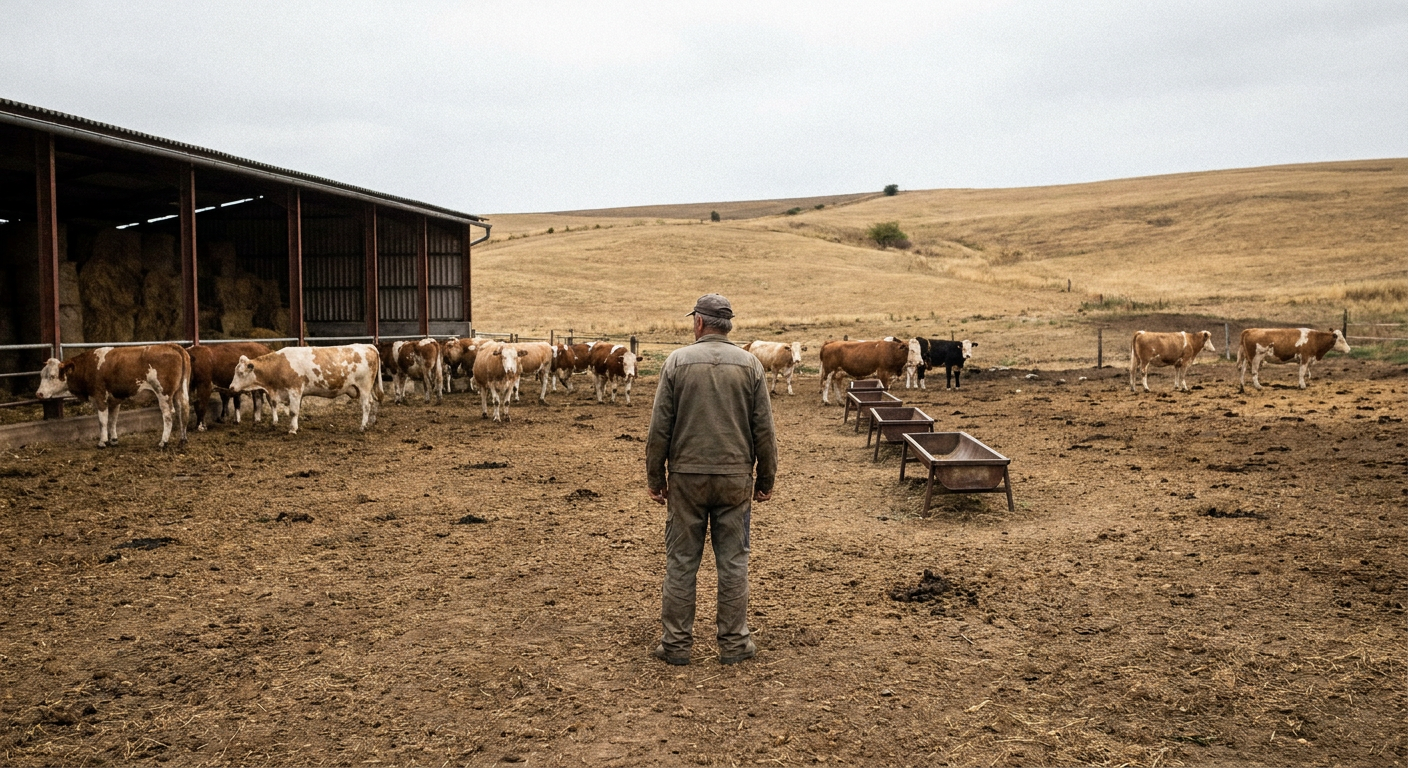
Czech farmers are reducing the size of their cattle herds due to an extended summer drought that has caused a shortage of feed crops and a sharp rise in prices. Farm representatives reported on Wednesday that the lack of precipitation has lowered grain yields and significantly reduced the supply of haylage, a fermented forage used for livestock.
The drought is occurring alongside several other economic pressures on the agricultural sector. These include a surplus of milk in Europe that has lowered prices for producers, as well as increased costs for fuel and fertilizer attributed to the U.S. war on Iran. The combination of these factors has reportedly restricted cash flow for many farming operations in the region.
At Agropodnik Kosetice, a farm southeast of Prague, board chairman Zdenek Duffek stated the harvest of haylage is currently at approximately half of what is needed to secure feed stocks. While the farm has 3,000 tonnes of stock remaining from the previous year, Duffek estimated they will still face a shortage of about 1,500 tonnes. Consequently, the farm is selling young calves and sending bulls to slaughter early to prioritize the feeding of its 1,000 milk cows.
For the general public, these changes are manifesting in the commodity markets. Pycha noted that because more farmers are rushing cattle to slaughter to avoid feed costs, the increased supply is causing beef prices to fall. While this may result in temporary price adjustments at the retail level, it represents a significant reduction in future livestock numbers. The drought has also had broader infrastructure effects, leading to the emptying of dams, drying of wells, and emergency shutdowns at power plants due to a lack of cooling water.
The reduction in herds and the financial strain on farms may lead to long-term shifts in Czech agricultural policy or market stability. With revenue losses reaching nearly $1 billion, the ability of small and large-scale producers to recover depends on future precipitation and stabilization of energy costs. Farm representatives did not provide a specific date for when they expect the drought to break, but they indicated that current herd reductions are an immediate necessity to protect core breeding stocks. Data regarding specific upcoming government aid or court actions were not reported.