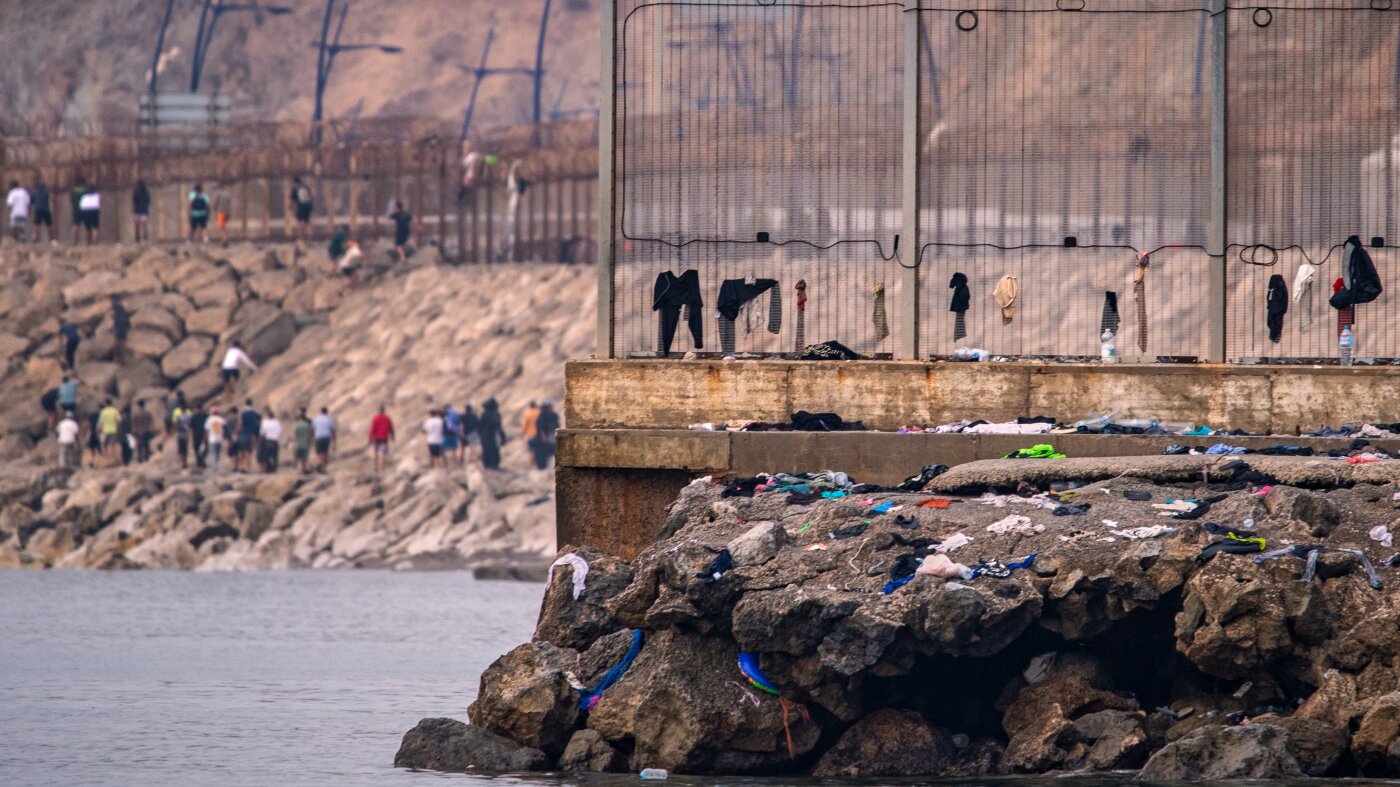
The Spanish government reported on Saturday that the death toll has reached 67 following a large-scale border crossing attempt into the North African enclave of Ceuta. Officials stated that the fatalities resulted from drownings and a stampede as thousands of people attempted to bypass a breakwater barrier separating the Spanish territory from Morocco. In response to the influx, Spanish authorities announced the installation of a new 500-meter containment barrier along the coastline to prevent further unauthorized entries.
The surge occurred between Thursday and Friday, during which approximately 60,000 people crossed into the autonomous city. Ceuta, a Spanish territory of roughly 84,000 residents located on the north coast of Africa, has seen its daily operations disrupted by the sudden arrival of migrants. While the Spanish Interior Ministry reported that the majority of those who entered have already returned to Morocco, soldiers continued to escort small groups of people back across the border as of Saturday morning.
Spanish officials and local leaders described the situation as an "incident" that has strained the city's infrastructure and security. Ceuta’s President, Juan Jesus Vivas, stated that while the return process is underway, the city has not yet regained its normal state. Some individuals who remained in Ceuta told reporters they intended to stay despite the closure of local services. The Spanish government has deployed military units to the border to manage the returns and maintain order at the fence line.
The day-to-day impact is characterized by a significant shift in legal rights and movement. Residents of Ceuta have seen their city "disrupted," according to President Vivas, with standard services temporarily halted or restricted. Migrants face the immediate physical risks of the crossing—evidenced by the high death toll—and the legal reality of summary returns. While the Spanish Interior Ministry claims the returns are "satisfactory," individuals remaining in the city report that businesses have been closed to limit their access to food and supplies, a measure intended to encourage voluntary return to Morocco.
This event sets a precedent for how Spain and the European Union manage sudden mass migration events at the bloc's only land borders with Africa. The rapid deployment of a 500-meter maritime barrier represents a concrete change in border infrastructure that will affect future migration patterns and maritime safety in the region. The knock-on effects include heightened diplomatic tension between Spain and Morocco regarding border enforcement responsibilities. What happens next depends on the completion of the return process; Spanish authorities have not yet provided a specific date for when all 60,000 individuals are expected to be processed or returned.