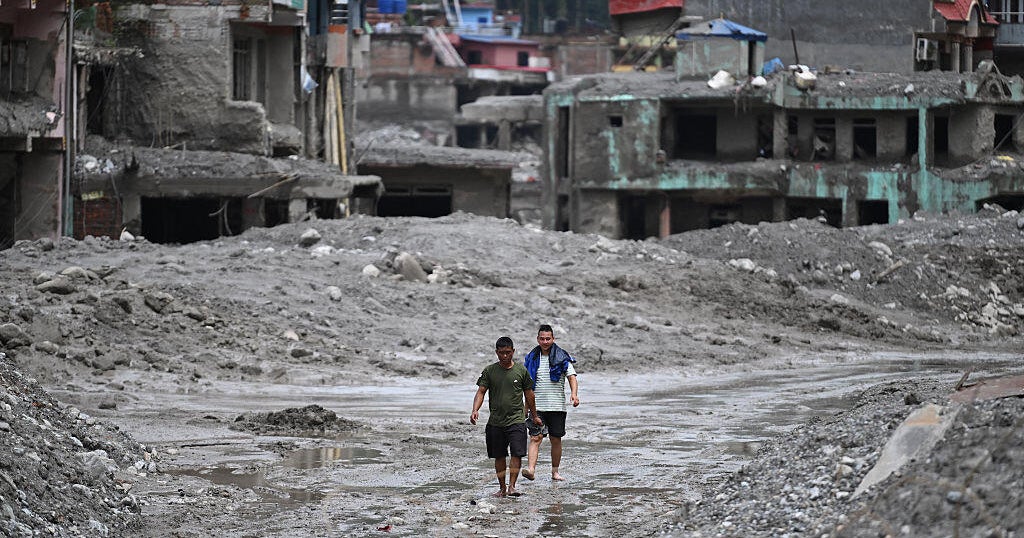
Authorities in Nepal issued fresh flood warnings on Sunday as the combined death toll from recent flash floods rose to 804 people across Nepal and China. Nepal's National Disaster Risk Reduction and Management Authority reported 788 deaths and 2,502 missing persons, while Chinese officials confirmed 16 deaths and 546 missing on their side of the border. The emergency follows a catastrophic glacial collapse that occurred on Wednesday high in the Himalayan region.
The disaster was triggered by the collapse of bedrock underneath a glacier, which scientists said caused a magnitude 5.2 seismic event. The resulting rockfall and melted water created a torrent that surged through mountain valleys, destroying buildings, bridges, and infrastructure. Dharam Raj Uprety, chief executive of Nepal's disaster agency, stated that water levels in the Bhotekoshi River rose Sunday after Chinese authorities reported increased flow upstream, prompting new mobile alerts for residents to seek higher ground.
Rescue teams are currently working to clear a major highway connecting Kathmandu to the hardest-hit districts, such as Dhading. In Tibet, Chinese state media reported that 261 foreign nationals are among the missing, including over 100 Nepalese citizens and travelers from around the world who were in the region for work, tourism, or religious pilgrimages. Malaysia has announced it will deploy a search-and-rescue team and provide $1 million in financial aid to Nepal.
The scale of the destruction includes the severe damage of a key power plant that provides electricity to more than 20,000 people across four districts. Residents in these areas face immediate losses in housing and utilities; Sharmila Tamang, a resident of Dhading, told The Associated Press that "nothing is left" of her home. Beyond the loss of property, survivors are experiencing physical exhaustion from repeated evacuations as new alerts are sent to their phones whenever river levels fluctuate.
Nepal’s foreign minister, Shisir Khanal, stated that the country contributes only 0.1% of global emissions but is suffering disproportionately from the effects of climate change. While scientists said it is too early to link this specific event to global warming, they noted the Himalayas are warming faster than other regions, increasing the probability of such disasters. Moving forward, workers began surveying the damaged power plant on Sunday, and international aid teams from Malaysia are preparing to arrive to assist in relief efforts. No specific timeline for the restoration of the highway or power grid has been reported.