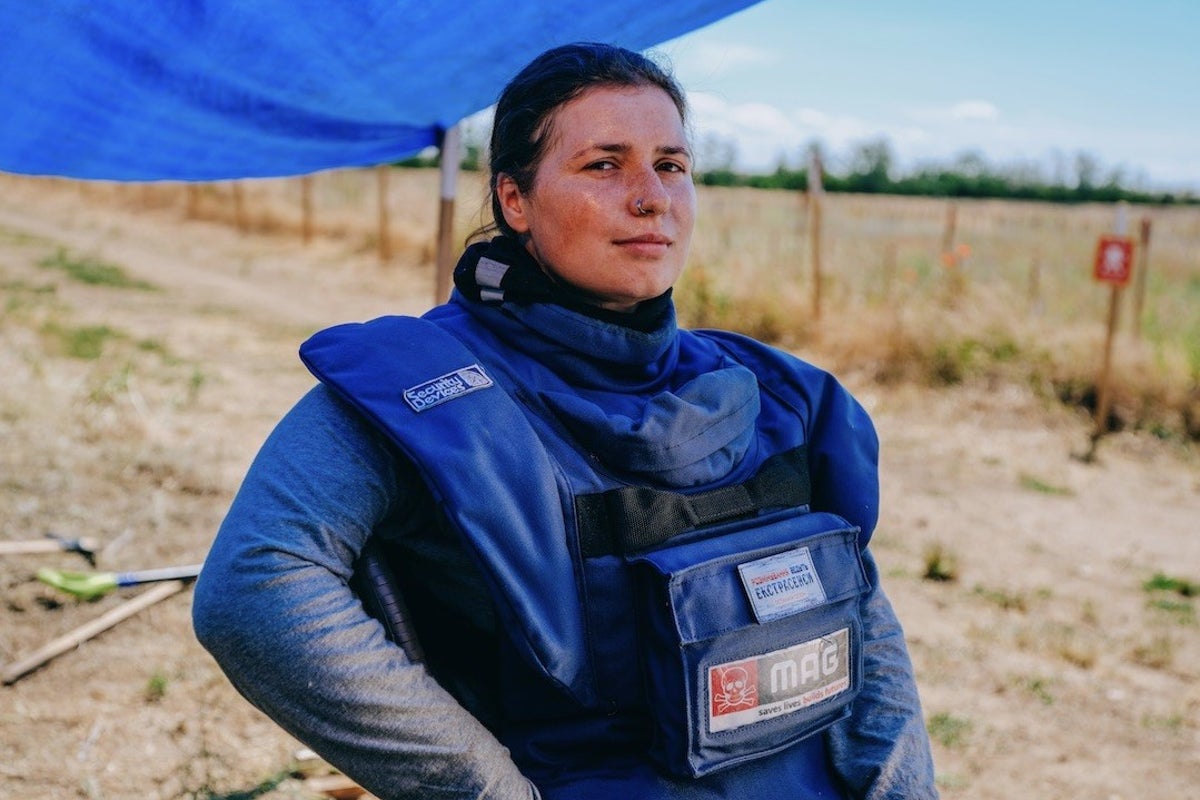
Humanitarian deminers are working to clear explosives from Ukrainian territory following more than four years of war, according to reports from the Mines Advisory Group (MAG). Antonina Kulhava, a team leader for the organization, described the ongoing efforts to remove ordnance from agricultural fields that are now being returned to cultivation.
Approximately 20 to 25 percent of Ukraine's surface is currently estimated to be covered with potentially dangerous weapons. This area encompasses more than 139,000 square kilometers, a landmass larger than England and Wales combined. The presence of these explosives has contributed to high rates of civilian casualties, with children identified as a specific group at risk.
Demining teams clear various types of explosive ordnance, including mines, grenades, rockets, missiles, aircraft bombs, cluster munitions, drones, and mortars. The process involves technical surveys followed by three methods of clearance: mechanical clearance using machinery, manual clearance by individual deminers, and canine clearance using dogs to detect explosives.
Kulhava, a 32-year-old former pastry chef and finance worker, now leads a team in what has traditionally been a male-dominated field. According to UN Women, women comprise approximately 30 to 35 percent of the humanitarian mine action workforce, but only about 12 percent work directly in operational fieldwork. Kulhava noted that while she initially felt less confident than her male colleagues, experience has increased her proficiency.
The physical danger translates into a long-term economic and social shift for local communities. As long as the land remains contaminated, farmers cannot produce food, which impacts local prices and regional food security. Residents also face daily infrastructure challenges, such as the lack of heating and electricity during winter months due to ongoing attacks on the power grid. A person living in these areas would notice frequent power outages and the sounds of aerial activity as part of their routine environment.
The demining process establishes a precedent for how humanitarian organizations handle large-scale contamination in active conflict zones. While the work is ongoing, some cleared areas have already been returned to agricultural use, which allows for the resumption of economic activity. The timeline for full clearance is not reported, but the work continues as deminers comb through craters and fields to mark ordnance for detonation. The next steps for the workforce involve ongoing fieldwork and technical surveys as additional areas are identified for clearance.