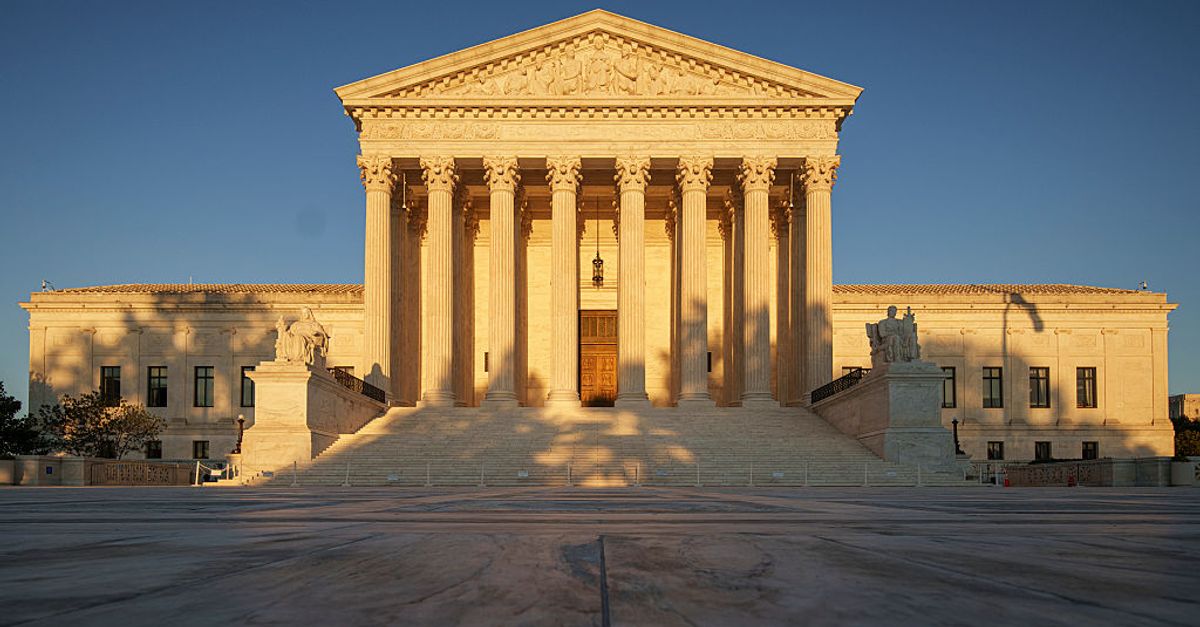
Lawyers for a group of Democratic congressional candidates requested on Saturday, October 10, 2026, that the U.S. Supreme Court maintain a lower court order requiring the Federal Communications Commission (FCC) to rule quickly on a political advertising rate dispute. The filing follows a Thursday administrative stay by Chief Justice John Roberts that paused a U.S. Court of Appeals for the 4th Circuit ruling, which had ordered the FCC to act by noon on Friday.
The legal dispute centers on a March 30 "public notice" issued by the FCC Media Bureau. The notice indicated that political parties and joint fundraising committees should receive the "lowest unit charge"—preferential advertising rates usually reserved for individual candidates—during the 45 days before a primary and 60 days before a general election. Candidates including Sen. Jon Ossoff (D-GA) and former Sen. Sherrod Brown (D-OH) challenged the notice, arguing federal law only grants these rates to candidates for personal use.
On Saturday, candidate representative David Fox accused the FCC of seeking to use procedural delays to avoid judicial review until the election period ends. This followed emergency applications from the FCC and two Republican groups, the National Republican Congressional Committee (NRCC) and the National Republican Senatorial Committee (NRSC), who argued that the 4th Circuit's order was an inappropriate intervention that could disrupt campaign finance rules in the weeks before the midterms.
The scale of the impact involves every U.S. House and Senate race where parties and joint committees purchase airtime. While the specific dollar-per-ad difference was not reported, the "lowest unit charge" applies during the 60-day window before a general election. For candidates and parties, this price difference can determine how many times an advertisement is broadcast to voters in their districts or states.
The case also sets a precedent for how quickly federal agencies must resolve internal reviews when time-sensitive statutory rights are at stake. The Supreme Court previously ruled on September 4 that the 4th Circuit likely lacked jurisdiction because the candidates had not waited for a final FCC order. The current dispute involves whether the FCC can be legally compelled to issue that order on an expedited schedule. The Supreme Court has not yet set a date for a final ruling on the stay requests.