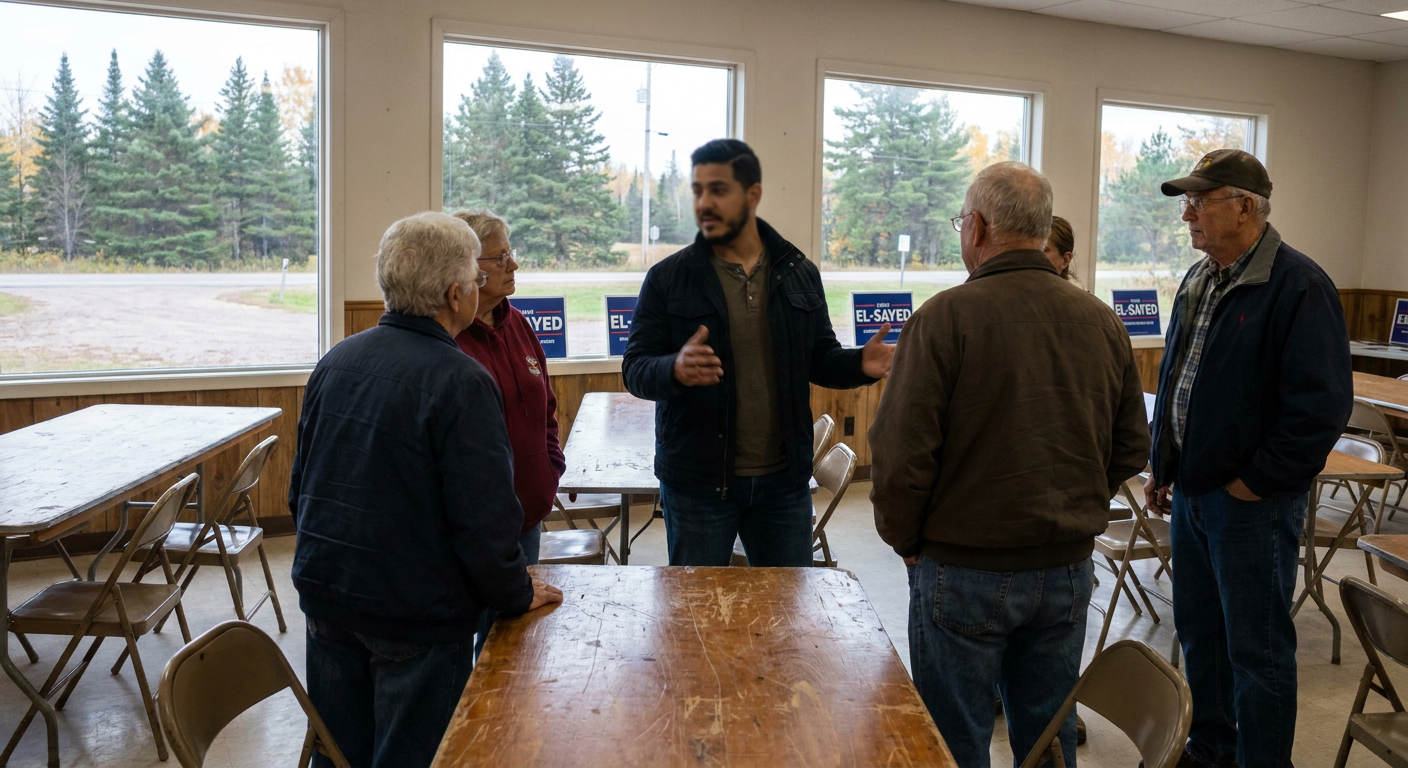
Democratic U.S. Senate candidate Abdul El-Sayed traveled to Michigan’s Upper Peninsula last week for a three-stop campaign tour. The visit to the Republican-leaning region included a rally at Northern Michigan University in Marquette and a stop in Escanaba. El-Sayed is competing against Republican candidate and former Congressman Mike Rogers in a race described as a toss-up by Michigan Public Radio.
The Upper Peninsula has not elected a Democrat to Congress since 2010, when former Representative Bart Stupak chose not to seek reelection. In the 2024 presidential election, approximately 60% of voters in the region supported Donald Trump. El-Sayed’s campaign strategy involves reaching out to conservative and rural voters to discuss his platforms on Medicare for All and campaign finance reform.
During his tour, El-Sayed stated that residents of the Upper Peninsula are concerned about the costs of gas and groceries. He urged supporters to talk to conservative family members about his message. In contrast, Republican State Representative Karl Bohnak, who supports Rogers, questioned the feasibility of El-Sayed’s Medicare for All proposal, asking who would pay for the program.
The strategy also tests the reach of specific policy platforms in a region that has remained Republican for over a decade. If El-Sayed’s focus on "getting money out of politics" and universal healthcare resonates with rural voters, it could establish a new precedent for how Democratic candidates approach Republican strongholds. However, the candidate also faces internal party challenges; former Democratic Congressman Bart Stupak indicated that some of El-Sayed’s positions gave him pause, stating he had not yet cast his vote.
With the Senate race margins described as narrow, the shift of even a small percentage of rural voters could influence the final outcome. The outcome will determine which party controls one of Michigan's two seats in the U.S. Senate, affecting future federal legislation on economic and healthcare issues. Election Day is scheduled to take place in approximately two weeks, which will serve as the final deadline for voters to decide between the two candidates.