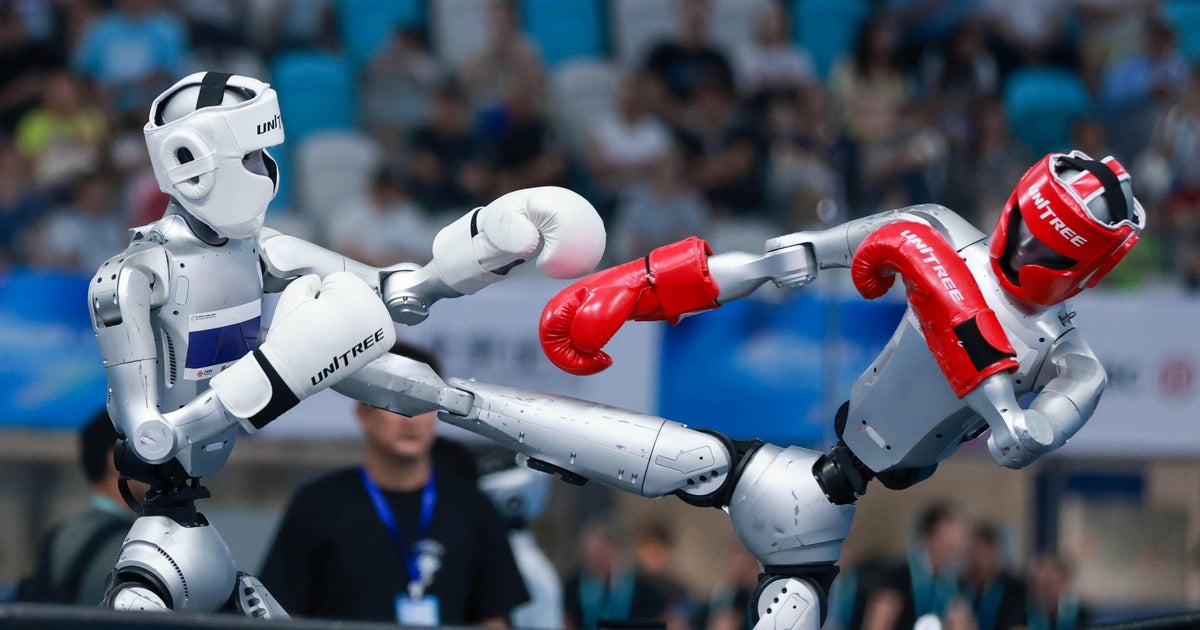
A robotics engineer working in China stated that humanoid robot soldiers could be ready for deployment within five to 10 years. Yang Kun, an engineer for the Shanghai-based company AG BOT, told CBS News that creating military applications for these machines is a primary objective. Yang stated that such technology could serve as a deterrent to prevent conflict between nations by demonstrating national power.
The comments were made during the 2026 World Humanoid Robot Games held in Beijing at the former 2022 Winter Olympics speedskating venue. The event featured more than 2,000 robots from 600 teams representing 16 countries. This is the second year China has hosted the competition, which includes events like sprinting, long jump, weightlifting, gymnastics, and kickboxing to demonstrate the physical capabilities of humanoid machines.
During the competition, a humanoid robot set a new record for the 100-meter sprint, completing the 109-yard distance in 9.39 seconds. This surpassed the 9.58-second world record set by track athlete Usain Bolt in 2009. While some machines demonstrated high levels of agility, others experienced technical failures, including tripping, collapsing, or catching fire during their events.
The scale of this industry is reflected in the participation of 600 teams from 16 different countries in the Beijing games. Under the leadership of President Xi Jinping, the Chinese government has prioritized research and development in artificial intelligence and robotics. For citizens in China, this translates to the increasing presence of AI and robotics in daily life. The reported goal of deploying these machines to "do some combat" suggests that military personnel and defense strategists may soon see a fundamental change in how ground forces are structured and deployed on the battlefield.
The advancement of these machines also impacts international security policy and the ethics of autonomous systems. Yang Kun addressed concerns regarding the potential for robots to act independently of human intent, stating that machines lack emotion and their actions depend entirely on those who control and program them. As the technology moves toward the five-to-10-year deployment window cited by AG BOT, international bodies may face pressure to establish rules for robotic combat. The next steps for this technology involve further refinement of mobility and task-specific programming, with no specific dates for the first official military trials yet reported.