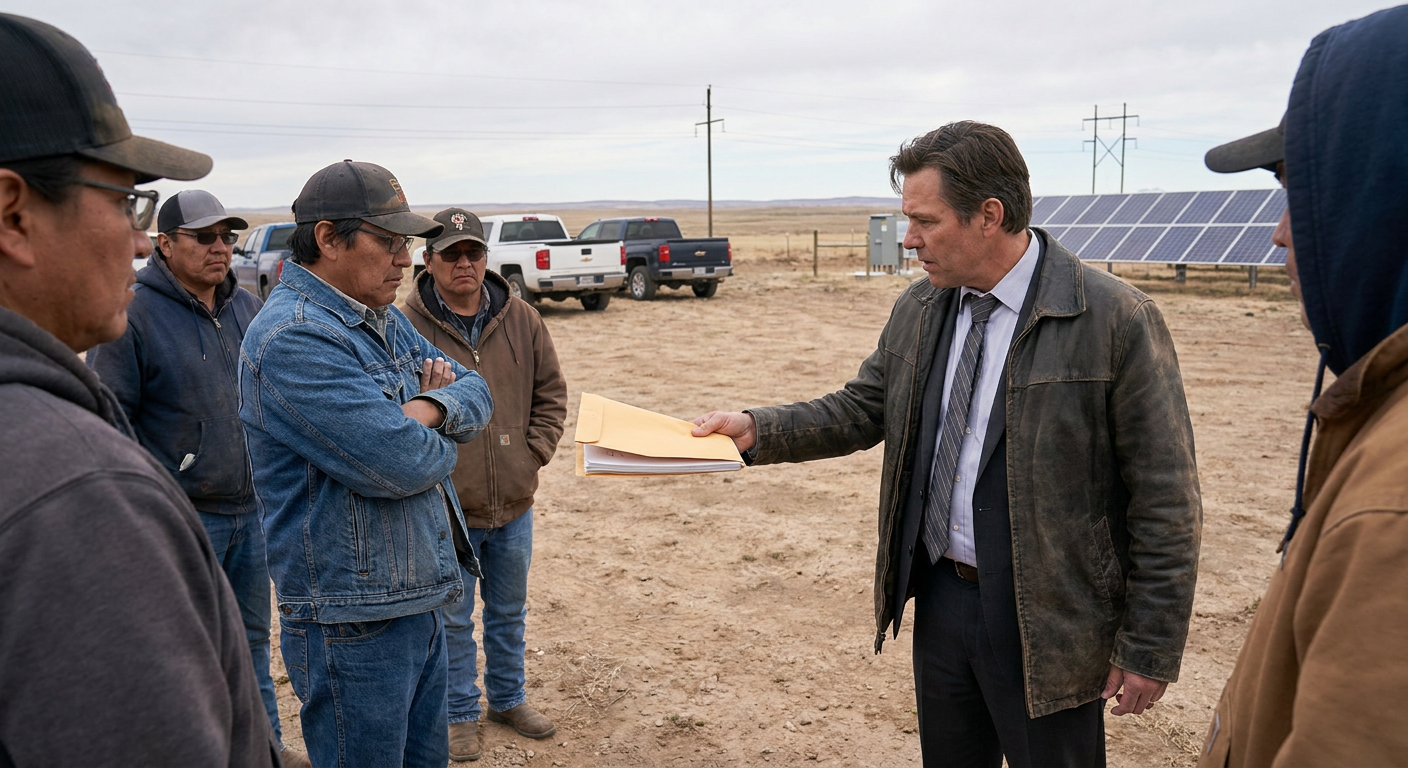
Denis Payre, a French entrepreneur and head of the company Nature & People First, offered a Navajo environmental group $10,000 to end its opposition to a proposed renewable energy project on the Navajo Reservation. The group, To Nizhoni Ani (Sacred Water Speaks), declined the offer, and its leader, Nicole Horseherder, stated that allies of the developer subsequently contacted the nonprofit’s donors to encourage them to withdraw funding.
The proposed project on Black Mesa in Arizona would use solar power to pump water into a series of reservoirs. This water would be released to spin turbines and generate electricity when solar power is unavailable, acting as a large-scale battery. Payre stated the project would help stabilize the energy grid, prevent blackouts, and create approximately 1,000 jobs during a four-year construction period.
Emails reviewed by member station KNAU confirmed the $10,000 offer from Payre to To Nizhoni Ani. Payre said the money was intended to recognize the nonprofit for its input and to "build bridges" toward cooperation. Following the group's refusal, a local political leader and the head of an energy industry group associated with Nature & People First reached out to the nonprofit's funders. Payre stated he had no involvement in those letters to donors.
The Federal Energy Regulatory Commission (FERC), the agency that regulates interstate transmission of electricity, natural gas, and oil, has already denied three of Payre's projects due to opposition from the Navajo Nation government. The current proposal remains stalled by this government opposition. If federal policies requiring tribal consent for hydropower projects are rolled back, as the source reports the Trump administration is attempting, the legal rights of tribal governments to block such infrastructure could be altered.
What happens next depends on the Navajo Nation presidential election in November 2026. Payre stated he intends to seek support from the new president to overturn the government's current opposition. In the meantime, Horseherder stated that the effort to influence her group's donors caused significant stress and delayed other work. The legality of the donation offer and the letters to funders is not in question, according to water law professor Heather Tanana, who described the actions as legal but part of a historical pattern of outside developers seeking to influence tribal affairs.