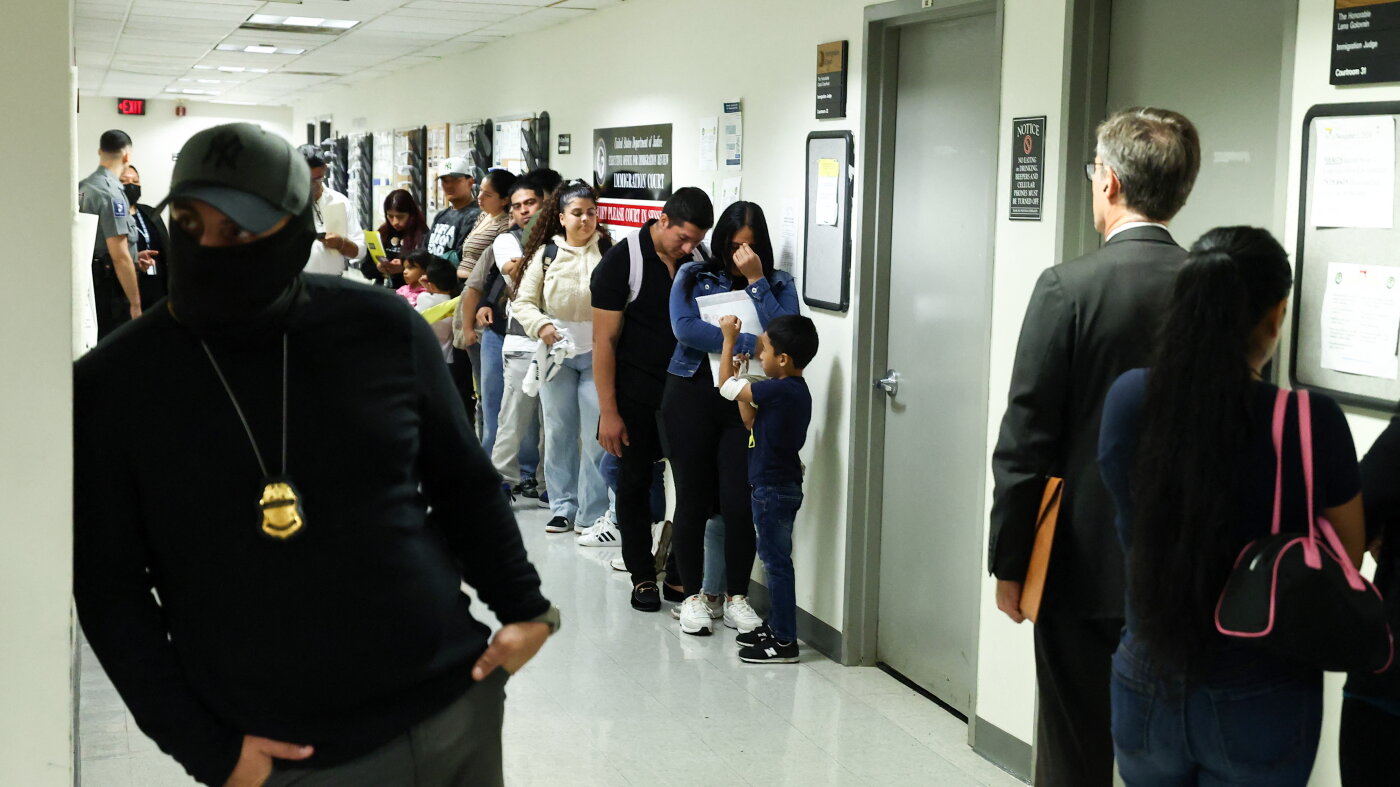
The U.S. Department of Justice (DOJ) has begun conducting immigration hearings at new locations in Washington, D.C., and Falls Church, Virginia. Five immigration attorneys told NPR that the Executive Office for Immigration Review (EOIR), the agency that oversees the court system, has rescheduled hearings originally set for courts in Maryland and Virginia to these new sites. Attorneys report that some immigrants were notified of these changes within days of their appointments, while others received no official mail notice.
These changes occur alongside the implementation of "mega master calendar" hearings, a tactic where immigration judges handle dockets of more than 100 people. The White House described recent changes in an April press release as an "aggressive and successful immigration enforcement overhaul" intended to restore the rule of law. The EOIR stated that it is making scheduling adjustments and opening new locations to handle cases in a "timely and lawful manner" as it adds more judges to address a backlog of 3.5 million cases.
Legal advocates report that the new locations are not established immigration courtrooms. The Falls Church site is a government building housing the EOIR headquarters, while the D.C. location at 400 C St SW is occupied by the Federal Emergency Management Agency (FEMA). Attorney Kel White reported attending a hearing on September 2 where the immigrant appeared in person at the Falls Church facility while the judge and the Homeland Security Department attorney participated remotely via video. The General Services Administration is reportedly seeking to acquire more space for the DOJ by December, with public requests identifying 18 potential locations.
For individual immigrants, these changes mean that court dates previously scheduled for 2027 are being moved up to as early as September 2026, sometimes with less than 10 days' notice. A person who misses a hearing because they did not receive a notice or arrived late due to long lines at the courthouse can be ordered removed from the country. Attorneys state that immigrants without legal representation are affected, as they lack the resources to track case changes through third-party apps or quickly adjust to new locations.
The use of remote judges in these new locations sets a precedent for how the 3.5 million-case backlog will be addressed. While the administration says the speed is necessary to clear the docket, legal groups like the American Immigration Lawyers Association argue the notice periods violate DOJ regulations requiring ample notice for respondents. The next phase of this expansion is scheduled for September 9, when the D.C. location is slated to begin holding hearings, followed by a broader acquisition of new courtroom spaces by the December deadline.