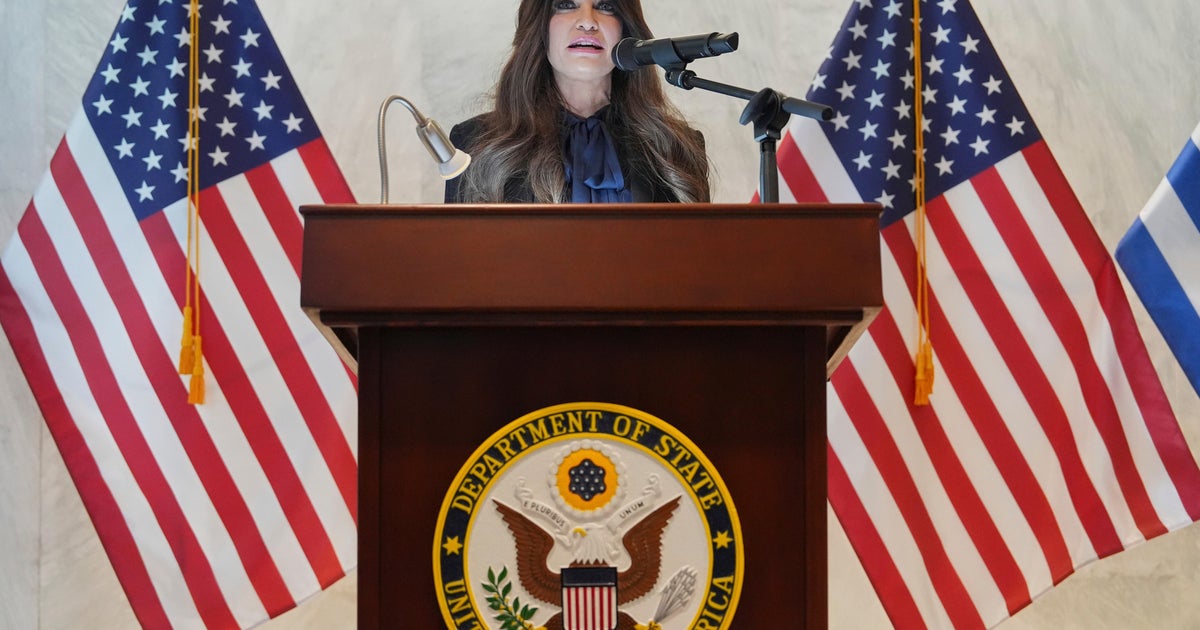
Eric Deters, a Republican donor, filed a defamation lawsuit against Kimberly Guilfoyle and her legal team in Kentucky state court on a Thursday. The lawsuit follows public disputes over Deters’ claims that Guilfoyle requested a $100,000 wire transfer from him to pay a credit card bill.
The legal action comes after Guilfoyle resigned from her position as U.S. ambassador to Greece on a Tuesday. Her resignation followed the public release of text messages by Deters, which he provided to several news organizations to support his allegations of a requested payment in exchange for assistance with the Trump administration.
In his filing, Deters cited a statement given by Guilfoyle’s legal team to the Wall Street Journal. The statement claimed that Deters owed Guilfoyle money for her attendance at events and had not fulfilled his obligations. The Journal reported the attorney’s assertion that Guilfoyle "was owed a balance for traveling to and supporting these patriotic events," a claim Deters denies.
Guilfoyle’s attorneys, Jesse Binnall and David M. Schwartz, previously disputed the authenticity of the text messages shared by Deters. Deters stated that he filed the suit so the defendants could defend their claims that his allegations were false in a court of law.
For a reader, this case represents a public legal conflict over financial transparency and conduct within political circles. A person following this case would notice a transition from public accusations in the media to a formal court proceeding in Kentucky. The concrete change for the parties involved includes the requirement to produce evidence regarding the authenticity of communications and the nature of their financial agreements. A court ruling could establish whether the public statements made by Guilfoyle’s legal team constituted defamation or were factual representations of a business dispute.
The knock-on effects could influence how donors and political figures document their financial interactions and travel reimbursements. It sets a precedent for how disputes over private text messages and verbal agreements are adjudicated when they involve federal appointees. What happens next depends on the Kentucky state court schedule; the defendants have the opportunity to file a response to the complaint. As of the report, no specific trial date or hearing deadlines have been established.