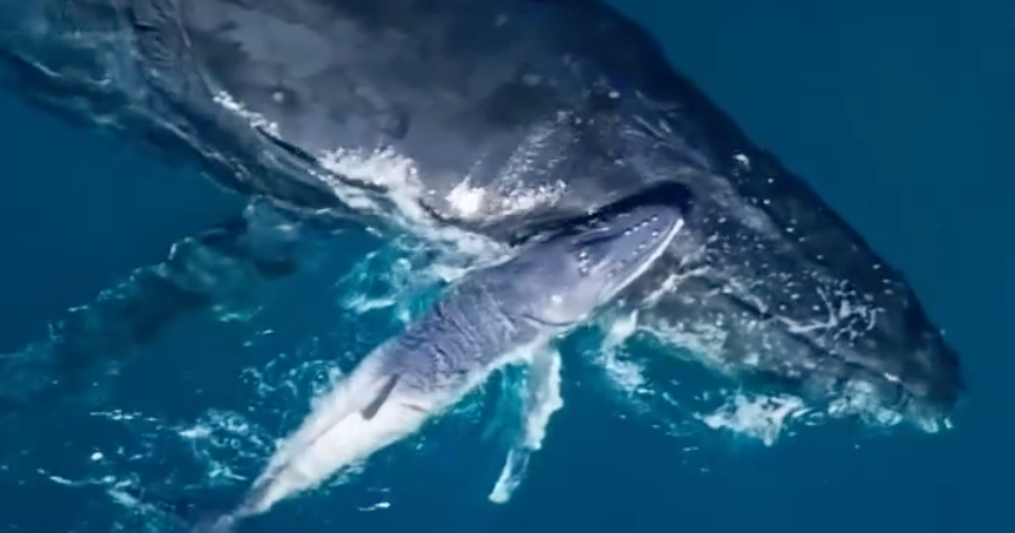
A photographer using a drone captured the birth of a humpback whale off the coast of New South Wales, Australia, on Tuesday, July 28, 2026. According to the Organisation for the Rescue and Research of Cetaceans in Australia (ORRCA), this event marks the first time a humpback whale birth has been recorded by a drone and is believed to be only the fourth such birth ever filmed globally.
The footage was recorded by wildlife photographer Alexander Forrest during a northbound migration of the species. Forrest reported that he noticed an adult female whale traveling at a slow speed and exhibiting unusual behavior. When the whale rose to the surface, Forrest began recording, observing the birth of the calf rather than a typical exhale.
Following the birth, members of ORRCA monitored the mother and newborn for several hours. The organization stated that the team collected observations during the initial hours of the calf's life to document its early development and the mother's behavior. ORRCA representatives said these observations could expand scientific understanding of humpback whale reproduction and maternal care.
The scale of this event is significant within the scientific community because it represents one of only four recorded instances of this behavior in history. On a broader level, the health of these whales impacts the ecosystem across various maritime regions. Humpback whales were listed as endangered in the U.S. in the 1970s due to commercial whaling, and while a moratorium was established in 1985, four population segments remain endangered and one is threatened, according to the National Oceanic and Atmospheric Administration (NOAA).
The information gathered from this drone footage will likely be used in international marine mammal science for years to come. By observing the immediate aftermath of birth, scientists can better understand the survival needs of calves, which may influence future policy regarding vessel speed limits or protected migratory corridors. The monitoring conducted by ORRCA on July 28, 2026, serves as a baseline for future studies, though specific dates for the publication of scientific papers resulting from this footage were not reported.