The Plain Record

Neutral daily news — clear headlines, complete facts.

National

Drying Mountain Springs Impact Navajo Shepherding Traditions in Arizona

Navajo shepherds in Arizona face challenges to traditional sheep herding as natural mountain springs used for centuries continue to dry up.

Published August 23, 2026 at 8:00 PM EDT

The short answer

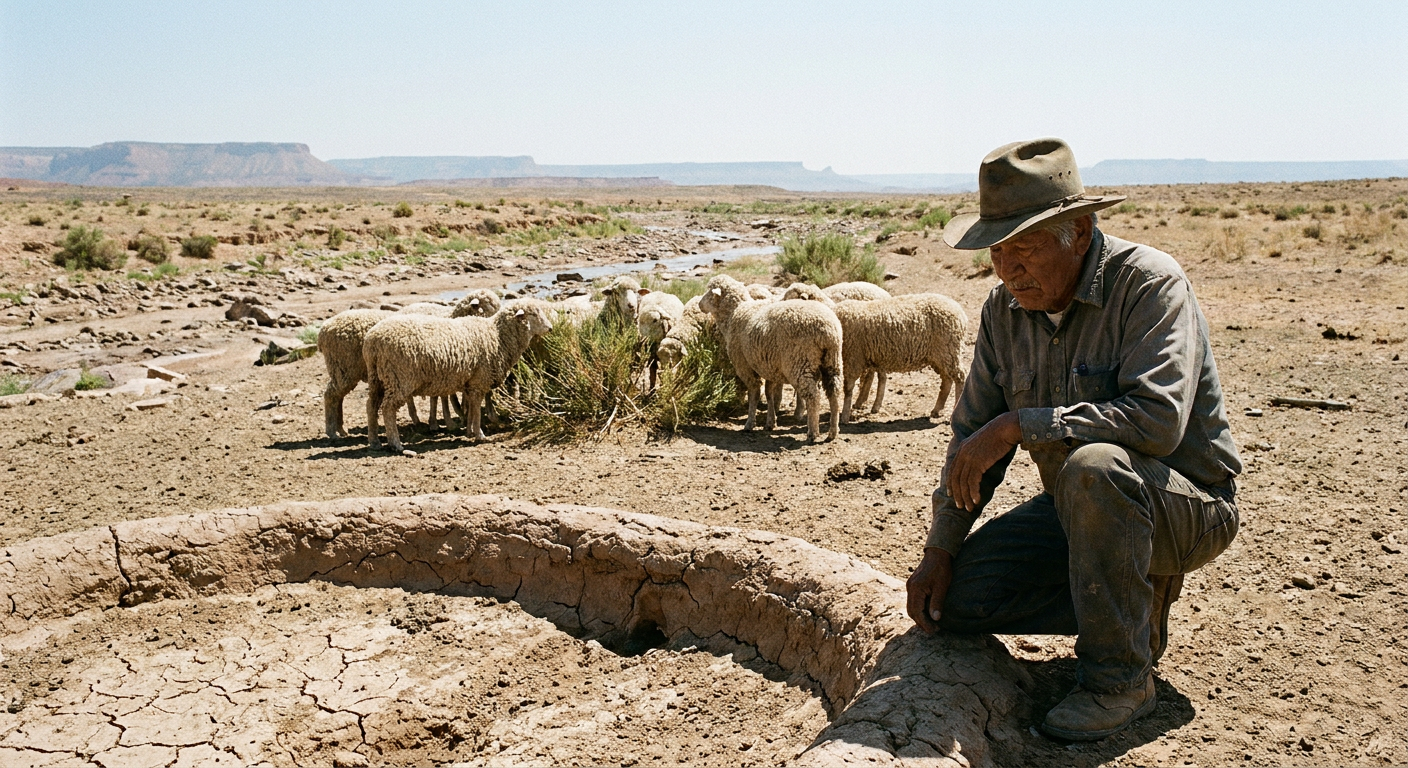
Navajo shepherds in Arizona face challenges to traditional sheep herding as natural mountain springs used for centuries continue to dry up. Natural springs in the mountains of Arizona that have supported Navajo shepherds for centuries are drying up. According to reporting from KNAU, this loss of water sources is impacting the ability of tribal members to maintain traditional sheep herding practices.

Drying Mountain Springs Impact Navajo Shepherding Traditions in Arizona

The Facts

Who
Navajo shepherds and tribal members
What
Navajo shepherds are losing access to historical mountain springs due to drying conditions, affecting traditional livestock herding.
When
August 24, 2026
Where
Arizona, United States
Why
Natural springs used for centuries are drying up, threatening the viability of traditional sheep herding and Navajo cultural practices.

Natural springs in the mountains of Arizona that have supported Navajo shepherds for centuries are drying up. According to reporting from KNAU, this loss of water sources is impacting the ability of tribal members to maintain traditional sheep herding practices.

Navajo shepherds have historically relied on these high-altitude water sources to sustain their livestock during seasonal migrations. The springs serve as a primary water supply for the animals in regions where alternative infrastructure is limited or nonexistent.

The decline in water availability has placed what is described as a mainstay of Navajo culture at risk. While the specific number of affected springs or the total number of shepherds was not reported, the environmental change is directly affecting the viability of long-standing agricultural traditions.

A person involved in these traditions would notice a tangible reduction in reliable water access at historical grazing sites, potentially requiring the transportation of water or the relocation of herds. These changes to daily labor and resource management could influence the long-term sustainability of the sheep-herding economy within the region. The loss of these water sources may also necessitate changes in tribal or state water management policies as natural infrastructure disappears.

The environmental decline in these Arizona mountain ranges serves as a marker for broader shifts in water availability within indigenous territories. The report did not specify exact dates for when individual springs might completely fail or what specific restoration efforts are planned. Future developments will depend on seasonal precipitation levels and potential tribal or federal interventions to address water scarcity in these high-altitude grazing areas.

Summaries are written by The Plain Record to state the facts of a story plainly and without political slant. See our editorial standards, or report a correction.

← Back to the front page

Questions readers ask

What happened: Drying Mountain Springs Impact Navajo Shepherding Traditions in Arizona?

Navajo shepherds are losing access to historical mountain springs due to drying conditions, affecting traditional livestock herding.

Who is involved?

Navajo shepherds and tribal members

When did this happen?

August 24, 2026

Where did this happen?

Arizona, United States

Why does this matter?

Natural springs used for centuries are drying up, threatening the viability of traditional sheep herding and Navajo cultural practices.