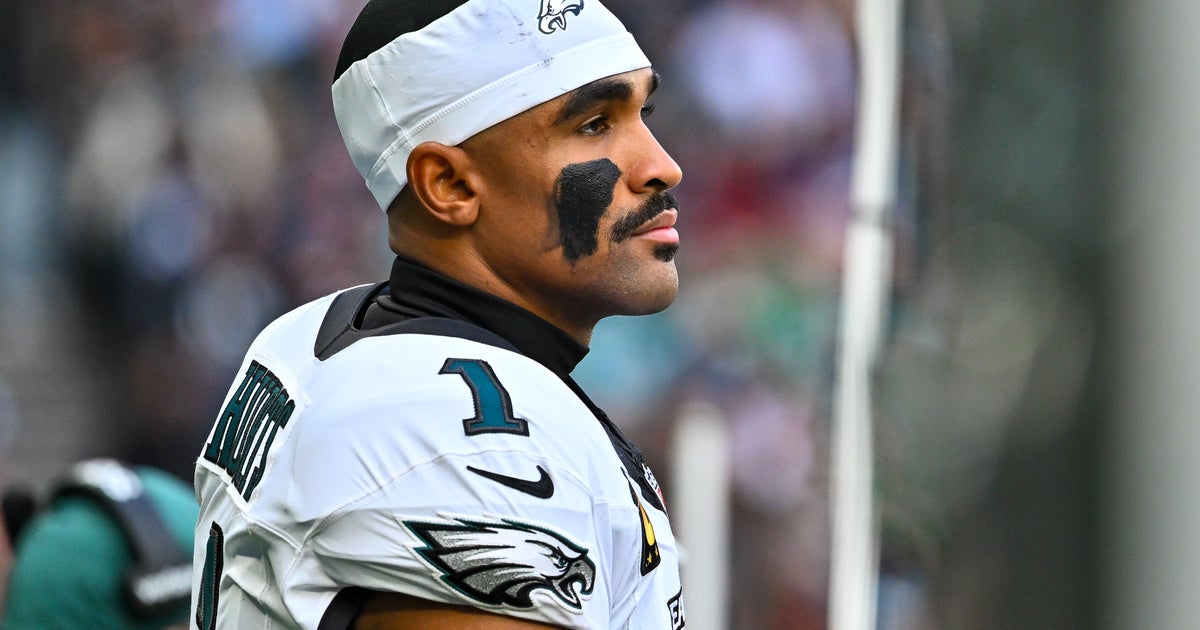
Philadelphia Eagles quarterback Jalen Hurts is facing a long-term absence from competition after being diagnosed with deep vein thrombosis and bilateral pulmonary emboli. According to a joint statement released Monday by his agent, Nicole Lynn, and the Eagles organization, Hurts has blood clots in his left leg and both lungs. The team stated that while his prognosis is very good, he could miss the remainder of the season.
The diagnosis follows a sequence of medical evaluations during the team's recent trip to London. One day before a game against the Jacksonville Jaguars, Hurts was diagnosed with a superficial blood clot in his left calf. NFL insiders reported that doctors ordered the quarterback to remain awake overnight, resulting in approximately 36 hours without sleep. Despite the initial clot discovery, medical staff cleared Hurts to play in the game, where he threw for 222 yards and one touchdown in a 19-17 loss.
Following the game and a return flight to the United States, the diagnosis was upgraded to deep vein thrombosis (DVT) and pulmonary emboli (PE). DVT occurs when a clot forms in deep veins, typically in the legs, while a PE occurs if the clot travels to the lungs. CBS News chief medical correspondent Dr. Jon LaPook noted that standard treatment involves blood thinners for at least three months. The Eagles stated they anticipate Hurts will resume contact football activities once he is no longer required to take blood-thinning medication.
In terms of concrete day-to-day changes, Hurts will move from active play to a regimen of blood thinners and close medical monitoring for at least the next 90 days. He will not be permitted to engage in contact football during this period due to the risks associated with blood-thinning medication. The quarterback is expected to remain with the team for conditioning, but his availability for games is suspended until he is cleared by physician experts. The incident has raised questions regarding travel protocols; while the International Air Transport Association suggests waiting five days to fly after a DVT diagnosis, Hurts flew back to the U.S. shortly after his game in London.
The situation sets a precedent for how professional sports teams manage vascular health during international travel. According to the CDC, long-distance travel involves extended periods of limited mobility, which increases the risk of venous thromboembolism. Head coach Nick Sirianni stated on Monday that he relied on the advice of medical experts when allowing Hurts to play and fly. The next steps involve a three-month evaluation period to determine if the clots have cleared and to test for underlying issues that might increase clotting risks. A specific date for his return to the field has not been set.