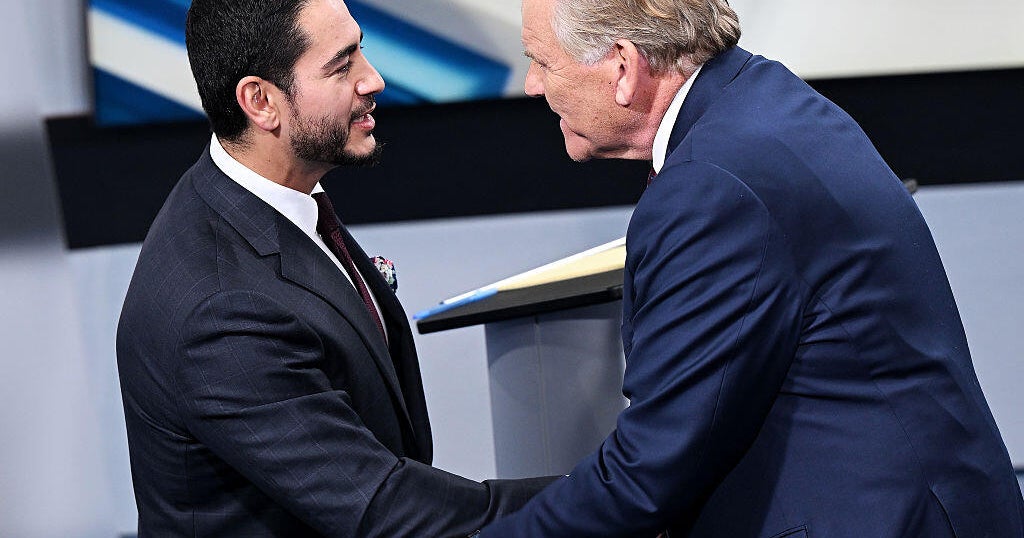
Democrat Abdul El-Sayed and Republican Mike Rogers met for their second and final televised Senate debate on Wednesday, Oct. 21, 2026, at WXYZ-TV in Southfield, Michigan. During the hourlong exchange, El-Sayed argued that Rogers would serve as a "sock puppet" for President Donald Trump, while Rogers characterized El-Sayed as untrustworthy and a candidate with views that are too extreme for Michigan. The candidates are vying for a seat in a closely watched contest that could determine which party controls the U.S. Senate.
The debate took place as the candidates entered the final weeks before the November midterm elections. It followed a more contentious first faceoff on Oct. 8 that was marked by frequent interruptions. In the current political environment, Democrats have emphasized voter frustration with inflation and the Iran War, while Republicans have highlighted internal Democratic divisions regarding Middle East policy and Medicare for All. Rogers, a former congressman, and El-Sayed, a former health official, focused their arguments on national security, trade, and economic policy.
One of the sharpest exchanges involved Rogers questioning El-Sayed's affiliations, repeating allegations regarding the Muslim Brotherhood. Rogers asked, "Are you for America, or are you for these terrorist groups overseas?" El-Sayed, who would be the nation's first Muslim senator if elected, called the questioning "shameful" and affirmed his commitment to the Constitution. The Democrat has previously disavowed any connection to the Muslim Brotherhood following reports about his mother's alleged past support for the group, noting he was not raised by her.
This election will determine which party holds a seat in the U.S. Senate. For Michigan voters, the outcome will influence federal policy on healthcare and trade, including the potential implementation of Medicare for All, which El-Sayed supports. Rogers argued this single-payer plan would lead to significant tax hikes, while El-Sayed stated the plan would be less expensive than current healthcare costs and has bipartisan support. The winner will also participate in decisions regarding international trade, including tariffs. El-Sayed criticized Trump's tariffs but said he was open to some duties, while Rogers called them a "mixed bag," questioning those imposed on Canada.
The candidates also presented differing views on international conflict and its impact on the domestic economy. El-Sayed linked high gas and grocery prices to the ongoing Iran War, calling for a War Powers Resolution to limit presidential authority. Rogers argued that Iran remains a threat to national security and that an Iranian-controlled Strait of Hormuz could cause fuel prices to rise even higher. While both candidates have expressed a desire for the war to end, they differ on the causes of current inflation.
Campaign activity will intensify in Michigan following the debate. Former President Barack Obama is set to rally in Detroit on Saturday, Oct. 24, and Donald Trump is scheduled to hold a rally on Sunday, Oct. 25. Rogers confirmed he plans to attend the Trump rally but noted that final details were not yet settled. Voters will make the final determination during the November midterm election. Individuals who have already cast early ballots or plan to vote on Election Day will decide which candidate represents Michigan for the next six-year Senate term.