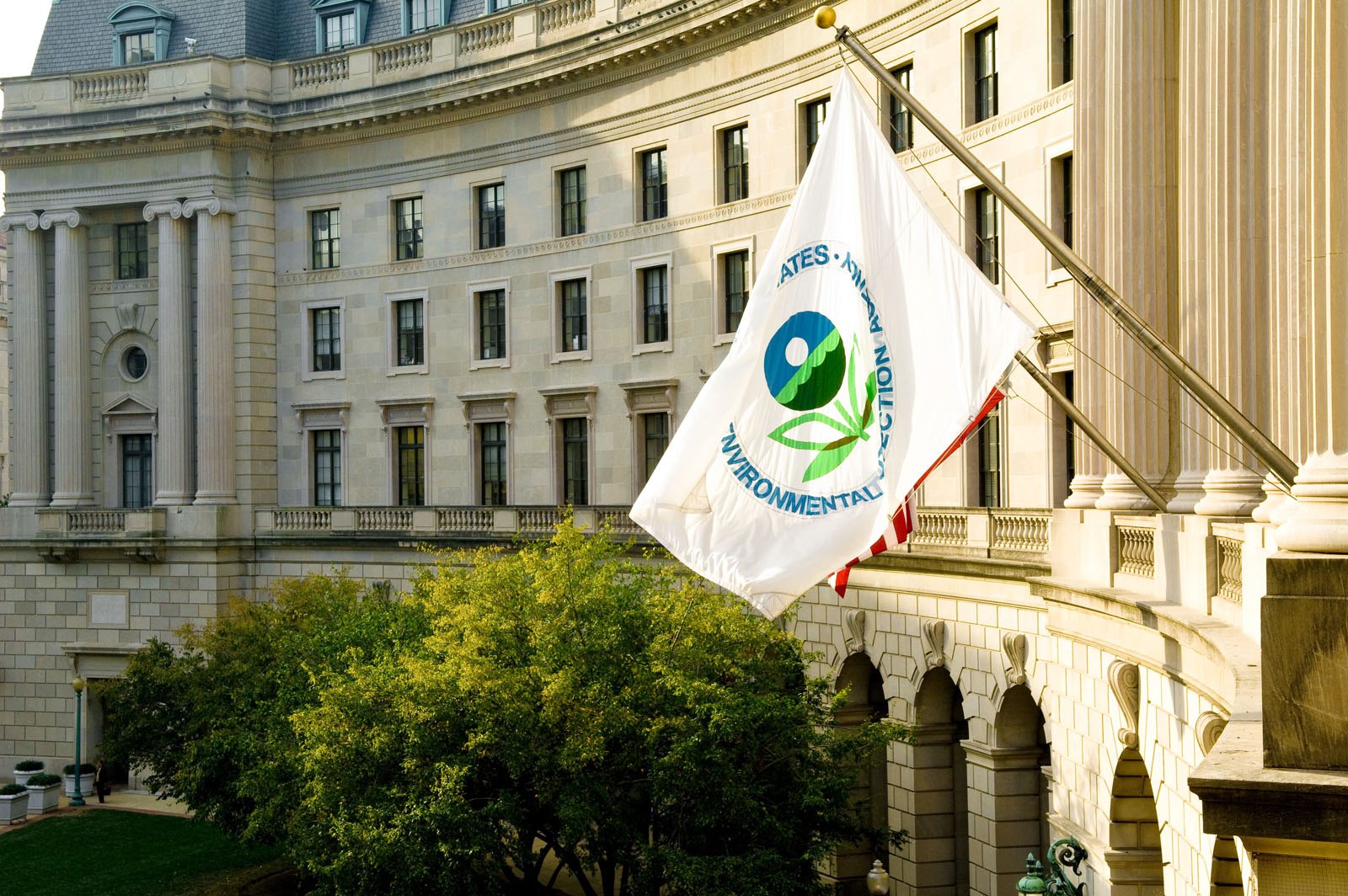
The Trump administration has rescinded approximately $1.7 billion in Environmental Protection Agency grants awarded to community groups, local governments, tribes, and nonprofits for climate, environmental justice, and public health projects. Counting related environmental justice programs, the total amount pulled back approaches $2.4 billion. The cancellations began in early 2025 and have affected recipients in dozens of states, including Thomasville, Georgia, which lost a $19.8 million Community Change Grant it had been awarded only months earlier.
The terminations follow an executive order signed on President Donald Trump's first day in office, titled "Ending Radical and Wasteful Government DEI Programs and Preferencing." The order directed federal agencies to end funding for programs built around diversity, equity, and inclusion frameworks. A companion order directed agencies to review spending under the Inflation Reduction Act. The administration has argued that the EPA's prior grant criteria — which prioritized low-income, minority, and historically underserved communities — amounted to unlawful preferencing and diverted the agency from its core statutory mission of protecting human health and the environment.
EPA officials have also described the terminations as a fiscal decision. Agency spokespeople said the EPA is "committed to being a great steward of taxpayer dollars" and that environmental justice "preferencing" does not align with the agency's mission. EPA Administrator Lee Zeldin has said the agency is reviewing Inflation Reduction Act awards for waste and for spending that he has characterized as passing federal money through intermediaries with limited oversight. The administration has framed the reversal as a return to neutral, merit-based funding decisions rather than a reduction in environmental enforcement.
Grant recipients and several federal judges have described the process differently. Recipients say the EPA canceled signed, binding agreements after work had begun, in some cases with no individualized explanation beyond a form notice stating that the award no longer aligned with agency priorities.
What the grants funded
The Community Change Grants program was created under the Inflation Reduction Act of 2022 and funded at roughly $2 billion. It was the largest environmental justice grant program in EPA history. Awards ranged from about $10 million to $20 million and went to partnerships between local governments and community organizations. Eligibility was written into the program: applicants had to serve communities identified as disadvantaged based on poverty rates, pollution exposure, health outcomes, and histories of underinvestment.
Funded work included lead paint and asbestos removal from older housing, mold remediation, wastewater and stormwater system repairs, air monitoring near industrial sites, tree planting and heat mitigation, weatherization, flood protection, and community health facilities. More than 350 awards had been announced before the terminations began; recipients and advocacy groups have counted more than 400 projects affected once related environmental justice and technical assistance grants are included.
Thomasville, Georgia
Thomasville is one of the most documented examples. The city and the Thomasville Community Development Corp. were awarded $19.8 million in late 2024 and were notified in 2025 that the award had been withdrawn. The project, called "Restoring Resiliency," included removing lead paint, mold, and asbestos from homes in the Dewey City neighborhood, repairing an 81-year-old wastewater system linked to contamination in Oquina Creek, and converting a former high school band room into a neighborhood health clinic. Local officials said the clinic would have improved health care access for residents who depend on limited public transportation.
Local reporting has documented that the planned public health improvements stalled after the cancellation. City staff had already begun design work and community outreach. Officials said replacing $19.8 million through local revenue or philanthropy is not realistic on the same timeline.
Similar accounts have come from recipients in Alabama, Massachusetts, Hawaii, Michigan, Texas, and other states, where organizations had hired staff, signed contracts with vendors, or started construction before receiving termination notices.
Who lost funding, and who did not
A central question raised by the cancellations is whether the cuts fall disproportionately on minority and low-income communities. The canceled programs were, by statute and by program design, restricted to communities with higher poverty rates and greater environmental health burdens. Because eligibility itself was limited to disadvantaged areas, terminating those programs removes funding only from those areas. Affluent and predominantly white communities that did not qualify for the grants in the first place did not lose money from these specific programs.
Whether such communities have seen funding increase is harder to answer with current public data. The EPA has not released a complete demographic breakdown of terminated versus retained awards, and no comprehensive independent tract-level analysis has been published. What is documented is the structure: the rescinded programs carried disadvantaged-community eligibility requirements, while other EPA programs — including state revolving funds for water infrastructure, brownfields assessment grants, and air quality monitoring administered through states — are not restricted by income or demographics and have continued to operate. Some of those programs are distributed by formula to states, which then set their own priorities. The practical effect is that the reductions are concentrated in the places the original grants were written to reach, while unrestricted programs available to all communities were left intact.
Several members of Congress have requested a full accounting of terminated awards by district and by demographic profile. The EPA has not published that accounting.
The practical consequence is a widening gap in basic infrastructure condition. A town that loses a lead abatement or wastewater award does not stop having lead pipes, failing sewer lines, or unmonitored air; it simply loses the only funding path it had for addressing them within a decade. Wealthier jurisdictions handle the same problems through bond issues backed by property tax bases, utility rate increases, or state matching programs. Where those options do not exist, deferred work compounds, repair costs rise with inflation and further deterioration, and residents continue living with the exposure in the meantime.
There is also a public-trust dimension that reaches beyond environmental policy. Local governments and nonprofits committed staff, matching dollars, engineering studies, and community outreach on the strength of signed federal agreements. When those agreements are withdrawn mid-project, the immediate cost is the sunk investment, but the durable cost is planning behavior: smaller jurisdictions become less willing to pursue competitive federal grants at all, because the administrative expense of applying and the risk of mid-stream cancellation now outweigh the expected benefit. That reluctance tends to persist across administrations and quietly reduces the number of places federal programs can actually reach.
The litigation
The terminations have produced multiple lawsuits in federal court. In one of the most closely watched cases, a coalition of nonprofit organizations and local governments — including the Green & Healthy Homes Initiative — sued the EPA, arguing that the cancellations were unlawful. The plaintiffs contend that the EPA entered into binding grant agreements, that the funds were appropriated by Congress for a specific purpose, and that the agency cannot cancel them without following the procedures set out in federal grant regulations, which require individualized cause and an opportunity to respond. They also argue that terminating awards specifically because they served disadvantaged communities is arbitrary under the Administrative Procedure Act.
The government's position is that grant terminations are within agency discretion, that the awards contained clauses allowing termination when they no longer serve agency priorities, and that disputes over grant money belong in the Court of Federal Claims rather than district court — a jurisdictional argument that has succeeded in some cases and failed in others.
Rulings have split. At least one federal judge, in a July 2026 order, found that the EPA had not followed proper legal procedures in terminating the grants and faulted the agency for issuing blanket notices without case-by-case justification. Other courts have accepted the government's jurisdictional argument and moved or dismissed claims, and appellate courts have stayed some lower-court orders that had restored funding. Related Supreme Court rulings on emergency applications in other federal grant cases have allowed agencies to withhold funds while litigation proceeds, which has slowed the practical restoration of money even where recipients have won.
For recipients, the split means the money remains frozen. Organizations affected by the cancellations must decide whether to absorb sunk costs, continue litigating, or scale back projects.
Documented impacts so far
Public health researchers note that lead paint, asbestos, and mold removal in older housing is among the most cost-effective ways to reduce childhood exposure to neurotoxins, with effects that show up years later in test scores and health care costs. Wastewater system repairs prevent bacterial contamination from reaching drinking-water sources and recreational waterways. Air monitoring near industrial corridors produces the data residents and regulators use to identify violations. Community health facilities address gaps in rural and low-income care.
Recipients have reported layoffs of staff hired for the projects, canceled vendor contracts, and abandoned matching commitments from local governments and foundations that were contingent on the federal award. In several cities, the loss of a single grant removed the entire budget for a project that had been years in development.
The distributional effect compounds this. Because eligibility was limited to communities with documented pollution burdens and high poverty rates, the reductions land entirely on places that already had fewer resources to absorb them. A wealthier municipality facing a lead abatement need can bond against its tax base; a small city with a shrinking population and an aging industrial footprint often cannot. The result is that a nationwide policy change, applied uniformly on paper, produces uneven outcomes in practice — widening the existing gap in environmental health conditions between communities rather than holding it steady. Public health researchers expect those gaps to appear in data years from now, in childhood blood lead levels, asthma rates, and waterborne illness reports, long after the budget decision itself has left the news.
The legal fight carries consequences for everyone who depends on federal funding, not only environmental grantees. At issue is how much flexibility a president has to cancel spending Congress has already appropriated and that an agency has already obligated through signed agreements. If broad terminations by executive order are upheld, then every federal grant — for transportation, education, disaster recovery, biomedical research, or rural broadband — becomes conditional on the priorities of the next administration, and recipients will have to plan accordingly, discounting federal commitments and slowing the projects those commitments were meant to accelerate. If the terminations are struck down, agencies will be required to justify cancellations individually and follow existing regulations. Courts have split, so the answer will likely come from appellate review or the Supreme Court. Until then, the practical situation is unresolved: the administration describes the action as a budget and administrative correction, recipients describe it as a broken contract, and the communities that were promised the money still do not know whether it is coming.