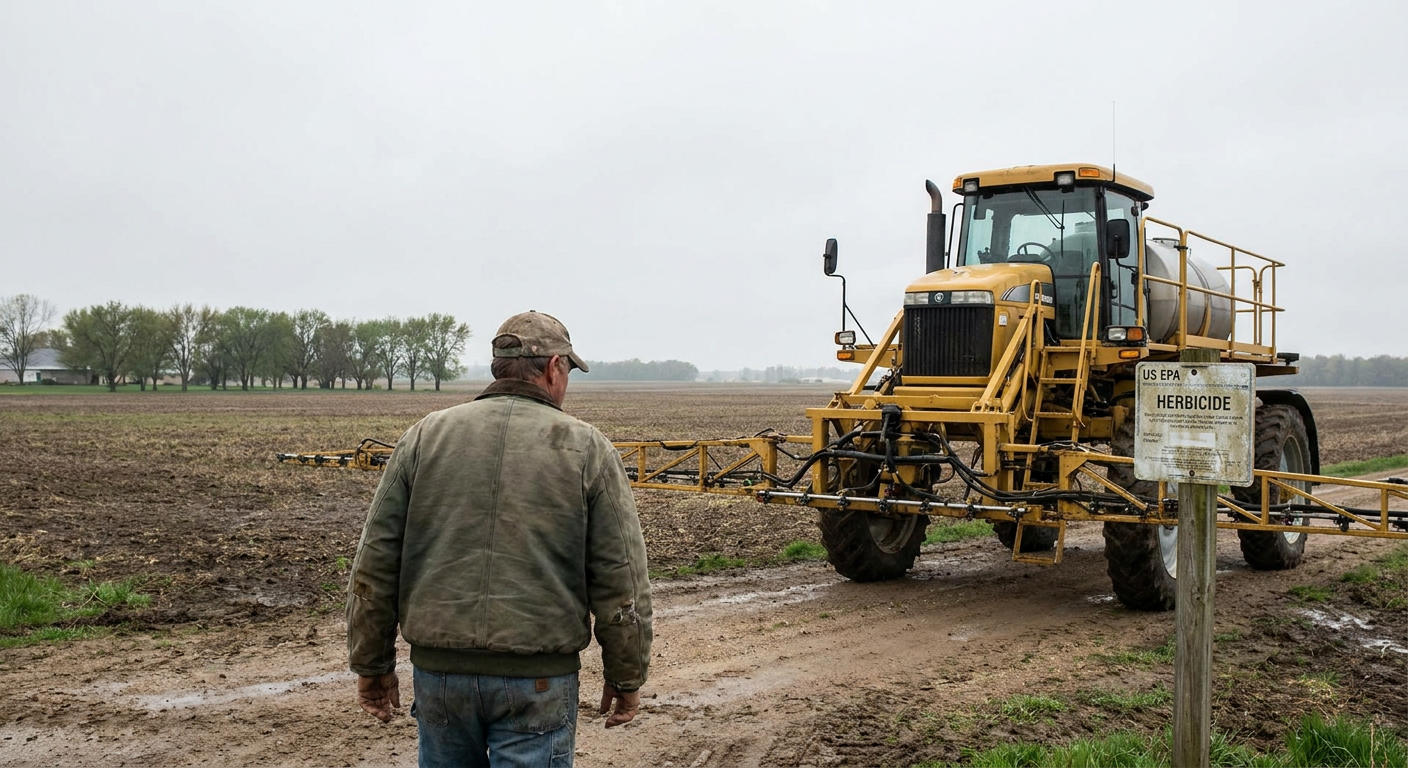
The Environmental Protection Agency (EPA) has introduced new regulations for a herbicide used by farmers to control weeds. The agency issued these rules earlier this year to address concerns regarding the chemical's tendency to drift, which can lead to unintended damage to neighboring crops and trees.
Controlling weed growth is a recurring challenge for agricultural producers, leading to the widespread use of herbicides. However, the specific chemical targeted by the new EPA rules has faced scrutiny due to its atmospheric mobility. When the herbicide drifts away from the intended field, it can affect non-target plants, including different varieties of crops and nearby forested areas.
The updated guidelines from the EPA aim to mitigate these risks by placing stricter controls on how and when the herbicide can be applied. While the agency intends for these measures to reduce environmental and agricultural accidents, some groups maintain concerns that the new rules do not fully eliminate the potential for damage.
For neighboring landowners and specialty crop growers, these regulations represent a shift in how the federal government attempts to protect their property from involuntary chemical exposure. A person living near agricultural land or managing a non-resistant crop might notice changes in how nearby fields are treated, potentially seeing different application methods or timing. The effectiveness of these rules will determine if there is a reduction in reported instances of unintentional plant death or stunted growth in areas adjacent to treated farms.
The new rules establish a precedent for how the EPA balances the needs of farmers requiring weed control with the protection of the surrounding environment. Because some groups remain concerned about ongoing dangers, these regulations may serve as a baseline for future legal challenges or additional policy adjustments. The EPA issued the rules earlier this year, and they are currently in effect for the current growing season, though the source does not list a specific expiration date or a schedule for subsequent reviews.