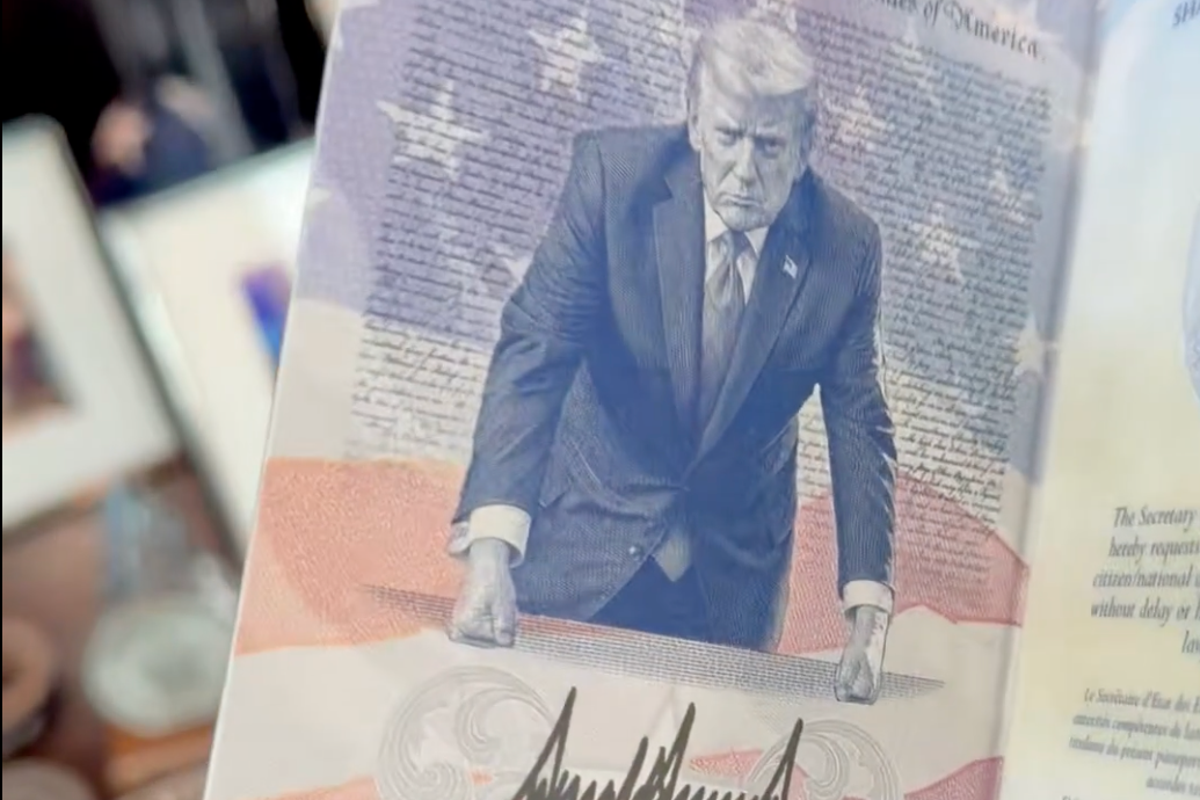
Eric Trump, the executive vice president of the Trump Organization and son of President Donald Trump, displayed his new U.S. passport in a video posted to X on Wednesday, September 2, 2026. The document, which Eric Trump stated he "absolutely loved," features a portrait of his father. The image depicts the president from the waist up, leaning slightly over a desk with his knuckles resting on the surface.
The document is a limited-edition "Patriot Passport" issued to mark the United States' Semiquincentennial, or 250th anniversary, which was celebrated on July 4, 2026. The design includes President Trump's signature, the number "250," and an image of his portrait imprinted over the Declaration of Independence. It also features a depiction of the founding fathers signing that historic document.
The State Department previously confirmed that individuals seeking the commemorative version must apply in person at a passport center, the Washington Passport Agency, or designated commemorative passport events. This marks the first instance of a living, sitting president being featured on a U.S. passport.
The introduction of the Patriot Passport affects U.S. citizens seeking the commemorative document during the nation's 250th anniversary period. While the commemorative edition is available for those who apply in person at specific locations, standard applicants will not automatically receive a passport featuring the president's likeness.
The move carries broader implications for U.S. government symbols and documents. In addition to the passport, the U.S. Mint recently released a gold-colored $1 coin featuring President Trump's face, marking the first time in over a century that a living president has appeared on American currency. The coins are made of copper along with zinc, manganese and nickel.
Furthermore, on Tuesday, September 1, 2026, reports emerged regarding a State Department proposal that would require parents applying for their children's passports to provide proof of their own citizenship or immigration status. This proposal is described as part of an effort to address birthright citizenship.