The Plain Record

Neutral daily news — clear headlines, complete facts.

National

Expedition confirms Pacific anomaly is not Amelia Earhart’s plane

Researchers led by Steve Schultz and Richard Pettigrew confirmed that a visual anomaly near Nikumaroro island was a collection of trees, not Amelia Earhart's plane.

Published October 18, 2026 at 11:35 PM EDT

The short answer

Researchers led by Steve Schultz and Richard Pettigrew confirmed that a visual anomaly near Nikumaroro island was a collection of trees, not Amelia Earhart's plane.

Expedition confirms Pacific anomaly is not Amelia Earhart’s plane

The Facts

Who
Steve Schultz of Purdue University, Richard Pettigrew of the Archaeological Legacy Institute, and a 17-member research team.
What
An expedition team determined that a suspected aircraft wreckage site near Nikumaroro was actually composed of natural debris and trees.
When
The expedition launched on October 14 and researchers reported their findings on a Sunday following the five-day search.
Where
The Taraia Peninsula on Nikumaroro island, Kiribati, in the Pacific Ocean.
Why
The investigation aimed to resolve the nearly 90-year mystery of Amelia Earhart's disappearance by identifying a reflective object seen in satellite imagery.

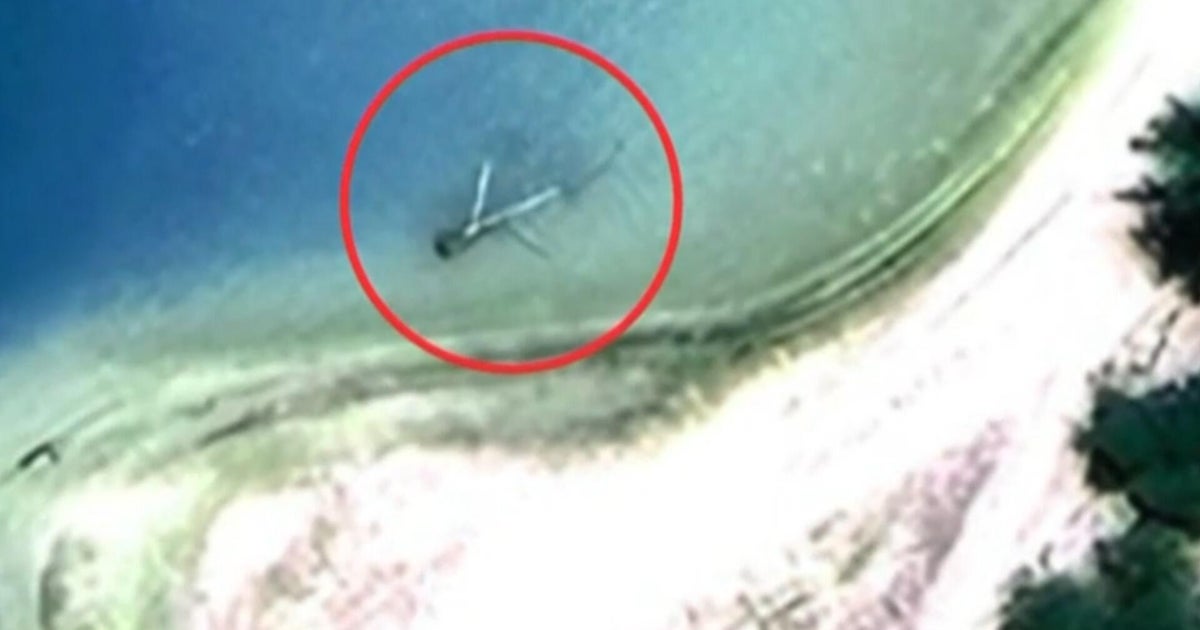
A research team concluded that a mysterious object near Nikumaroro island in the Pacific is not the wreckage of Amelia Earhart's missing Lockheed Electra 10-E. The 17-member expedition, led by Steve Schultz of Purdue University and Richard Pettigrew of the Archaeological Legacy Institute, identified the "Taraia Object" as a collection of trees rather than aviation debris. The team announced their findings after reaching the site to investigate a visual anomaly first identified in satellite imagery.

The investigation centered on an anomaly at the Taraia Peninsula that appeared reflective in aerial photos, leading researchers to initially suggest it could be metal. Upon arrival, the team found the objects were coated in a carbonate veneer and concretized coral sand, which created a shiny appearance similar to metal. Much of the debris had fragmented or washed away by the time the researchers arrived, leaving a single Y-shaped segment that had been the focus of the search.

The expedition faced logistical challenges, including severe weather that confined the team to their ship for three of the five scheduled search days. Limited fuel and supplies prevented the crew from extending their stay at the remote location, which required five days of sea travel to reach. The team had planned to use magnetometers, sonar, and filming equipment to survey the lagoon before attempting to retrieve the object for identification.

The scale of the search for Earhart spans nearly 90 years and multiple recent expeditions. In 2024 alone, another team used sonar to identify what they believed was an aircraft on the ocean floor, only for it to be identified later as a rock formation. The specific anomaly at Nikumaroro had been visible in photos since 1938 but remained unnoticed until a Navy veteran identified it in 2020. This latest expedition confirms that the object, which researchers previously described as "very strong" evidence of the plane, does not provide the sought-after closure for the families or the aviation community.

The failure to find the plane at this site leaves the mystery unresolved and continues the reliance on competing theories. While Pettigrew and others suggest Earhart may have landed on Nikumaroro due to 1930s-era relics and now-lost human remains found there, no conclusive physical evidence of the Lockheed Electra exists. Future search efforts will likely require new satellite analysis or deep-sea sonar data. No specific dates for follow-up expeditions by this team were reported following their return from the peninsula.

Timeline of what happened

Key dates and decisions, in the order they occurred.

  1. July 2, 1937

    Amelia Earhart and Fred Noonan disappear during global flight attempt

  2. 1938

    Object appears in aerial photos but goes unnoticed

  3. 2020

    Navy veteran identifies anomaly in satellite imagery during pandemic

  4. October 14, 2024

    17-member expedition team launches to investigate the site

Summaries are written by The Plain Record to state the facts of a story plainly and without political slant. Drafted with AI assistance and checked against the source record before publication. See how we report, or report a correction.

← Back to the front page

Questions readers ask

What happened: Expedition confirms Pacific anomaly is not Amelia Earhart’s plane?

An expedition team determined that a suspected aircraft wreckage site near Nikumaroro was actually composed of natural debris and trees.

Who is involved?

Steve Schultz of Purdue University, Richard Pettigrew of the Archaeological Legacy Institute, and a 17-member research team.

When did this happen?

The expedition launched on October 14 and researchers reported their findings on a Sunday following the five-day search.

Where did this happen?

The Taraia Peninsula on Nikumaroro island, Kiribati, in the Pacific Ocean.

Why does this matter?

The investigation aimed to resolve the nearly 90-year mystery of Amelia Earhart's disappearance by identifying a reflective object seen in satellite imagery.