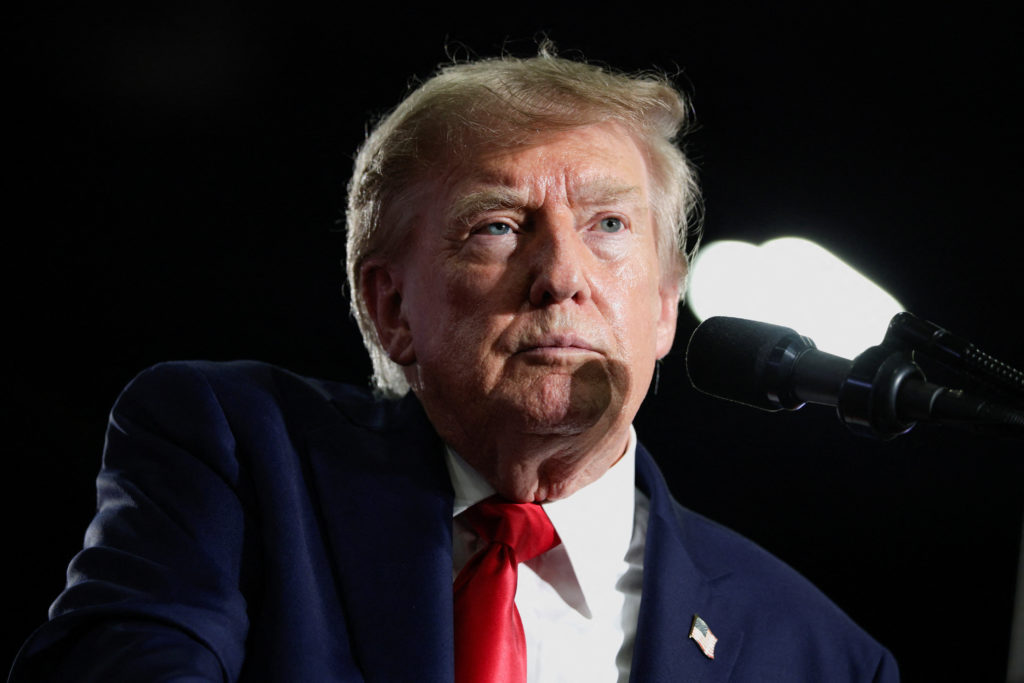
President Donald Trump stated in an Aug. 16 Truth Social post that his administration has achieved the "essential denuclearization of Iran." White House spokesperson Olivia Wales supported this claim, stating that military operations launched on Feb. 28 have destroyed Iran's nuclear facilities, defense industrial base, and navy. However, nuclear and military experts interviewed by PolitiFact reported that while the 2025 bombardments degraded Iran's capabilities, the country likely retains the materials and machinery necessary to develop nuclear weapons.
The United States has sought to limit Iran's nuclear program for years, notably through a 2015 agreement that exchanged sanctions relief for activity limits and international inspections. President Trump withdrew the U.S. from that deal in 2018. In June 2025, the U.S. and Israel conducted air strikes against Iranian nuclear sites. While the White House characterizes these sites as "obliterated," experts like Richard Nephew of Columbia University described the outcome as a significant degradation that would be time-consuming to reconstitute, rather than a total elimination.
Nuclear specialists noted that Iran continues to bar international inspectors, making its current status difficult to verify. Matthew Bunn, a nuclear policy specialist at Harvard University, stated that Iran likely still possesses a stockpile of highly enriched uranium sufficient to produce a dozen or more nuclear weapons over time. Experts also indicated that Iran may have stored advanced centrifuges and components in locations that are protected from air strikes. A 60-day ceasefire memorandum of understanding, intended to lead to nuclear talks, expired on Aug. 17 without a permanent agreement.
The scale of the remaining nuclear threat is measured in Iran’s reported stockpile of highly enriched uranium, which Matthew Bunn of Harvard University estimated is enough for 12 or more nuclear weapons. For the Iranian population, the "successful naval blockade" cited by the White House continues to "strangle" the national economy, which impacts the daily prices of food, medicine, and fuel for approximately 88 million people. Additionally, specialists warned that the U.S. military actions may have empowered the Islamic Revolutionary Guard Corps (IRGC) within Iran, potentially increasing the leadership's motivation to acquire a nuclear deterrent to prevent future strikes.
The knock-on effects of the current conflict include a stall in diplomatic options, as experts like Brendan Green of the University of Cincinnati suggested that military risks are now nearly exhausted. This shift places a greater burden on future diplomatic efforts that are currently described as highly unlikely. What happens next depends on whether the U.S. and Iran can establish new negotiations following the Aug. 17 expiration of the ceasefire memorandum. Without a new agreement or the resumption of inspections, the U.S. remains focused on its primary stated war goal: ensuring Iran does not obtain a functional nuclear weapon.