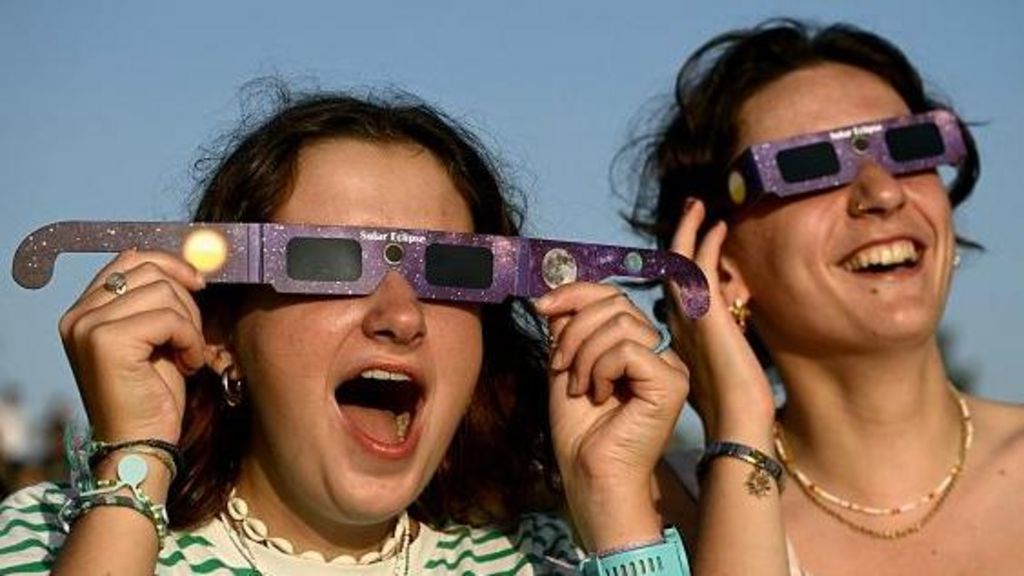
Eye experts are advising the public to monitor for vision changes following the solar eclipse that passed over western Europe on Wednesday. According to Alexander Ionides, a consultant eye surgeon at Moorfields Eye Hospital in London, individuals who looked at the sun without protection may experience symptoms within several hours of exposure. These symptoms include a central blind spot, blurred vision, or distortion where objects like faces or clocks appear grey, yellow, or dark in the center of the visual field.
The warning follows historical data from the 1999 total eclipse in the UK, when approximately 70 people sustained permanent eye damage. Experts reported that many of those individuals had looked at the event for less than a minute. The current event on Wednesday was a partial eclipse in the UK, which experts noted kept the sun bright enough that fewer people may have attempted to view it directly compared to the 1999 event.
Medical professionals explained that staring at the sun can cause solar retinopathy, which is damage to the retina at the back of the eye caused by bright light and ultraviolet radiation. Because the retina lacks pain receptors, the damage does not hurt as it occurs. In addition to visual spots, other reported symptoms include eye pain, redness, irritation, and increased sensitivity to light. Ionides stated that as of Thursday morning, fewer people had contacted hospitals or casualty departments compared to the 1999 eclipse.
A person affected by solar retinopathy would notice a concrete change in their day-to-day life, specifically a persistent grey or yellow spot appearing in the center of whatever they are looking at, such as text on a page or a person’s face. These changes typically emerge several hours after exposure. Individuals experiencing these symptoms are advised to seek urgent medical attention through local opticians, who can perform retinal scans to identify damage, or through hospital eye units where doctors are on call.
The immediate focus for public health officials is ensuring that those with symptoms receive a diagnosis to determine if they require a referral to a local eye casualty unit. While the lower number of early hospital visits suggests that public safety messages regarding the dangers of using ordinary sunglasses may have been effective, the full scale of the impact will only become clear as symptoms develop over the coming days. No specific deadline for recovery or final tallies of the injured was reported, as the condition can develop gradually.