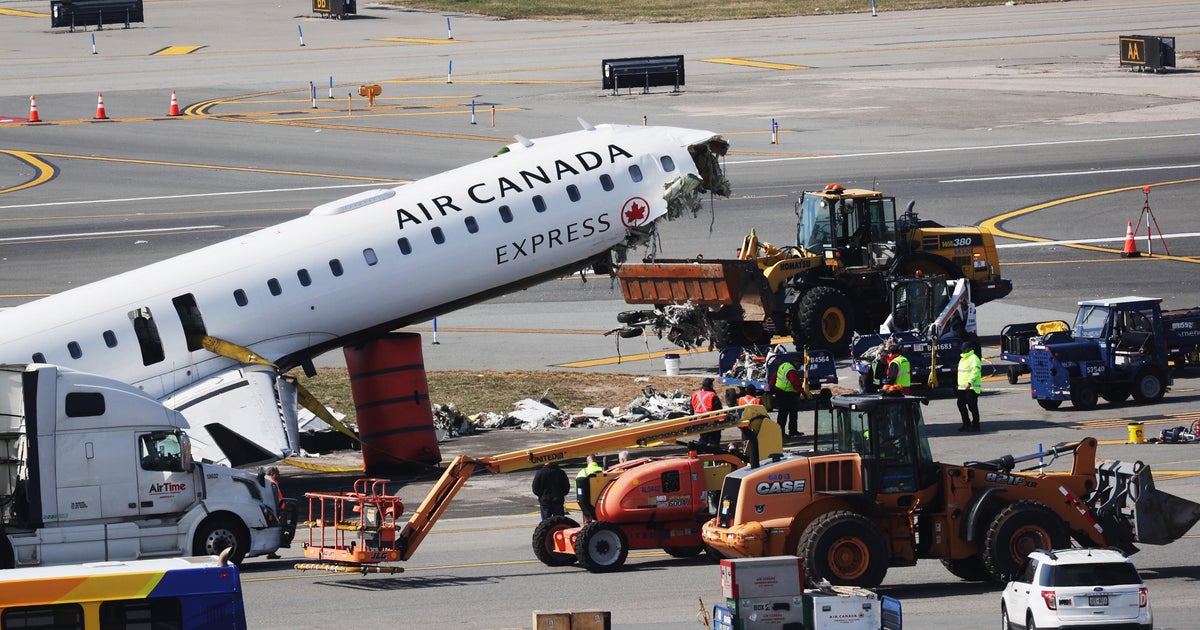
Two air traffic controllers at LaGuardia Airport in New York left their shifts earlier than scheduled on the night of a fatal runway collision in March, according to a government source familiar with the matter. The Federal Aviation Administration (FAA) is currently seeking to terminate the employment of both individuals. The agency characterized the unauthorized departures as timecard fraud.
The incident occurred just before midnight on March 22, when an Air Canada Express flight arriving at the airport collided with a Port Authority fire truck on the runway. The collision resulted in the deaths of the plane's pilot and copilot. Additionally, two fire officers and 39 of the 76 people on board the aircraft were transported to local hospitals for treatment.
At the time of the collision, two other controllers were actively working in the tower cab. The National Transportation Safety Board (NTSB) stated in March that maintaining a staff of two controllers during the midnight shift is common practice across the national airspace. The two controllers who left early were intended to serve as additional support staffing for the shift.
Transportation Secretary Sean Duffy stated that while most controllers complete their full shifts, the government will not tolerate practices that impact the airspace or result in fraud against taxpayers. The air traffic controllers union confirmed it is in discussions with FAA leadership regarding the situation. Former controller Todd Yeary questioned whether external factors, such as low traffic volume or the use of compensatory time, played a role in the departures.
Passengers and airline employees would notice the impact of these staffing investigations through potential changes in safety protocols or airport efficiency. While the NTSB noted that two controllers were present as per standard midnight shift procedures, the FAA stated that the absence of scheduled support staff unfairly increases the workload of remaining controllers. This investigation occurs against a backdrop of reported staffing shortages, which the FAA says it is attempting to address by hiring more personnel to reduce the burden on current workers.
The knock-on effects include an ongoing NTSB investigation into broader concerns regarding controller fatigue across the United States. The NTSB is examining how shift scheduling and staffing levels influence safety in the national airspace. The FAA has declined interviews but stated it remains committed to holding employees accountable. The specific dates for the termination proceedings or the release of the final NTSB accident report have not been reported.