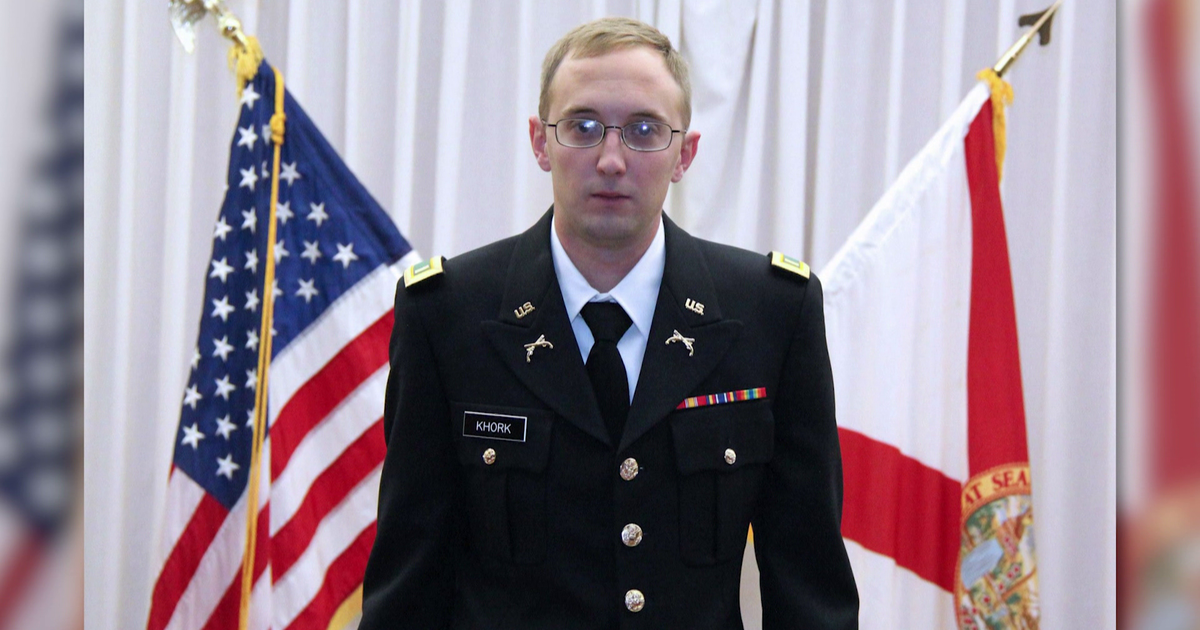
The family of Army Reserve Capt. Cody Khork is calling for the U.S. Army to release its internal investigation into a March 1 Iranian drone strike that killed six American service members in Kuwait. While the Army confirmed the probe was completed in early July, the full findings have not been made public.
The strike occurred at a tactical operations center at the Port of Shuaiba during the first day of the Iran war. Capt. Khork, who served as deputy force protection officer for the Iowa-based 103rd Sustainment Command, was killed alongside five others when an Iranian Shahed drone hit their position. Prior to the attack, the unit had been moved to the port as part of Operation Epic Fury.
Jim and Stacey Khork, the captain's parents, stated that their son had issued multiple warnings to the unit’s leader, Brig. Gen. Clint Barnes, regarding the risk of an Iranian attack. According to the family and multiple sources, Army intelligence had warned as early as January that Iran might target the Port of Shuaiba. Survivors reported that Khork advised staying in bunkers during the attack, but Jim Khork stated that Barnes repeatedly requested an "all clear" signal. Brig. Gen. Barnes and the 103rd Sustainment Command have not commented on these specific accounts.
Survivors of the strike have challenged initial descriptions of the event provided by Defense Secretary Pete Hegseth, who referred to the drone as a "squirter" that bypassed fortified defenses. An injured soldier told reporters in April that the position was not fortified and was unprepared for defense. Maj. Stephen Ramsbottom further alleged that medical shortages contributed to the fatalities, stating that Master Sgt. Nicole Amor might have survived if a doctor or a fixed aid station had been present. Witnesses said soldiers used makeshift bandages and civilian vehicles to transport the wounded to local hospitals.
At a broader level, the findings involve the safety protocols for U.S. troops stationed in the Middle East during active conflict. If the investigation confirms that intelligence warnings from January were unheeded or that medical requests were denied, it could lead to changes in how force protection and medical support are allocated at non-permanent tactical centers. The reported failure—which left soldiers relying on one ambulance and civilian cars to transport the wounded to Kuwaiti hospitals—sets a precedent for how the military justifies the risks taken by specialized units operating near conflict zones.
The specific day-to-day impact for the affected families currently involves waiting for scheduled briefings on the official findings, which the Army stated it is arranging for the primary next of kin. The Army has asked for patience, citing the privacy of Gold Star families as the reason for the delay in public release. The Senate investigation remains ongoing. No specific date for the public release of the full report has been provided.