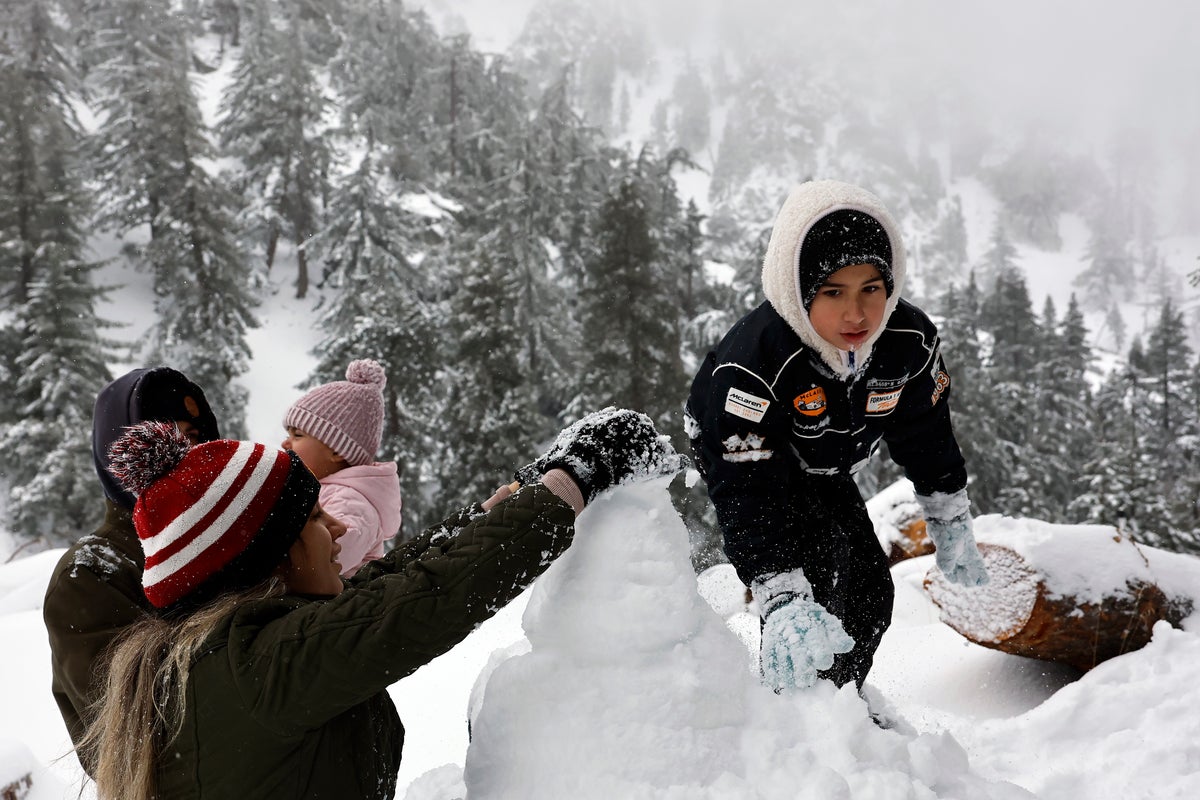
The 200-year-old Farmer’s Almanac has released its winter weather outlook for 2026-2027, predicting a season characterized by rain, snow, and ice across various regions of the United States. Caleb Weatherbee, the official forecaster for the Almanac, stated that some areas could see frequent storms while others may experience milder conditions interrupted by brief periods of cold air.
The forecast is influenced by an El Niño weather system that formed in the tropical Pacific in early June. According to the National Oceanic and Atmospheric Administration’s (NOAA) Climate Prediction Center, there is an 81 percent chance that this system will develop into a very strong El Niño between October and December. El Niño typically results in warmer water in the tropical Pacific, which often leads to wetter conditions in the southern U.S. and milder weather in the North.
For the southern tier, including Southern California, the Southwest, Texas, and the Gulf Coast, the Almanac predicts frequent storms and potential sleet or freezing rain. In the Northeast, inland residents are told to expect heavy, wet snow in January and February, while coastal areas may see more rain. The northern Plains and Great Lakes regions are forecasted to experience sudden snow squalls and strong winds. While the Almanac claims an 80 to 85 percent accuracy rate, Colorado meteorologist Cory Reppenhagen noted that the publication's forecasts are often vague, typically predicting cold winters and warm summers.
The scale of the impact is nationwide, with specific focus on inland Northeastern residents who are warned of heavy snow accumulations during the first two months of 2027. If the Almanac’s prediction of "heavy, wet snow" holds true, individuals in these states may face higher costs for snow removal services or increased physical labor for property maintenance. Meanwhile, those in the northern Plains and Great Lakes could experience sudden changes in daily commutes and outdoor work schedules due to predicted wind surges and snow squalls.
The report also sets a precedent for how different forecasting models compete for public attention. While the Farmer's Almanac relies on its traditional methods, the reliance on NOAA data regarding El Niño provides a scientific baseline for the wet conditions expected in the South. The next major developments will occur between October and December 2026, when the strength of the El Niño will be confirmed, followed by the specific January and February windows identified for the heaviest Northeast snowfalls. Residents typically use these windows to schedule seasonal transitions, such as switching to winter tires or winterizing home heating systems.
What happens next: The transition into the forecasted severe weather is expected to begin in the fall, particularly in the Pacific Northwest. The predicted strong El Niño phase will be monitored from October through December 2026. Major winter weather events for the Northeast are specifically forecasted for January and February 2027. Forecast accuracy will continue to be evaluated by regional meteorologists throughout the winter season.