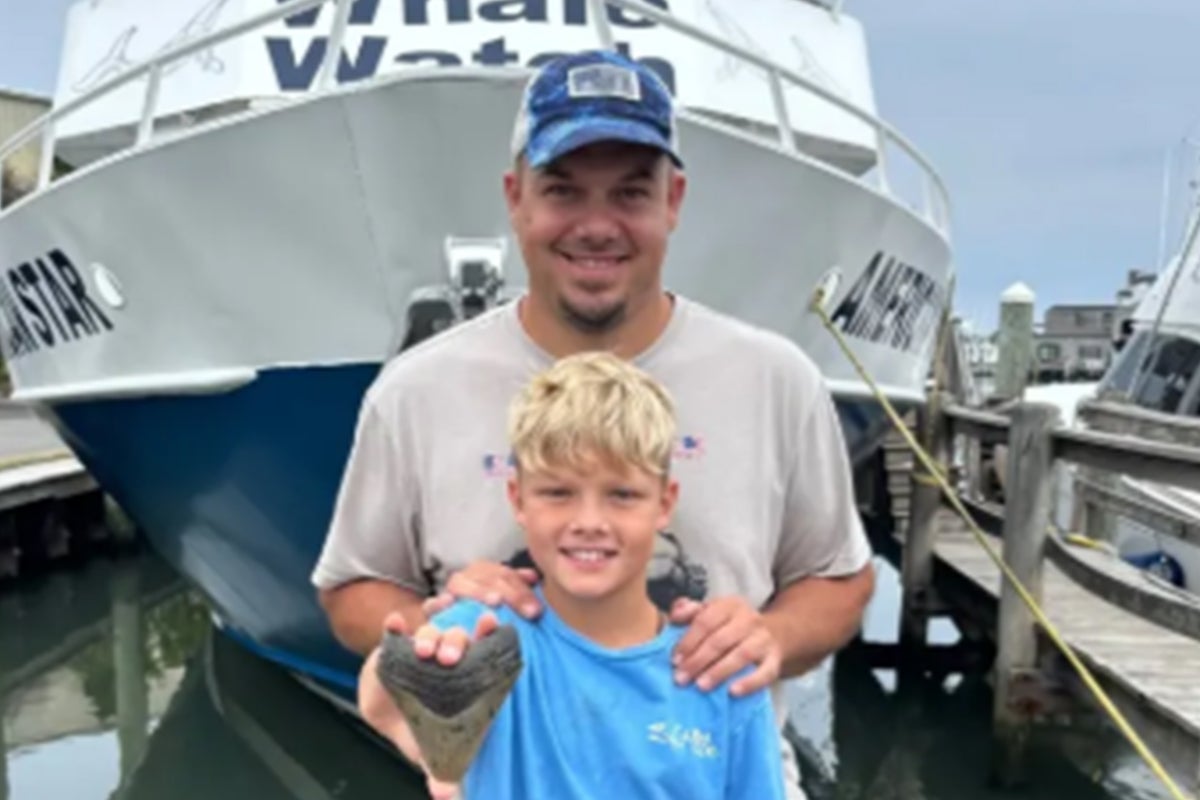
A father and son vacationing in Cape May, New Jersey, discovered a fossilized megalodon tooth while exploring a jetty. Michael Bowers and his 11-year-old son, Bo, found the artifact wedged inside an opening in the rocks during their trip.
Megalodons were the largest carnivorous sharks to inhabit the oceans, living approximately 23 to 3.58 million years ago. According to Melissa Laurino, director of the Cape May Whale Watch and Research Center, these prehistoric animals could reach lengths of up to 60 feet.
Bowers, who is from Monongahela, Pennsylvania, spotted the object and asked his son to retrieve it due to the boy's smaller hands. The family took the specimen to the Cape May Whale Watch and Research Center, where experts confirmed the tooth was a genuine megalodon fossil.
While shark teeth are frequently found along the Atlantic coast, Laurino stated that discovering a megalodon tooth on a New Jersey beach is rare. Many similar fossils are typically found further south at Maryland's Calvert Cliffs. The Maryland Department of Natural Resources notes that such discoveries occur because areas once covered by shark-inhabited waters have since become inland locations.
A person visiting the Jersey Shore would typically only find small, modern shark teeth; however, a find of this scale represents a significant departure from daily expectations. The tooth of a megalodon can be roughly the size of an adult human's hand, a stark contrast to the much smaller teeth commonly washed up by the tide. This discovery may influence how recreational beachgoers interact with coastal structures like jetties, as the Bowers family found the fossil lodged within rocks rather than on the open sand.
The event sets a local precedent for fossil discovery in Cape May, which is less known for such prehistoric finds than Maryland’s Calvert Cliffs. It demonstrates the ongoing geological shifts that bring ancient seafloor remains to modern shorelines. For the Bowers family, the find cancelled a planned trip to North Carolina, where they had intended to rent scuba gear specifically to hunt for similar fossils. No further formal excavations or government actions related to this specific find were reported following the authentication by the research center.
What happens next: The Bowers family intends to keep the tooth as a personal treasure. No specific dates for future research or exhibition of the tooth were provided, and no legislative or regulatory changes regarding beachcombing in Cape May were announced following the discovery.