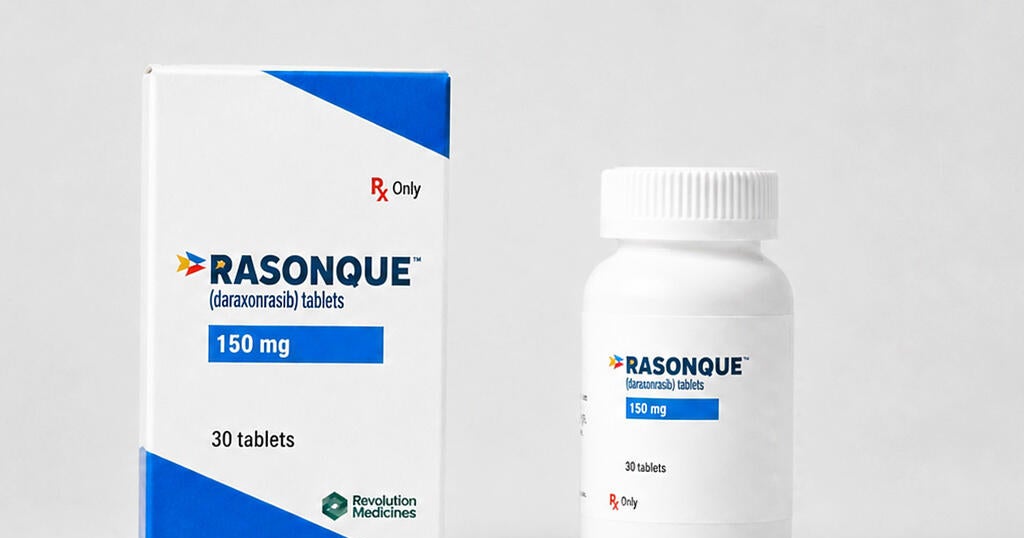
The Food and Drug Administration (FDA) announced on Wednesday the expedited approval of daraxonrasib, a new daily pill for the treatment of advanced pancreatic cancer. The drug, which will be marketed under the brand name Rasonque by Revolution Medicines, is designed to block a mutated protein that drives tumor growth in approximately 90% of pancreatic cancer cases. FDA officials stated the approval was issued more than six months ahead of the agency's target date.
The approval follows a company-funded clinical trial involving 500 patients with metastatic pancreatic cancer whose disease had stopped responding to previous treatments. Results showed that patients taking daraxonrasib lived for a median of 13.2 months, compared to 6.7 months for those receiving standard chemotherapy. Common side effects reported during the study included skin rash, mouth sores, diarrhea, and other digestive issues.
Revolution Medicines, based in Redwood City, California, announced that a one-month supply of the medication will cost approximately $39,800. The drug utilizes a molecular mechanism that binds to multiple subtypes of the KRAS gene, a family of proteins that regulates cell growth. Researchers had previously characterized this protein as "undruggable" for four decades due to its physical structure.
A person prescribed this treatment will shift from intravenous chemotherapy to a daily oral pill. Former Sen. Ben Sasse (R-NE), a trial participant, reported a 76% reduction in tumor volume and decreased pain over a four-month period. While Dr. Andrew Coveler of the Fred Hutch Cancer Center noted the medicine is not a cure, it represents a mechanical change in how advanced cases are managed, moving away from standard chemotherapy protocols that have historically seen a five-year survival rate of only 13%.
The knock-on effects of this approval may extend to the broader oncology market. Dr. Pashtoon Kasi of City of Hope Orange County stated the development could lead to additional trials using similar molecular approaches for other tumor types. Revolution Medicines is currently studying the technology for other cancers, including lung cancer. Following the FDA's decision on Wednesday, the drug is now cleared for U.S. commercial distribution, though specific dates for wide pharmacy availability were not reported.