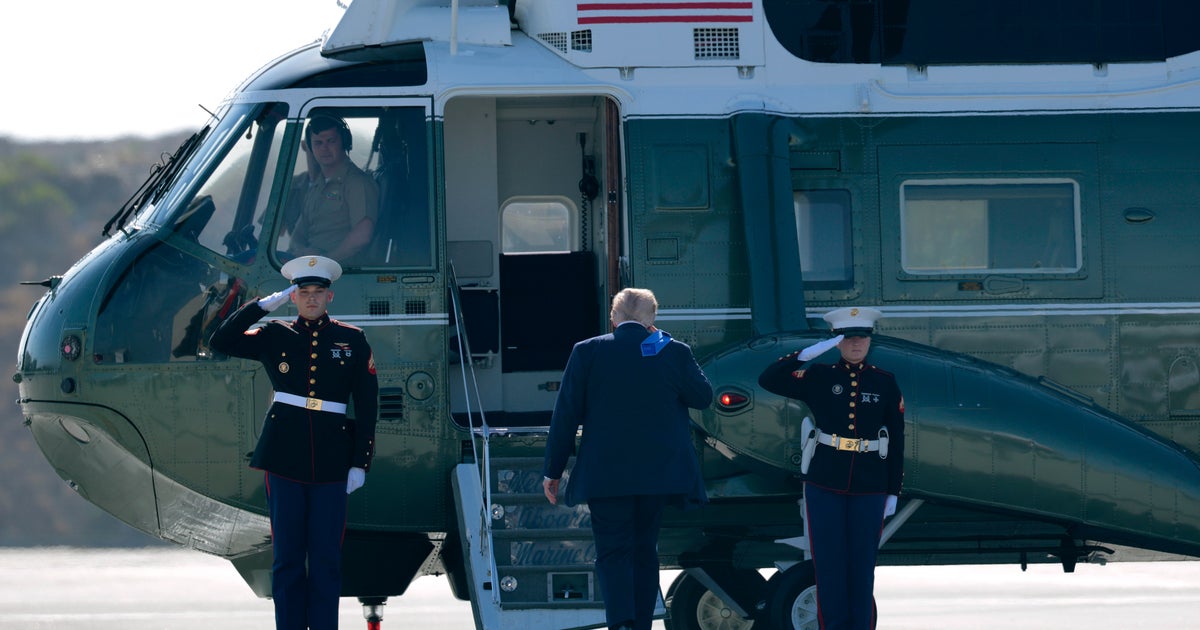
The Federal Aviation Administration (FAA) and the National Transportation Safety Board (NTSB) are investigating why air traffic was not halted at Ronald Reagan Washington National Airport during a Tuesday departure by Marine One. The incident occurred as President Trump was leaving the White House for a trip to the West Coast. According to the FAA, the presidential helicopter and a commercial plane experienced a "momentary loss of separation" before moving away from one another.
Current Department of Transportation regulations require Reagan National Airport (DCA) to implement a ground stop whenever Marine One or emergency flights cross the Potomac River. These rules were established following a January 2025 midair collision between an Army Black Hawk helicopter and an American Airlines jet at the same airport. While non-essential helicopter operations are prohibited around DCA, Marine One remains exempt from the ban provided specific traffic protocols are followed.
Radio logs indicate the Marine One pilot attempted to contact the DCA tower three times to signal that the helicopter was minutes from liftoff. The tower eventually acknowledged the call but reported the message was "broken and unreadable." After Marine One lifted off, air traffic controllers informed the pilot that a plane was currently rotating off a runway. The pilot acknowledged the report, held the helicopter's position, and initiated a flight delay. The FAA confirmed that the president was never in danger during the encounter.
For travelers and airline staff at DCA, these safety protocols mean that whenever the president travels by helicopter, all commercial movement on the runways stops. A breakdown in communication, as reported in this incident, creates a situation where commercial jets and the presidential transport are in the air simultaneously within the same restricted zone. A person scheduled on a flight during these windows would notice their aircraft holding on the tarmac or circling the airport until Marine One clears the area.
The investigation sets a precedent for how the FAA handles communication failures between military pilots and civilian controllers. The Marine Corps characterized the flight as "routine," stating that controllers had approved the route and provided appropriate information. However, the NTSB's involvement suggests a formal review of why the mandatory ground stop failed to trigger. The FAA stated it will continue to review the incident, though no specific deadline for the final report or potential changes to air traffic control procedures has been announced.