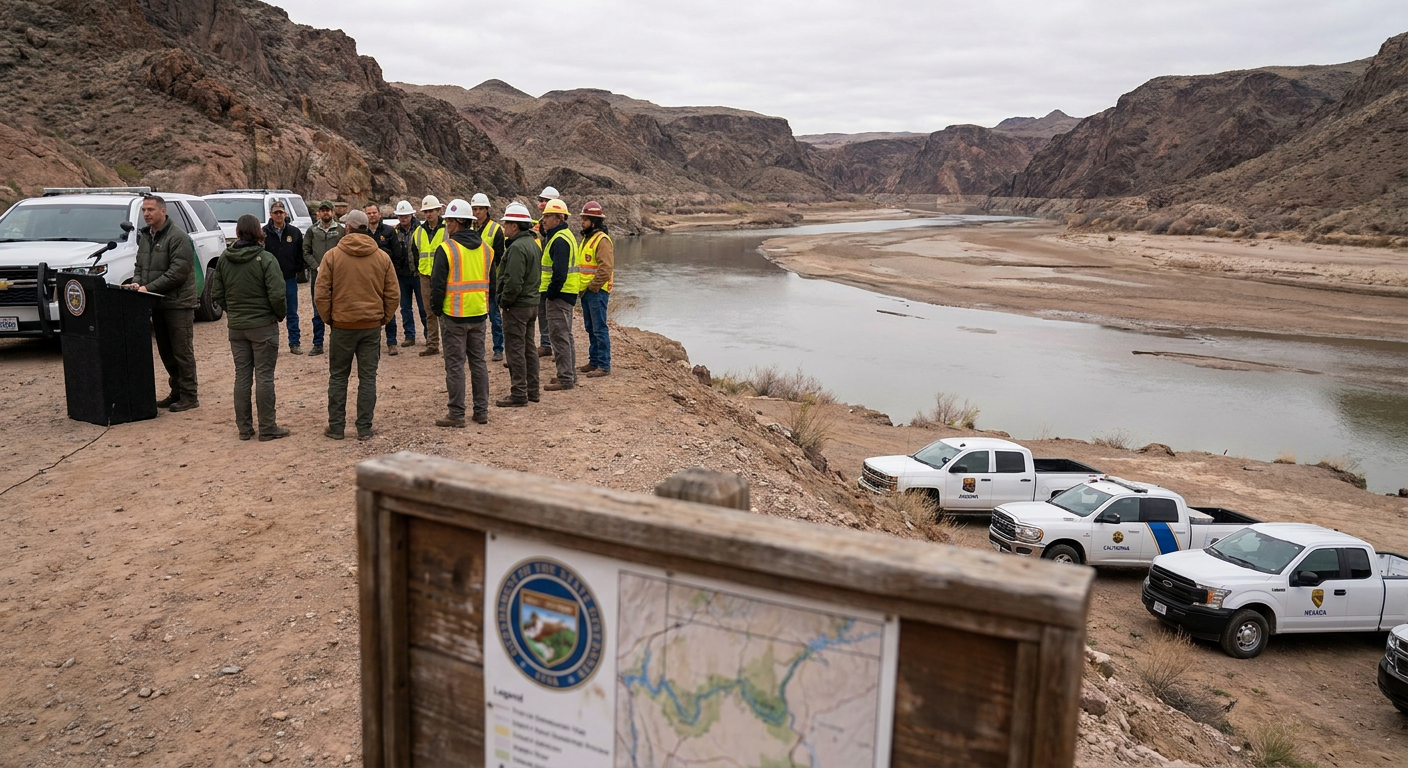
The federal government announced a new management plan for the Colorado River on Friday, mandating significant reductions in water usage for three Western states. Under the new guidelines, Arizona, California, and Nevada must implement water cuts to address declining levels in the river's primary reservoirs.
The decision follows a period of record-low water levels at Lake Mead and Lake Powell, the two largest reservoirs in the Colorado River system. The river serves as a critical water source for millions of people and vast areas of agricultural land in the American Southwest, but prolonged drought conditions have stressed the system's capacity to maintain traditional delivery levels.
According to the federal plan, the Lower Basin states of Arizona, California, and Nevada will bear the primary responsibility for the reductions. While the specific volume of water to be cut for each individual state was not detailed in the initial announcement, the federal government characterized the measures as necessary to stabilize the shrinking river system.
The scale of this intervention is driven by the fact that the river's two largest reservoirs have reached record-low levels. When these reservoirs drop too low, they threaten the ability to generate hydroelectric power and deliver water downstream. By enforcing these cuts now, federal officials are attempting to prevent the reservoirs from reaching "dead pool" status, where water can no longer flow past the dams. The source does not specify the exact timeframe for when these cuts must be completed or how long they will remain in effect.
The knock-on effects of these cuts are likely to be felt in the agricultural sector, which consumes the largest share of the river's water, potentially influencing crop yields and food prices. It also sets a precedent for federal intervention in interstate water compacts when states are unable to reach a voluntary agreement during periods of extreme shortage. What happens next depends on how state agencies translate these federal mandates into local restrictions; however, specific dates for implementation or potential legal challenges were not reported in the source.