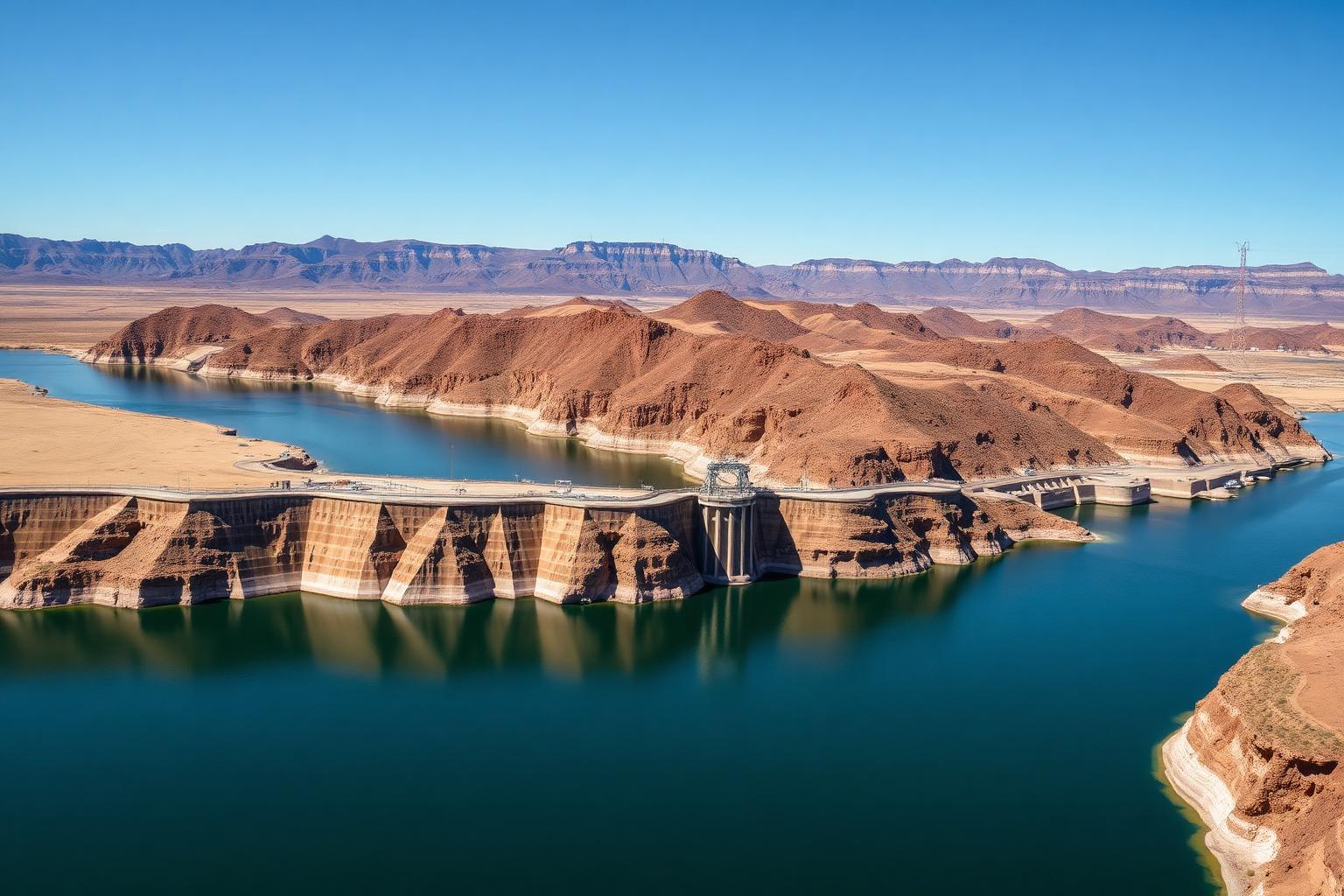
The federal government on July 31, 2026, proposed a new 10-year framework to reallocate water from the Colorado River among Western states. The plan aims to address declining water levels in crucial reservoirs that serve more than 40 million people across seven U.S. states, dozens of tribal communities, and Mexico.
The proposal follows a 25-year period of dropping water levels and a recent historic drought in the Southwest. The Colorado River Basin is currently governed by a compact established over 100 years ago in the 1920s, which divides water equally between the Upper Basin states—Colorado, Wyoming, Utah, and New Mexico—and the Lower Basin states—California, Arizona, and Nevada. Russ Schumacher, a professor at Colorado State University, noted that the system currently holds less water than when the compact was created due to increased demand from growing populations and warmer, drier conditions.
Under the federal plan, Lower Basin states would face the primary requirements for water conservation and usage reductions. These states, which include high-population areas like California and Arizona, use their allocations to support large-scale agricultural production. Schumacher stated that while Lower Basin reductions would be required, especially in dry years, cutbacks for Upper Basin states would be more voluntary.
The scale of the issue is driven by a long-term decline in mountain snowpack, with Schumacher reporting that Colorado recently experienced its worst winter for snow since measurements began. In addition to low precipitation, record warmth in December, February, and March has increased evaporation, further straining a water supply that serves millions. For agricultural producers in the Lower Basin, these reductions may lead to changes in crop production or land use, while urban residents could see new local conservation mandates as states work to meet the federal government's 10-year targets.
The federal intervention sets a precedent for how the 1922 Colorado River Compact is managed during periods of chronic water shortage. By prioritizing mandatory cuts in the Lower Basin over the Upper Basin, the framework shifts the burden of conservation toward downstream users who have historically utilized a larger portion of their legal allocation. What happens next involves a period of potential relief if a predicted "super El Niño" brings wetter conditions to the Southwest this fall and winter, though climatologists warn that long-term warming continues to decrease the landscape's ability to retain moisture. The federal framework is intended to govern water distribution for the next decade.