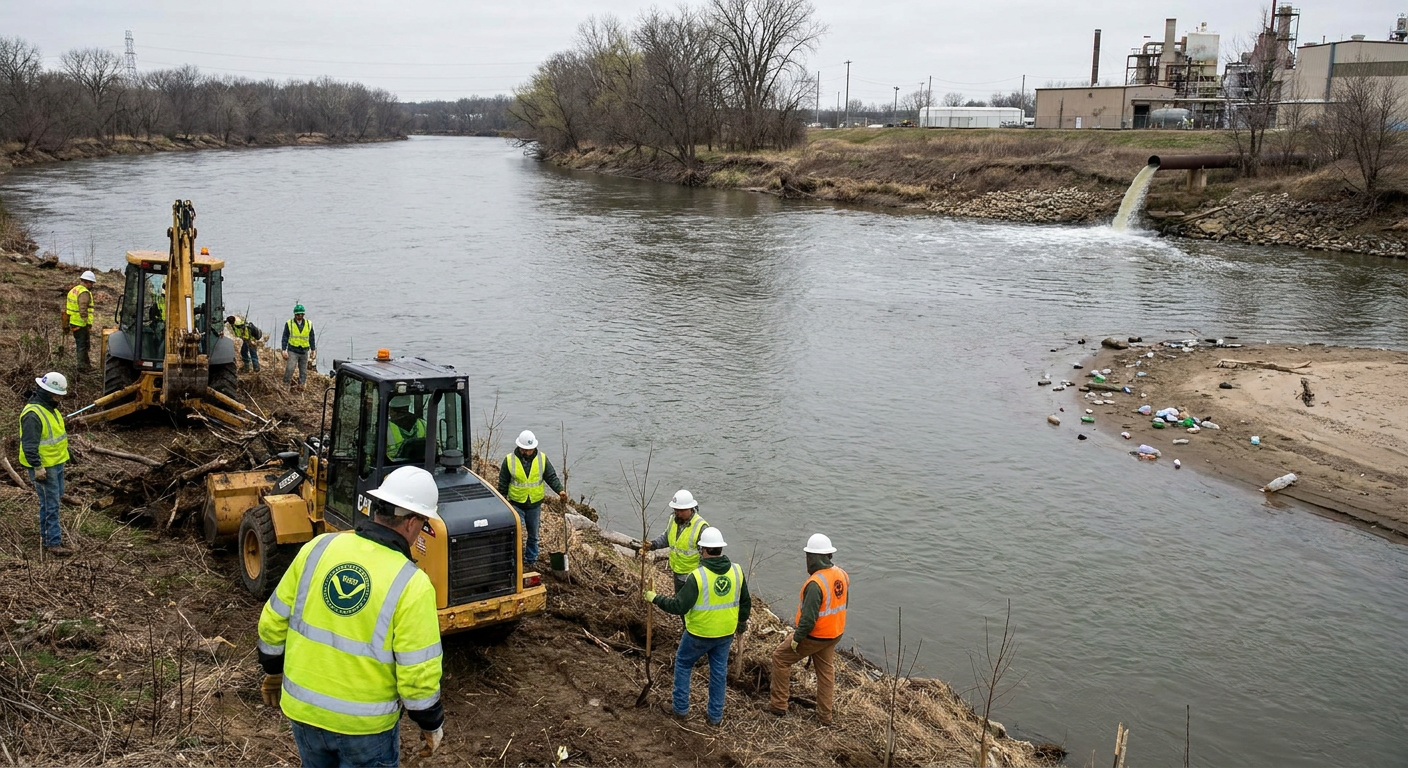
Federal environmental regulations enacted over the last 50 years have led to the recovery of several U.S. rivers previously affected by industrial and mining waste. According to Pittsburg State University biologist James Whitney, cleanup efforts at Environmental Protection Agency (EPA) Superfund sites have reduced the amount of metals washing into waterways like the Spring River, which flows through Missouri, Kansas, and Oklahoma. While biologists report significant increases in fish and mussel populations in these areas, experts state that current laws do not address all sources of pollution.
The recovery follows a series of federal actions in the 1970s and 1980s, including the Clean Water Act and the Superfund law for major environmental cleanups. Before these regulations, industrial pollution was severe enough that Ohio’s Cuyahoga River caught fire multiple times. In recent decades, efforts to plug abandoned mine shafts and manage waste piles have mitigated runoff. Additionally, regulations on city sewage and factory outflows have targeted manufacturing chemicals, fecal bacteria, and ammonia in urban waterways.
Data from Chicago’s Shedd Aquarium indicates that fish diversity has expanded at specific survey sites from three species in the 1980s to between 15 and 20 species 30 years later. Similar improvements have been noted in the Trinity River in Texas and the West Fork White River in Indiana. However, a 2022 study published in Global Change Biology found that fewer than half of U.S. streams were in good condition based on fish and invertebrate populations. Scott Black, executive director of the Xerces Society for Invertebrate Conservation, noted that the Clean Water Act does not regulate agricultural runoff, such as phosphorus, nitrogen, and pesticides.
For water utility customers, the lack of regulation on agricultural chemicals like nitrogen and phosphorus results in higher costs for drinking water treatment. These costs are often passed down to households through monthly utility bills to ensure water meets safety standards. Environmental advocates also point to potential changes in federal policy, such as proposals to narrow protections for wetlands and reported staff cuts at the EPA, as factors that could shift how pollution laws are enforced in the future.
The EPA stated that it currently maintains the necessary staff to enforce the Clean Water Act and manage Superfund cleanup efforts. While specific future deadlines for new regulations were not reported, the agency continues to oversee existing cleanup sites where toxic waste and abandoned mines are managed. The ongoing recovery of fish and mussel populations serves as a primary metric for the effectiveness of these long-term restoration projects, though the knock-on effects of unregulated agricultural runoff continue to influence the operational budgets of local water treatment facilities.