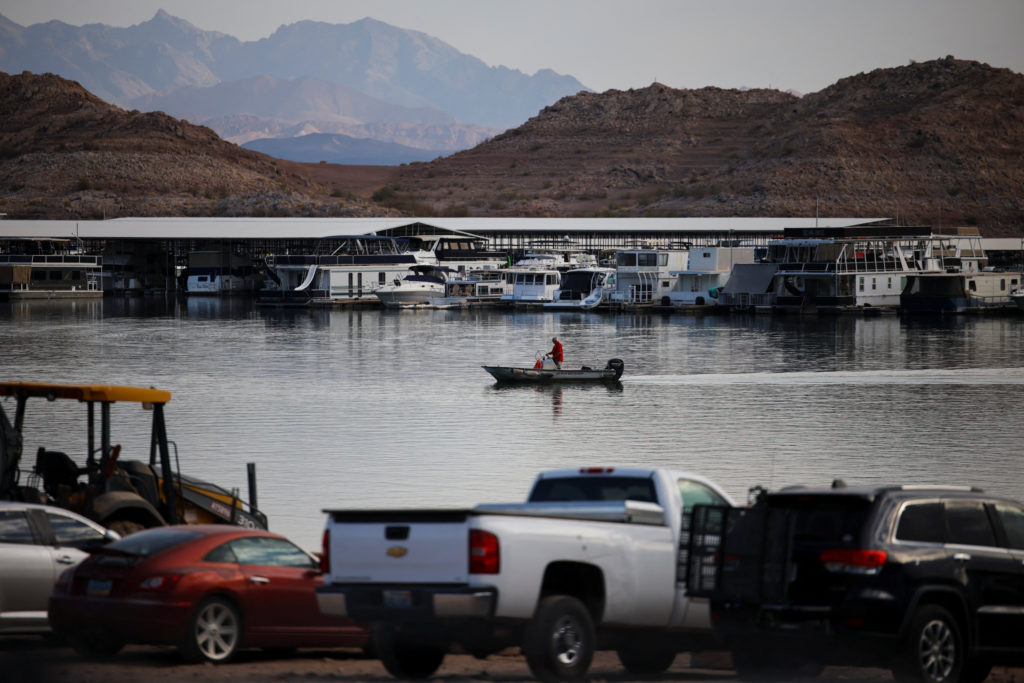
The U.S. Bureau of Reclamation has released a plan for Arizona, California, and Nevada to reduce their Colorado River water usage by a combined 1.25 million acre-feet annually over the next two years. The plan follows record-low water levels at the nation's two largest reservoirs, Lake Mead and Lake Powell, which serve as indicators for the health of a river system supporting 40 million people.
The Colorado River basin is currently experiencing a long-term drought, worsened by what researchers describe as a record snow drought that has limited the recharging of reservoirs, aquifers, and snowpacks. In addition to Mead and Powell, eight other federal reservoirs, including Elephant Butte in New Mexico and Green Mountain in Colorado, recently reached their lowest levels in at least 30 years.
In response to the planned reductions, Nevada filed a lawsuit this week against the Interior Department and the Bureau of Reclamation. The state alleges that the reductions—which could reach 70% of the Las Vegas region's allocation over the next decade—will prevent the area from meeting basic water needs. The Bureau of Reclamation stated on Thursday that it does not comment on active litigation.
The scale of the planned cuts is significant, totaling approximately 1.54 billion cubic meters of water annually from the Lower Basin states. For context, this volume is enough to fill more than 600,000 Olympic-sized swimming pools. Farmers in Yuma, Arizona, who produce 90% of North America’s winter leafy greens, report that while they may avoid immediate cuts due to high-priority rights, the uncertainty is preventing them from planting new acreage for long-term crops like citrus and dates, which take years to reach commercial production.
Knock-on effects extend to tribal lands and neighboring states. An alfalfa grower for the Colorado River Indian Tribes expressed concern regarding an aging irrigation system and the ability to finish current growing seasons if reservoir levels continue to fall. While Colorado, Utah, Wyoming, and New Mexico are not currently required to cut water, the Bureau of Reclamation has noted they may do so voluntarily. The federal plan remains subject to change based on environmental conditions, including the possibility of larger cuts.