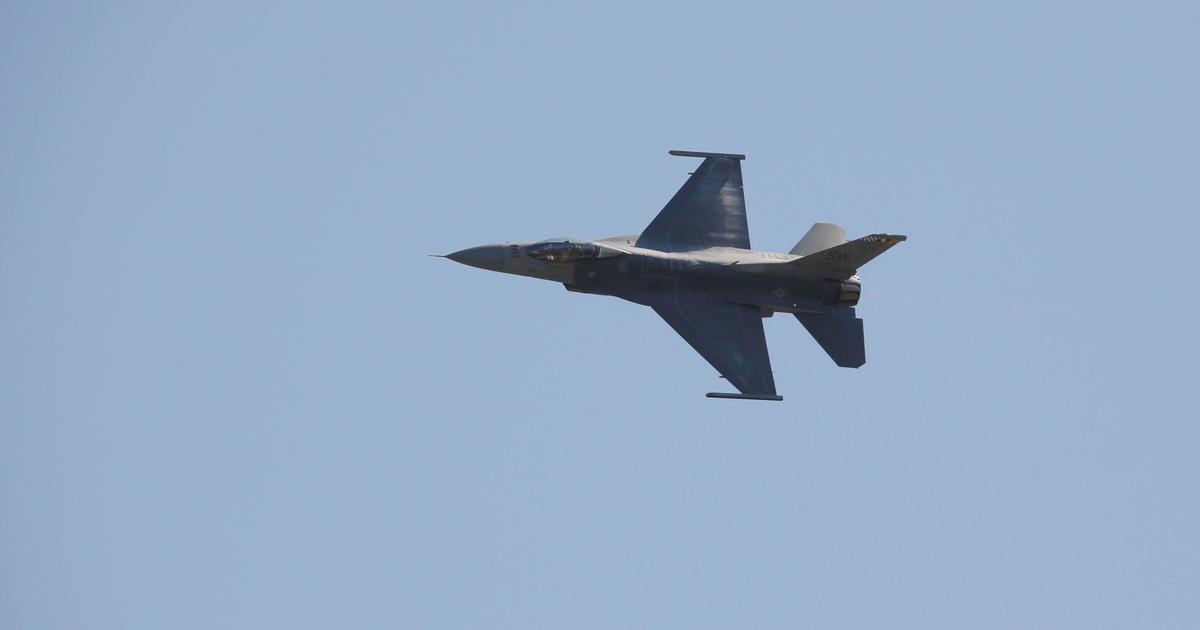
U.S. military officials reported that fighter jets intercepted a general aviation plane flying through restricted airspace over Cincinnati, Ohio, on a Saturday. The incident occurred while President Donald Trump was delivering a speech at a rally held at the Northern Kentucky University campus, located just south of Cincinnati.
The North American Aerospace Defense Command (NORAD) stated that F-16 fighter aircraft intercepted the plane at approximately 3 p.m. CT. According to the command, the military jets safely escorted the civilian aircraft out of the restricted area. While the military did not specify the reason for the flight restriction, the Federal Aviation Administration (FAA) typically issues Temporary Flight Restrictions (TFRs) for high-profile events attended by political figures.
Following the interception, Air Force officials issued a reminder on Sunday for pilots to review airspace restrictions through the FAA’s Notices to Airmen (NOTAMs) before flight. NORAD noted that pilots who enter restricted zones may be met by federal authorities upon landing for interviews or potential enforcement actions. The source did not report the identity of the pilot or any specific charges filed in this instance.
For the aviation community, a TFR violation can lead to a range of consequences from mandatory interviews with federal agents to the suspension of pilot licenses. The scale of these restrictions often covers several miles around a specific venue, meaning any pilot within that radius who has not cleared their flight plan through the FAA may face military interception. While the specific number of pilots affected by the Cincinnati TFR was not reported, the military documented multiple similar incidents across various states during recent months, including during the 2026 Patriot Games and the July World Cup final.
The day-to-day impact for pilots is a requirement for increased pre-flight planning and communication with air traffic control to avoid legal and safety risks. These interceptions establish a precedent of military response for any unauthorized entry into protected airspace. What happens next depends on the findings of federal authorities who meet the pilot upon landing; the military has not released further details regarding the outcome of the Cincinnati investigation.