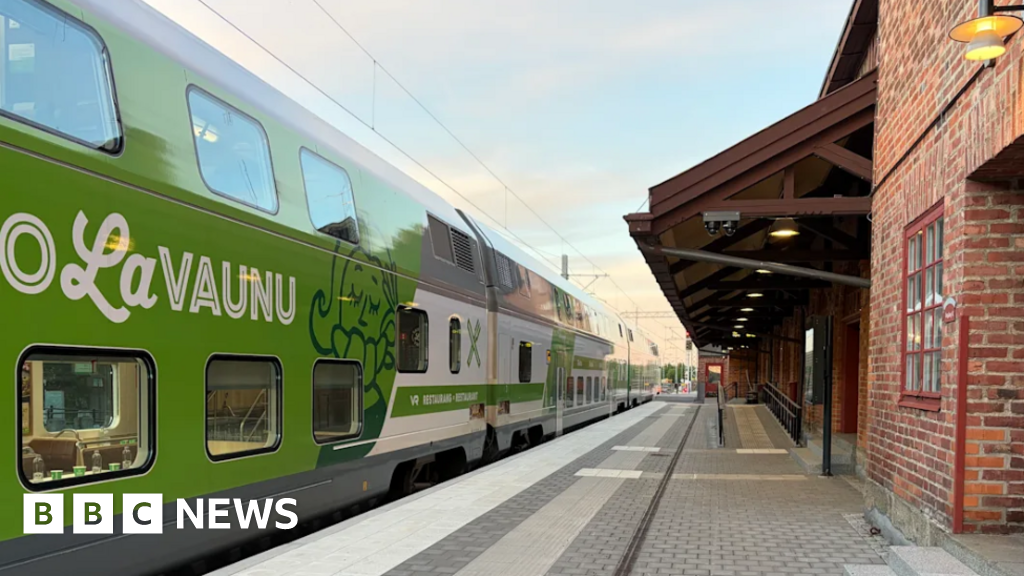
A new passenger rail service connecting Finland and Sweden began operations on Monday, restoring a direct cross-border link between the two Nordic nations for the first time in nearly 40 years. The inaugural double-decker train departed from the Finnish coastal city of Oulu at approximately 05:00 local time and traveled across the Torne River to Haparanda, Sweden.
The connection between Haparanda and Oulu had been suspended between the late 1980s and early 1990s due to low passenger figures and technical discrepancies in track gauges. Finland historically utilizes wider track widths identical to those in Russia, a legacy of its time as a Russian Grand Duchy, while the rest of Europe uses a narrower standard. Finland is currently in the process of updating its infrastructure to align with the European standard.
The new service operates twice daily and completes the 100-minute journey along Finland’s west coast to the Swedish border. While passengers must transfer to a different train at Haparanda station to continue traveling south into Sweden, the link creates a continuous rail path from Portugal’s Algarve region to Kolari, Finland's northernmost station.
The scale of the project involves two daily departures and a 100-minute transit time for the specific border-crossing segment. For a single traveler, this connection serves as the final link in a transcontinental journey that crosses multiple borders, though the source did not provide specific ticket pricing or the exact number of passengers expected to use the border crossing daily. People living in the border regions of Oulu and Haparanda will notice a direct change in transit options, moving from no rail connectivity to two scheduled options per day starting this week.
Beyond local transit, the Finnish transport minister stated the service reflects growing cooperation between Finland and Sweden. The infrastructure update also signals a shift in Finland’s logistical alignment away from Russian standards and toward the European rail network. Moving forward, the service is now active following Monday's inaugural run. The source did not list further deadlines for the ongoing track width updates or scheduled changes to the current twice-daily frequency.