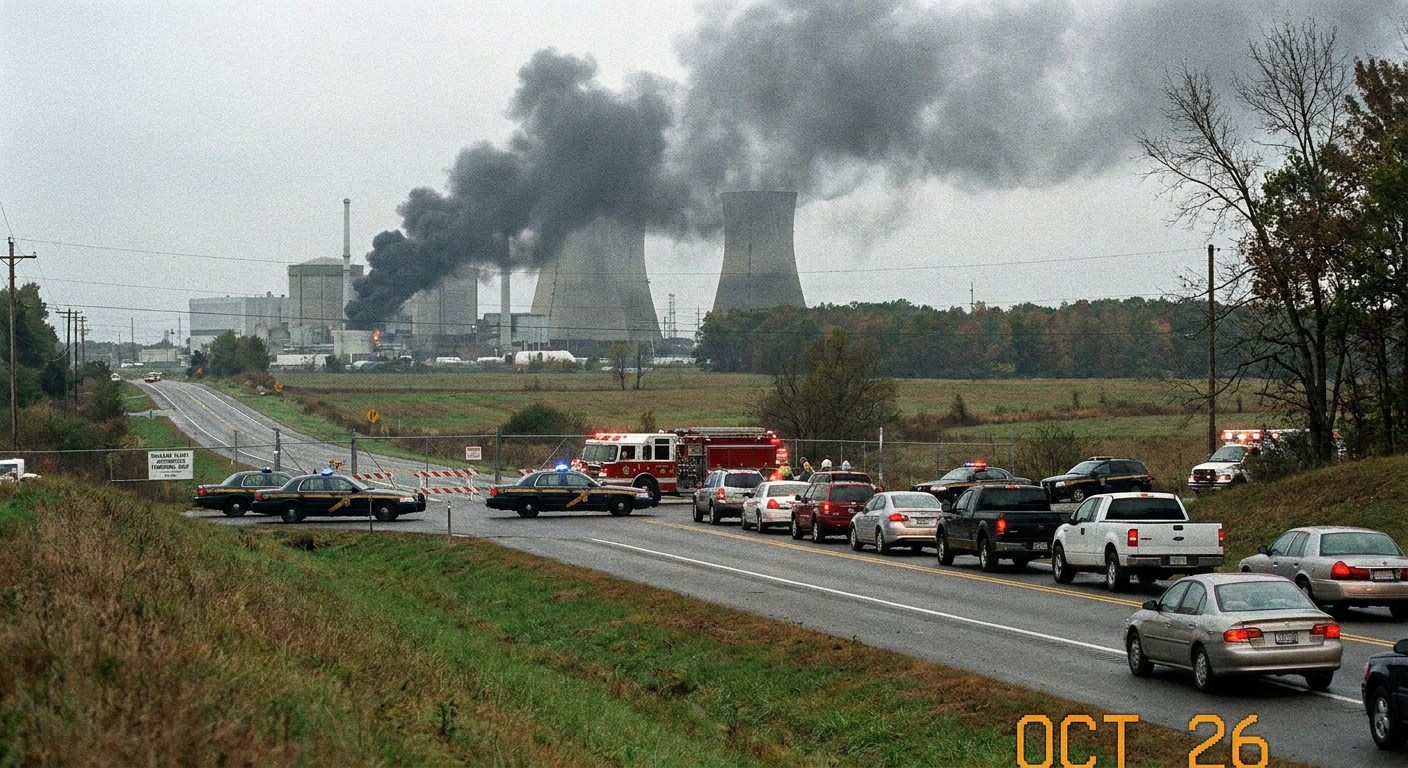
A fire at a South Carolina laboratory on a site that produces materials for U.S. nuclear weapons triggered an emergency response on Wednesday, October 28, 2026, leading to a temporary shutdown of facility entrances and restrictions on local transportation. Site officials reported that the fire was extinguished and no radiological contamination was detected outside of the facility. The emergency, which began in the late afternoon, was terminated at 9:45 p.m. that evening after all-clear notifications were issued.
The Savannah River Site, located near Aiken along the South Carolina and Georgia border, was established in the 1950s to produce materials for the U.S. nuclear weapons program. While the complex originally manufactured plutonium and tritium for the Cold War arsenal, the specific laboratory area where the fire occurred focuses primarily on research. The Department of Energy oversees the site, which is managed by private contractors including the Battelle Savannah River Alliance and Savannah River Nuclear Solutions, LLC.
The emergency was declared at 5:39 p.m. on October 28, prompting officials to restrict air, rail, and river traffic in the immediate vicinity. Employees working in affected areas who were not part of the emergency response were ordered to shelter in place as a precaution. By 9:18 p.m., the facility reported that there were no further operational emergencies or scheduled delays, allowing incoming shift workers to report for duty as usual.
The Savannah River Site employs more than 13,000 people, including both federal workers and private contractors. During the emergency, these employees faced immediate workplace changes, with non-essential personnel in impacted areas required to shelter in place and oncoming shifts temporarily delayed until entrance barriers were reopened. Rail and river service were suspended, and local airspace and facility access roads were closed.
The scale of the site’s operations includes a planned $23.5 billion expansion to reestablish production of plutonium pits, the explosive cores used in modern nuclear warheads. The facility continues to produce tritium and store both uranium and plutonium. While no contamination was found in this instance, officials notified state and local government agencies as part of the response.
The termination of the emergency on the night of October 28 allowed for the resumption of normal operations. Moving forward, the site remains under the oversight of the National Nuclear Security Administration as it continues construction on the new plutonium pit production facility. No specific dates for a formal investigation report into the cause of the fire were provided in initial statements.