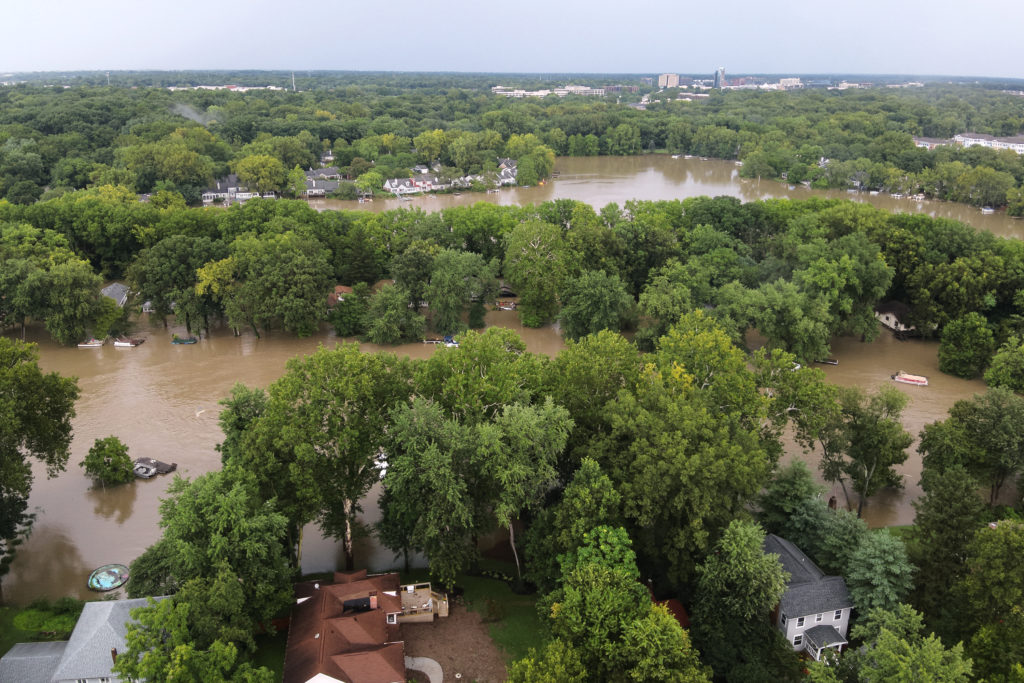
Authorities in Indiana reported Saturday that at least five people have died following a week of severe storms and flooding. First responders used boats to conduct rescues in Indianapolis as the White River rose, while more than a dozen counties issued local disaster declarations.
The fatalities recorded over the past week include a boy killed by a falling tree, a woman who drove into floodwaters, and a teenager who went missing Wednesday after jumping into a river. Gov. Mike Braun (R) stated Saturday that President Donald Trump intends to approve a request for federal resources to assist with response and recovery efforts.
In Indianapolis, Mayor Joe Hogsett said the city is facing its most significant flooding in more than 30 years. The Indianapolis Fire Department reported rescuing 95 people and 45 pets by late Saturday afternoon. Evacuations also took place in Delaware, Tipton, and Fayette counties as rivers reached record levels, including the White River, which crested at over 24 feet in Anderson and Noblesville.
The scale of the disaster is defined by rainfall exceeding 11 inches in some areas over a two-day period, causing river levels to surpass records set 113 years ago in 1913. Small-business owners and farmers are also impacted, with reports of saturated corn fields and flooded commons areas that typically host public events. For many residents, the impact includes a loss of utility services, as power has not yet been restored for some individuals following the initial wave of storms earlier in the week.
The activation of National Guard vehicles and the pending approval of federal resources indicate that the recovery process will involve multiple levels of government coordination. While floodwaters have begun to recede in areas north of Indianapolis, flash-flood warnings remained active through Saturday. The next steps for the state involve assessing the total damage to infrastructure, such as toppled power poles and damaged bridges, as the crest moves downstream toward the state capital.
The scale of the disaster is defined by rainfall exceeding 11 inches in some areas over a two-day period, causing river levels to surpass records set 113 years ago in 1913. Small-business owners and farmers are also impacted, with reports of saturated corn fields and flooded commons areas that typically host public events. For many residents, the impact includes a loss of utility services, as power has not yet been restored for some individuals following the initial wave of storms earlier in the week.
The activation of National Guard vehicles and the pending approval of federal resources indicate that the recovery process will involve multiple levels of government coordination. While floodwaters have begun to recede in areas north of Indianapolis, flash-flood warnings remained active through Saturday. The next steps for the state involve assessing the total damage to infrastructure, such as toppled power poles and damaged bridges, as the crest moves downstream toward the state capital.