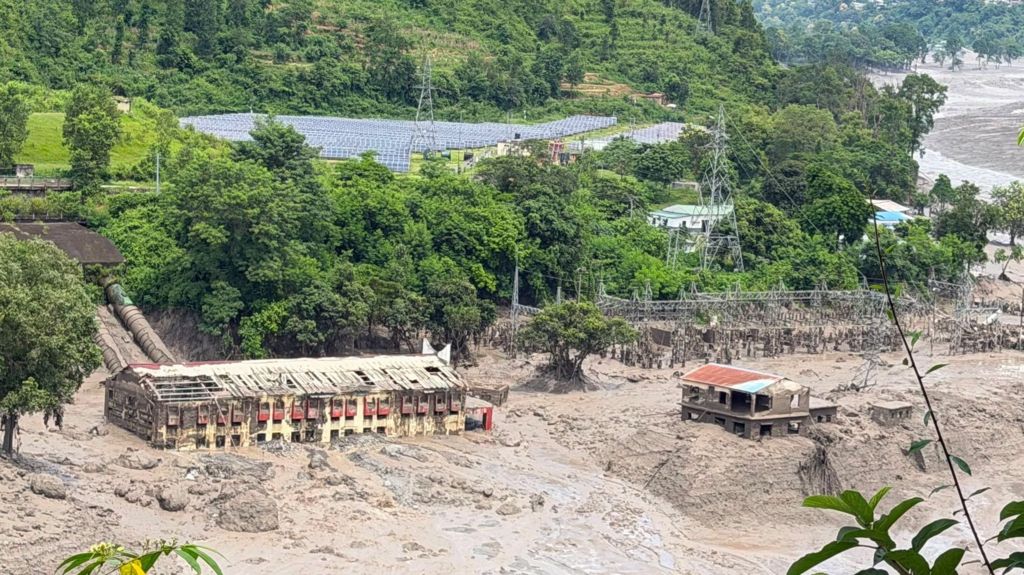
A massive flash flood in northern Nepal's Rasuwa district has washed away villages and damaged infrastructure, including a hydropower dam. Authorities reported early Wednesday that heavy casualties are feared as search and rescue operations begin in the region bordering Tibet.
The flood occurred along the Bhote Koshi river, which serves as a primary trading route between Nepal and China. Officials indicated the surge was likely caused by melting snow that entered the river system from the Tibetan side of the border.
Rasuwa Chief District Officer Narendra Pariyar stated that while officials expect severe damage, it is too early to provide a specific scale of the destruction. As of Wednesday morning, 12 people had been rescued, but 13 officers from the Armed Police Force were reported missing from two posts, and authorities have lost contact with dozens of other police personnel in the area.
Local business owners reported a lack of prior warning regarding the flood. Yee Liang, a Chinese businessman in Kathmandu, stated that his logistics company lost contact with seven container trucks and their Nepali employees due to a loss of signal in the affected zone. Prime Minister Balendra Shah announced via social media that he held an emergency meeting to coordinate medical teams, scouts, and the Red Cross.
For those living and working in northern Nepal, the immediate impact includes the destruction of homes and essential infrastructure, such as hydropower facilities, which may disrupt electricity and local services. Transportation and trade are also affected; the loss of contact with logistics staff and the potential damage to the main trading route with China could impact the flow of goods and income for small-business owners and transport workers. The National Disaster Management Authority has advised residents near river banks to take immediate precautions as the situation develops.
The event sets a precedent for increasing volatility in the region, following a similar glacier burst on the Chinese side of the border last year. This recurring threat may influence future disaster management policies and regional coordination between Nepal and China regarding Himalayan water systems. Search and rescue operations are currently ongoing, and authorities are working to restore communication signals to account for the missing personnel and assess the full extent of the casualties and property damage.