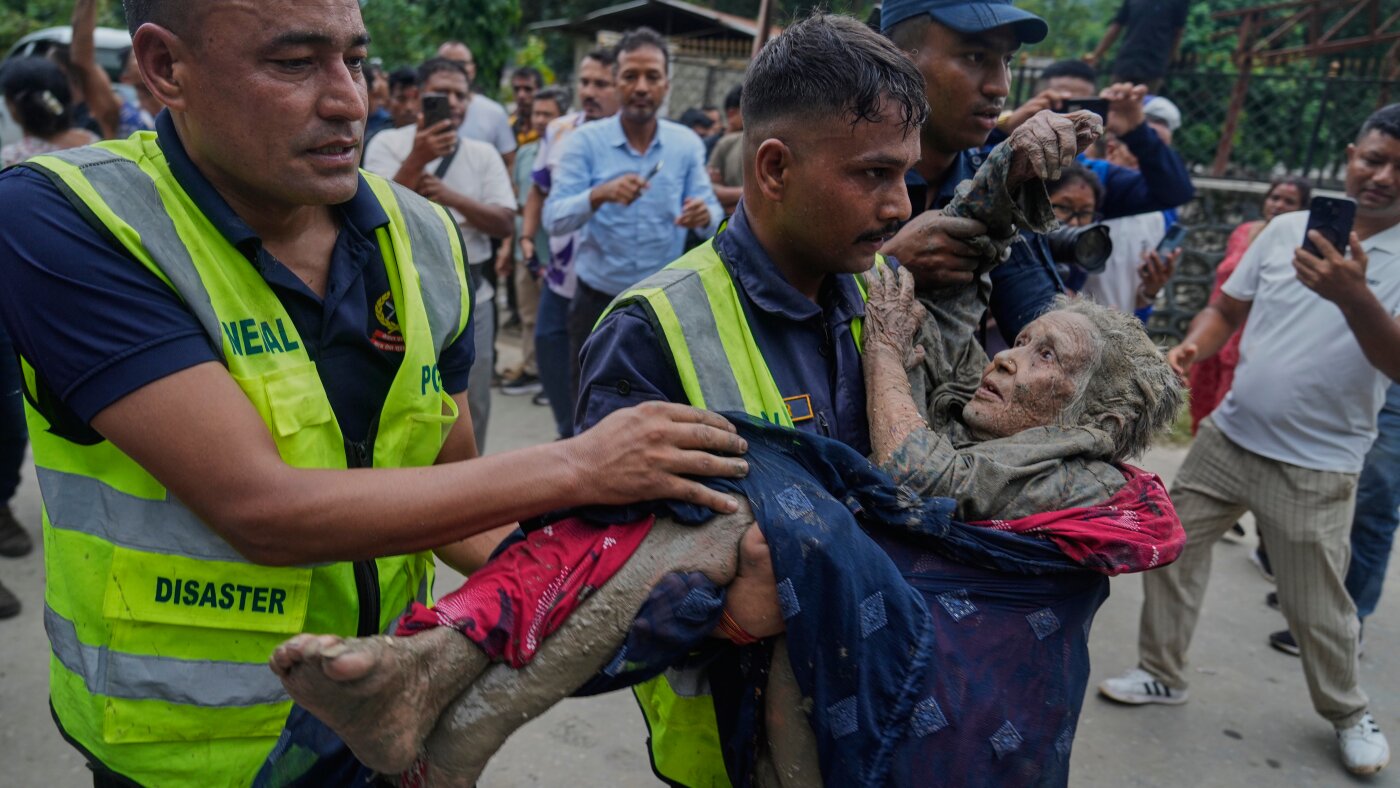
Massive flash floods and mudslides triggered by a glacial collapse along the border of Nepal and China have left at least 165 people dead and nearly 1,000 missing. Official reports from China’s Xinhua News Agency and police in Nepal on Thursday confirmed that the disaster, which occurred Wednesday, destroyed infrastructure and buried buildings under heavy mud and debris.
The event follows similar flooding in August 2023, when high temperatures caused a glacial lake to overflow in Tibet, resulting in nine deaths and the destruction of a border bridge. Researchers at the International Centre for Integrated Mountain Development (ICIMOD) reported that the Lhende Khola river system has now flooded twice in 14 months. The U.S. Geological Survey (USGS) initially recorded the event as a magnitude 4.4 earthquake but later corrected its analysis to a magnitude 5.2 glacial collapse, citing seismic data and satellite imagery.
Rescue operations are ongoing in Nepal’s Nuwakot district and across the border in Tibet. In Tibet, Chinese state broadcaster CCTV reported three confirmed deaths and 558 missing, including 260 foreigners. In Nepal, police reported at least 162 deaths and 403 missing. Among the missing in Nepal are 341 foreigners, including 133 Indian citizens on a pilgrimage to Mount Kailash, 47 Americans, 34 Australians, 33 Britons, and 24 Canadians.
The scale of the destruction includes the burial of market centers like Dhunge Bazaar and the submersion of multi-story buildings in the Nuwakot district. Beyond the immediate loss of life, the event highlights an increasing risk for the millions of people living in the Hindu Kush Himalaya region, where ICIMOD researchers found ice loss rates have doubled since 2000. This collapse demonstrates how unstable glacial systems can suddenly disrupt health care access, food supplies, and regional trade by destroying critical infrastructure such as roads and bridges.
What happens next depends on international coordination and weather conditions. Australia’s Foreign Minister Penny Wong stated that while Nepal has not yet made a formal request for aid, Australia is coordinating a response with the United Nations and the Red Cross. Malaysia’s Foreign Ministry is currently attempting to contact 55 citizens in Kathmandu whose status is unknown due to infrastructure disruptions. Search and recovery efforts continue as authorities work to confirm the safety of the hundreds of missing foreigners and local villagers.