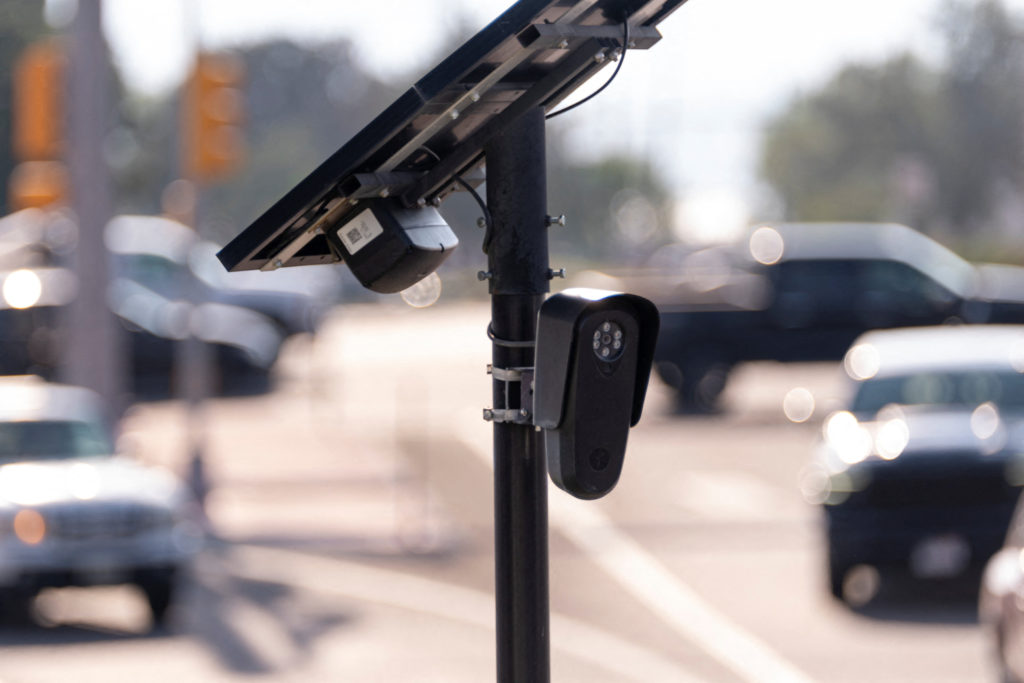
Candidates for public office across the United States are addressing the use of Flock Safety cameras, a network of artificial intelligence-powered devices that record vehicle license plates and characteristics. While law enforcement officials describe the technology as a tool for solving crimes, critics and several political candidates have raised concerns regarding privacy and warrantless mass surveillance.
License plate reader technology has existed for decades, but Atlanta-based Flock Safety, founded in 2017, has expanded its reach to approximately 6,000 communities across every state except Alaska. The recent political attention follows reports of officers misusing the data to stalk individuals and ongoing litigation regarding the constitutionality of the surveillance network.
In Pennsylvania, both Democratic Governor Josh Shapiro and his Republican opponent, Stacy Garrity, expressed support this week for a statewide ban on the cameras. In Wisconsin, Democratic gubernatorial nominee David Crowley said that as governor he would implement transparency and accountability laws to limit their use, while his Republican opponent, U.S. Rep. Tom Tiffany, proposed pausing state funding for the technology. Meanwhile, the administration of Florida Governor Ron DeSantis ordered the removal of automated license plate readers from state highway rights-of-way this week.
The push for regulation could change how local and state law enforcement agencies utilize their budgets and technology. For example, Rep. Tom Barrett (R-MI) is co-sponsoring legislation to ban federal agencies from using this technology and to prevent state and local governments from using federal funds for its purchase. If such measures pass, local police departments currently relying on the system may face the loss of a tool they describe as "invaluable," potentially impacting their investigative methods for theft and missing persons cases.
The outcome of these midterm elections may determine the legal standing of private-public surveillance partnerships in several states. Voters in Rhode Island saw Governor Dan McKee pause new installations ahead of the Sept. 9 primary. President Donald Trump stated his administration is currently studying the issue. As candidates in states like Texas and Michigan continue to make the cameras a campaign issue, the precedent set by potential bans could affect the relationship between technology companies and government surveillance.