The Plain Record

Neutral daily news — clear headlines, complete facts.

National

Florida Growers Plant Gene-Edited Citrus Trees to Combat Bacterial Disease

Florida citrus growers are testing a gene-edited rootstock approved by the EPA to combat citrus greening, a disease that has reduced state production by 95% since the 1990s.

By The Plain RecordUpdated September 19, 2026 at 12:36 PM EDT
Published September 17, 2026 at 4:12 AM EDT

The short answer

Florida citrus growers are testing a gene-edited rootstock approved by the EPA to combat citrus greening, a disease that has reduced state production by 95% since the 1990s.

Updates (2)

  • Update — September 19, 2026 at 12:36 PM EDT: Florida growers are testing a gene-edited rootstock developed by Soilcea to protect citrus trees from a bacterial disease that has reduced state production by 95%.
  • Update — September 18, 2026 at 10:42 AM EDT: Florida citrus growers are testing a CRISPR gene-edited rootstock, CarriCea T1, to combat citrus greening disease that has reduced state production by roughly 95% since the late 1990s.
Florida Growers Plant Gene-Edited Citrus Trees to Combat Bacterial Disease

The Facts

Who
Florida citrus growers, Soilcea (biotech company), and the Environmental Protection Agency (EPA).
What
Florida citrus growers are planting gene-edited trees to fight citrus greening.
When
The EPA approval occurred this spring, and plantings are ongoing.
Where
Florida, specifically Tampa and Thonotosassa.
Why
Citrus greening has reduced Florida's citrus production from 300 million boxes to 15 million boxes per year, and gene-editing is being tested as a way to save the industry.

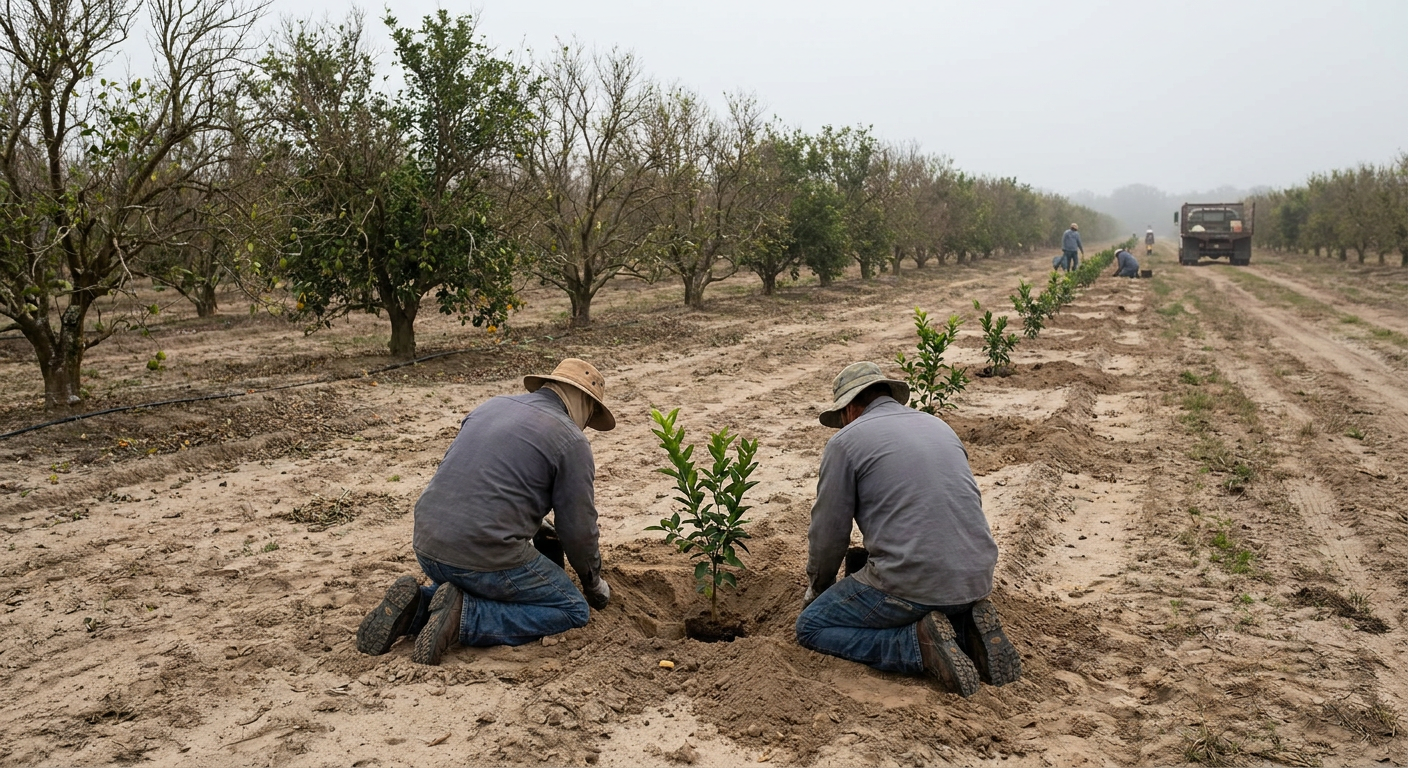
Florida citrus growers have begun planting trees utilizing gene-editing technology designed to resist citrus greening, a bacterial infection that has affected the state's citrus industry for approximately two decades. The Environmental Protection Agency (EPA) recently approved a gene-edited rootstock, known as CarriCea T1, which is intended to maintain a tree's immune system to combat the bacteria.

Citrus greening, which first appeared in Florida in 2005, is spread by the Asian citrus psyllid, a small winged insect. The infection causes trees to produce bitter, discolored fruit and typically leads to the death of the tree within a few years. Matt Joyner, CEO of Florida Citrus Mutual, stated that statewide production has declined from approximately 300 million boxes of fruit per season in the late 1990s to just over 15 million boxes in the most recent season.

The gene-edited rootstock was developed by the Tampa-based company Soilcea using CRISPR technology. According to Soilcea’s Yianni Lagos, the bacteria often kills half of a tree's root system before physical symptoms appear on the leaves. By focusing on the rootstock, the company aims to enable the trees to fight the infection naturally, potentially reducing the need for chemical insecticides.

While early test plantings show that trees with the gene-edited rootstock appear taller and greener than those without it, the final results remain unconfirmed. Lagos noted that it takes several years for fruit to grow, and researchers must ensure the resulting citrus meets flavor standards. He stated that while current data is positive, the long-term performance of the trees will not be fully known until they reach 10 years of age.

The concrete change for growers currently planting these thousands of trees is a shift from reactive measures, such as protective tents and chemical sprays, to a biological defense built into the tree's DNA. If the technology performs as expected, it could lead to a reduction in insecticide costs and a potential stabilization of fruit supply. However, because citrus trees take years to mature, growers will not know if the fruit is commercially viable or if the trees will survive a full decade until the early 2030s.

The use of CRISPR in this manner sets a precedent for how gene-editing may be used to preserve agricultural sectors facing extinction from incurable diseases. The success or failure of CarriCea T1 will likely influence future EPA approvals for other genetically modified crops. For now, the process remains in a long-term testing phase as growers monitor the growth and flavor profiles of the fruit produced by these newly planted trees.

Timeline of what happened

Key dates and decisions, in the order they occurred.

  1. 1895

    English family enters citrus business

  2. 2005

    Citrus greening arrives in Florida

  3. 2012

    Greening first spotted in English family groves

  4. 2015

    English family citrus business closes due to greening

  5. 2026

    EPA approves CarriCea T1 gene-edited rootstock

Summaries are written by The Plain Record to state the facts of a story plainly and without political slant. Drafted with AI assistance and checked against the source record before publication. See how we report, or report a correction.

← Back to the front page

Questions readers ask

What happened: Florida Growers Plant Gene-Edited Citrus Trees to Combat Bacterial Disease?

Florida citrus growers have begun planting trees utilizing gene-editing technology designed to resist citrus greening, a bacterial infection that has affected the state's citrus industry for approximately two decades. The Environmental Protection Agency (EPA) recently approved a gene-edited rootstock, known as CarriCea T1, which is intended to maintain a tree's immune system to combat the bacteria.

Who is involved?

Florida citrus growers, Soilcea (biotech company), and the Environmental Protection Agency (EPA).

When did this happen?

The EPA approval occurred this spring, and plantings are ongoing.

Where did this happen?

Florida, specifically Tampa and Thonotosassa.

Why does this matter?

Citrus greening has reduced Florida's citrus production from 300 million boxes to 15 million boxes per year, and gene-editing is being tested as a way to save the industry.