The Plain Record

Neutral daily news — clear headlines, complete facts.

National

Florida Man Enters Remission Following Clinical Trial for High-Risk Leukemia

Ryan Goepel, 49, entered remission from adverse-risk acute myeloid leukemia after participating in a clinical trial using treatments typically reserved for older patients.

Published October 24, 2026 at 8:36 PM EDT

The short answer

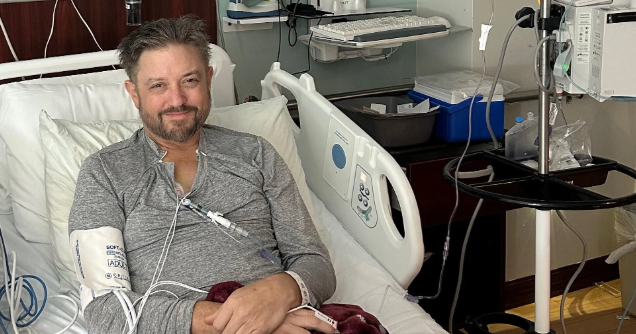
Ryan Goepel, 49, entered remission from adverse-risk acute myeloid leukemia after participating in a clinical trial using treatments typically reserved for older patients. A Florida man diagnosed with advanced acute myeloid leukemia (AML) entered remission following a clinical trial that tested non-traditional treatments for younger patients. Ryan Goepel, then 49, sought medical attention in September 2024 for persistent knee pain he initially attributed to gout.

Florida Man Enters Remission Following Clinical Trial for High-Risk Leukemia

The Facts

Who
Ryan Goepel and Dr. Justin Watts of Sylvester Comprehensive Cancer Center
What
A clinical trial for adverse-risk acute myeloid leukemia resulted in remission for Ryan Goepel and 18 other participants.
When
September 2024 through September 2026
Where
Miami, Florida
Why
The trial tested whether medications typically used for older leukemia patients could effectively treat younger patients with specific genetic cancer profiles.

A Florida man diagnosed with advanced acute myeloid leukemia (AML) entered remission following a clinical trial that tested non-traditional treatments for younger patients. Ryan Goepel, then 49, sought medical attention in September 2024 for persistent knee pain he initially attributed to gout. Blood tests and a subsequent biopsy revealed his organs were failing due to adverse-risk AML, a form of blood cancer with a genetic makeup typically found in patients in their 70s or 80s.

Doctors at Sylvester Comprehensive Cancer Center in Miami informed Goepel that standard chemotherapy would likely be ineffective and could potentially be fatal within weeks due to his weakened state. Dr. Justin Watts, chief of the leukemia section at the center, instead enrolled Goepel in a clinical trial investigating two medications usually reserved for older patients. The trial examined whether these drugs could effectively treat younger patients whose cancer possessed specific genetic characteristics.

Goepel began a 28-day regimen involving a daily pill and one week of daily infusions. According to data published in the journal Haematologica in September, 25 out of 36 patients in the trial saw their cancer shrink or disappear, with 19 achieving complete remission. Goepel reached remission within two weeks of starting treatment. Following the trial, he received a bone marrow transplant from one of his sisters in November 2024 to rebuild his immune system.

For the individuals affected, such as parents like Goepel, this shift in treatment protocol may mean the difference between entering hospice care and achieving long-term remission. Dr. Mihir A. Shukla of NYU Langone’s Perlmutter Cancer Center noted that the results are prompting questions about whether decades-old standard approaches to AML should be changed. The data indicates that for specific genetic profiles, a less toxic regimen of pills and infusions may be more effective than the aggressive chemotherapy traditionally administered to younger patients.

The success of the trial sets a precedent for personalized genetic matching in leukemia treatment rather than relying solely on patient age. Goepel, who has remained cancer-free for two years, married in November 2025. Further research into treatment options for adverse-risk AML is currently underway. Goepel continues to meet regularly with his medical team for monitoring, while other institutions, including Boston Medical Center, continue separate research into gout through the TRUST trial, which aims to enroll 650 adult patients to compare symptom-based versus uric-acid-level-based treatments.

Timeline of what happened

Key dates and decisions, in the order they occurred.

  1. September 2024

    Goepel diagnosed with acute myeloid leukemia after seeking treatment for knee pain.

  2. September 2024

    Goepel enters remission two weeks after starting clinical trial treatment.

  3. November 2024

    Goepel undergoes bone marrow transplant.

  4. November 2025

    Goepel weds on the one-year anniversary of his remission.

Summaries are written by The Plain Record to state the facts of a story plainly and without political slant. Drafted with AI assistance and checked against the source record before publication. See how we report, or report a correction.

← Back to the front page

Questions readers ask

What happened: Florida Man Enters Remission Following Clinical Trial for High-Risk Leukemia?

A clinical trial for adverse-risk acute myeloid leukemia resulted in remission for Ryan Goepel and 18 other participants.

Who is involved?

Ryan Goepel and Dr. Justin Watts of Sylvester Comprehensive Cancer Center

When did this happen?

September 2024 through September 2026

Where did this happen?

Miami, Florida

Why does this matter?

The trial tested whether medications typically used for older leukemia patients could effectively treat younger patients with specific genetic cancer profiles.