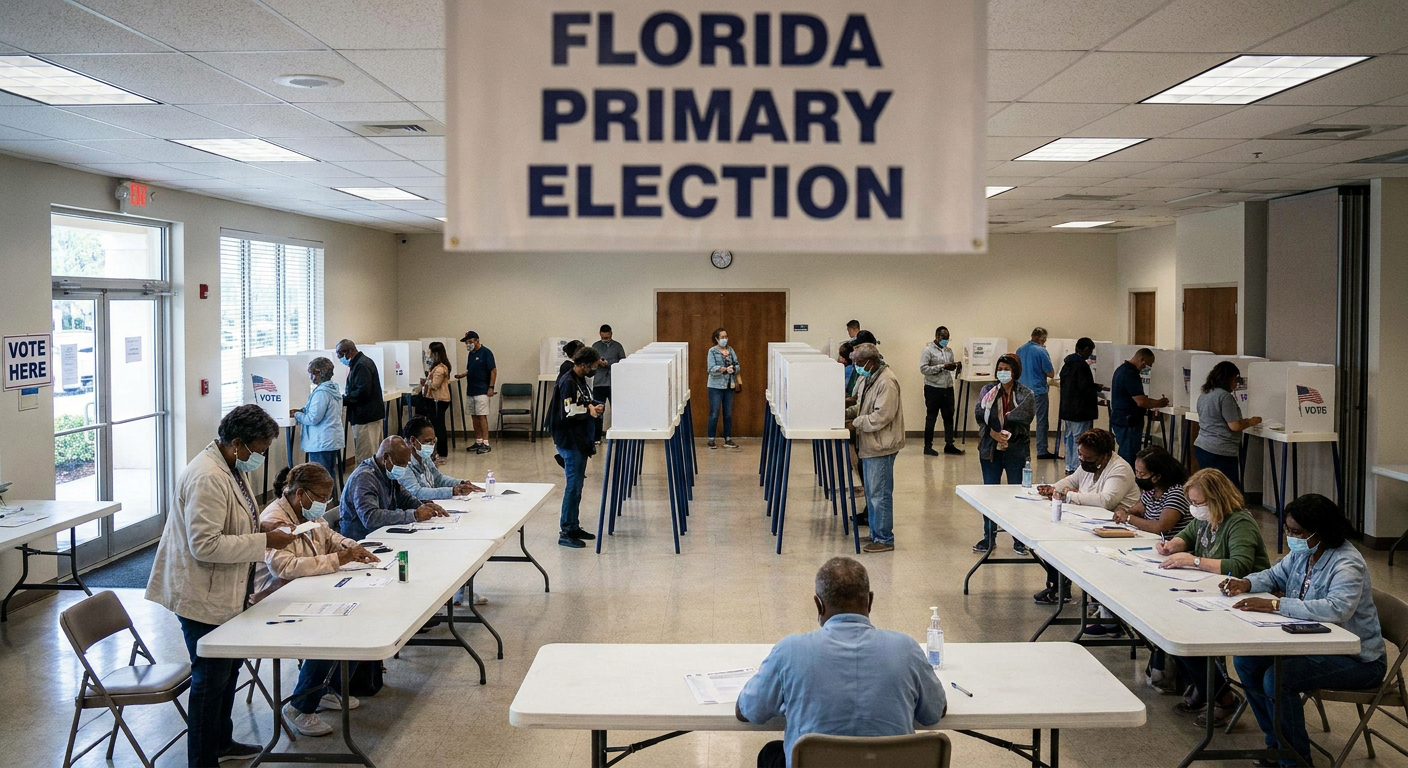
Florida voters headed to the polls Tuesday to select party nominees for high-profile statewide and federal offices. The primary elections include contests for governor, the U.S. Senate, and several seats in the U.S. House of Representatives.
The 2026 primary cycle follows a period of redistricting in the state. The redrawing of electoral maps often alters the boundaries of congressional districts, which can influence the demographic makeup of a constituency and the competitive landscape for candidates seeking office.
The elections featured on the ballot will determine which candidates represent the Republican and Democratic parties in the general election. Key races include the challenge for the governor’s mansion and a seat in the U.S. Senate, alongside various House contests shaped by the new district lines.
For Florida residents, the immediate change is the narrowing of the field for the general election. Those who receive their party’s nomination will move on to compete for roles that oversee state budgets, social services, and federal legislation. The redistricting process means some residents may find themselves in new districts, represented by different candidates than in previous cycles, which can change their direct point of contact for constituent services and federal advocacy.
The results of these primaries also set the stage for the general election, where the balance of power in both the Florida state capital and the U.S. Congress is at stake. National political organizations and donors often use primary results to determine where to allocate financial resources for the fall campaigns. The final winners of these races will be decided during the general election on November 3, 2026.