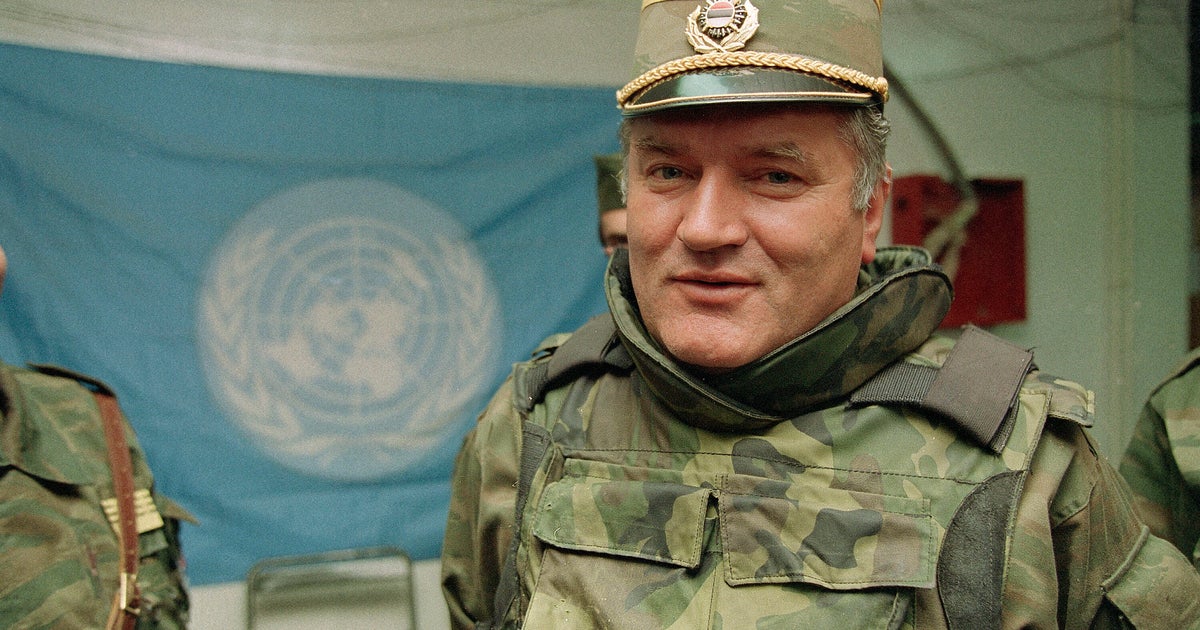
Ratko Mladic, the former Bosnian Serb general convicted of genocide for his role in the 1990s Bosnian War, died at age 84 in a United Nations prison hospital in The Hague, Netherlands. Serbian state television (RTS) and Bosnian Serb television first reported the death, which was later confirmed to the Associated Press by an anonymous family member. U.N. court officials stated they could not immediately confirm the reports, though Mladic's son, Darko Mladic, was reported to be traveling to The Hague.
Mladic served as the commander of Bosnian Serb troops during the 1992-1995 conflict following the disintegration of Yugoslavia. In 2017, the International Criminal Tribunal for the Former Yugoslavia (ICTY) sentenced him to life in prison for genocide and war crimes. The court found him responsible for the 1995 Srebrenica massacre, where approximately 8,000 Muslim men and boys were killed, and the 43-month siege of Sarajevo.
The general spent 16 years as a fugitive before his arrest in May 2011 at a relative's house near Belgrade, Serbia. During his trial, Mladic remained defiant, at one point shouting at judges that their findings were "pure lies." His legal team had recently requested his release on humanitarian grounds, citing an "advanced, irreversible medical decline" following multiple strokes believed to have occurred while he was in hiding.
The scale of the conflict Mladic overseen involved the deaths of at least 11,000 people in Sarajevo alone, including 1,500 children, during a three-and-a-half-year siege. The legal proceedings against him and political leader Radovan Karadzic, who received a 40-year sentence in 2016, established a detailed record of the concentration camps, systematic rapes, and mass graves utilized during the war. These records serve as a primary historical and legal resource for the region's post-war transition and for international law regarding the responsibility of military commanders.
The conclusion of Mladic's life also closes a chapter for the U.N. tribunal in The Hague, which saw three of its most high-profile defendants—Mladic, Karadzic, and former Serbian President Slobodan Milosevic—either convicted or die in custody. While Mladic's death ends his life sentence, the historical and legal precedents set during his 2011-2017 trial continue to influence international human rights litigation. No further court dates or appeals are pending following his death.