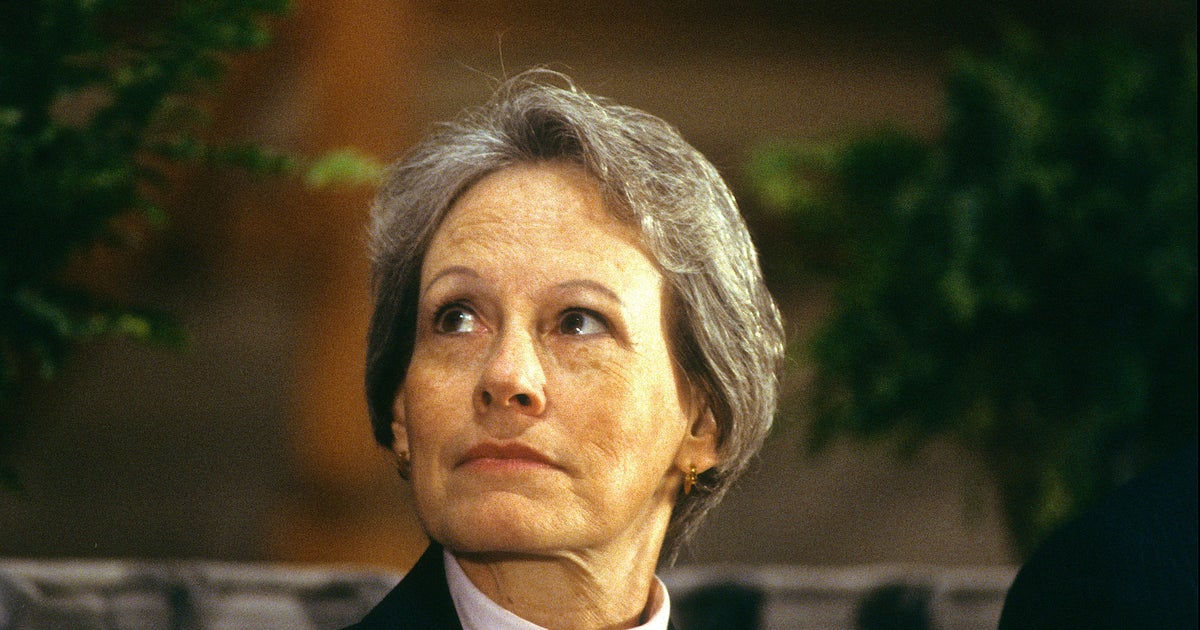
Former U.S. Sen. Nancy Kassebaum Baker of Kansas, the first woman elected to the U.S. Senate without having previously followed a spouse into office, died Friday at the age of 94. Her son, Bill Kassebaum, confirmed the news on Saturday, describing his mother as an independent voice who prioritized the interests of her state and country.
Kassebaum Baker was the daughter of former Kansas Governor Alf Landon, the 1936 Republican presidential nominee. She earned degrees from the University of Kansas and the University of Michigan before serving on a local school board and working as a Senate staffer. In 1978, she won a nine-candidate Republican primary and later the general election with 54% of the vote, beginning a three-term tenure in the Senate.
During her time in Washington, Kassebaum Baker was known for a moderate political approach that occasionally put her at odds with her party. She co-authored a 1996 health insurance law with Sen. Ted Kennedy (D-MA) and chaired the Labor and Human Resources panel. She also supported a ban on assault weapons during the Clinton administration, a move she said generated the most critical mail of her career.
Following her retirement from the Senate in 1997, she married former Senate Majority Leader Howard Baker (R-TN) in December 1996. The union marked the first time two former senators had married. She later served on a campaign finance reform commission and accompanied her husband to Japan when he was appointed ambassador in 2001. In her later years, she endorsed several Democratic candidates for office in Kansas and called for the impeachment of Donald Trump following the 2021 attack on the U.S. Capitol.
Voters and policy observers would notice the impact of her legislative work through the Kassebaum-Kennedy health insurance law, which addressed how Americans maintain coverage. Her political shift in later years, including the endorsement of Democratic Governor Laura Kelly in 2022 over a former staffer, Derek Schmidt, highlighted a widening gap between her moderate platform and the evolving platform of the modern Republican Party. This transition influenced the political landscape in Kansas, demonstrating how a traditional GOP figure could impact contemporary elections by crossing party lines.
The death of Kassebaum Baker marks the end of a political lineage that stretched back to the 1930s. Her son noted that her legacy was defined by a willingness to discuss stances openly with constituents, even those who disagreed with her. While no specific funeral dates or public memorials were cited by the family in the initial announcement, her passing concludes a public service career that spanned local school boards, the U.S. Senate, and international diplomatic assignments.