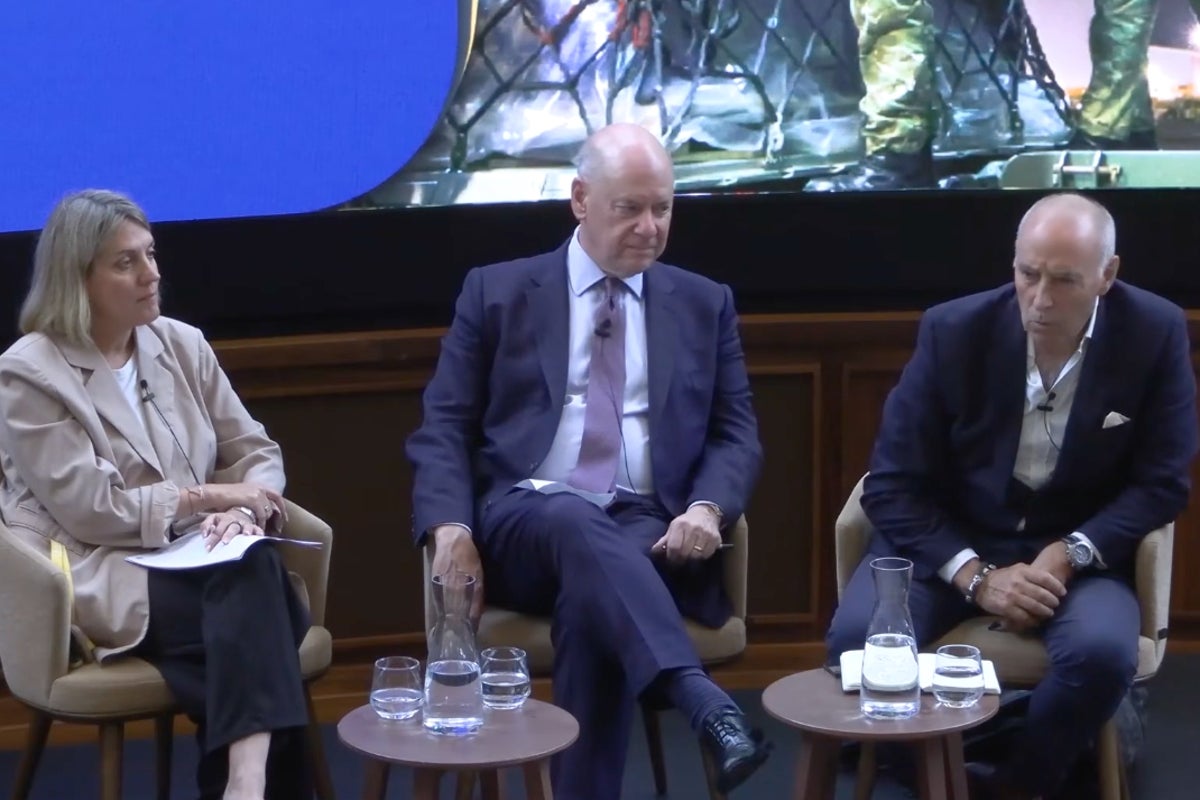
Lord Jonathan Evans, the former director general of MI5, stated on Friday, October 16, that Prime Minister Andy Burnham should not use international aid cuts to finance increased military spending. Speaking at an event hosted by the Royal United Services Institute (RUSI) in London, Lord Evans advised the government to view national security and international development as a "holistic issue" rather than competing priorities.
The remarks follow a decision made last year to reduce the United Kingdom's international aid budget. The spending target is set to drop from 0.5% of Gross National Income (GNI) to 0.3% over the coming years. This reduction was intended to reallocate funds toward the nation's defense budget.
Lord Evans, who led the UK's domestic intelligence agency from 2007 to 2013, argued that defense capabilities depend on a stable global environment and the ability to build international alliances. He specifically criticized reductions in the Integrated Security Fund (ISF), a program used for local conflict prevention. Funding for the aid-powered portion of the ISF is scheduled to decrease from £343 million in 2024-25 to £194 million in 2026-27.
Describing the cuts to conflict prevention as a "false economy," Lord Evans stated that early intervention is more cost-effective than responding to crises after they emerge. He noted that regions with the highest levels of poverty and lack of development, such as Sudan and Syria, frequently overlap with active conflict zones. He suggested that focusing resources on prevention would yield a "better effect" than reactive spending.
The concrete day-to-day change will be felt by local organizations and international programs that rely on the ISF to mediate disputes and prevent violence before it escalates. Rather than seeing UK-funded peace-building initiatives in their communities, residents in volatile regions may instead see a shift toward reactive humanitarian aid or military engagement once a conflict has already begun. Lord Evans argued that the long-term impact for the UK taxpayer could be "bigger problems to sort out later," potentially leading to higher costs associated with refugee crises, regional instability, and more expensive military deployments.
The knock-on effects include a potential weakening of the UK’s ability to maintain a "stable environment" and build allies through non-military means. By reducing the aid-to-GNI ratio to 0.3%, the UK sets a precedent of prioritizing direct military funding over the traditional 0.7% or 0.5% international benchmarks. What happens next depends on the implementation of the 2026-27 budget cycle, when the lower funding level of £194 million for the ISF is scheduled to take full effect. No specific parliamentary votes or court dates were reported regarding a reversal of these planned reductions.