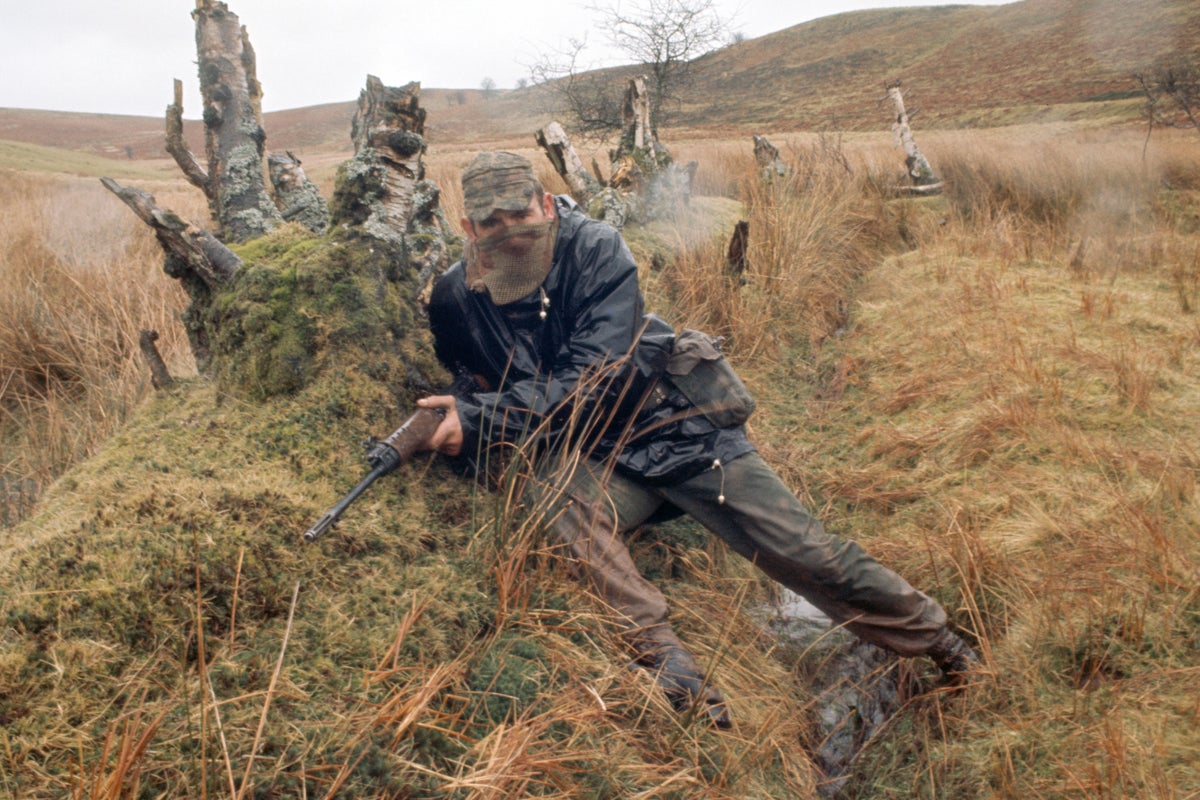
A former member of a covert British Army surveillance unit, identified by the pseudonym "Blue," has publicly detailed a 1978 operation in Northern Ireland that resulted in a fatal shootout with the Irish Republican Army (IRA). In an account provided to the podcast *SAS: The Shadow War*, the veteran described the events of March 17, 1978, which led to the death of his partner and the eventual capture of one of the region's most wanted gunmen.
At the time, Blue was a 22-year-old soldier serving with 14 Intelligence Company, a clandestine unit known as "the Det." He and Lance Corporal David Jones were conducting a "night standing OP"—a temporary, covert observation position—near a farm in South Derry. Their mission was to track an associate of Francis "Frankie" Hughes, a prominent IRA gunman, in hopes that the associate would lead them to Hughes.
During the surveillance, two armed men dressed in military-style clothing approached the soldiers' position. Blue stated that he initially mistook the men for British security forces. When the figures reached within 12 feet, Blue identified himself by whispering, "Stop. Security forces." The men then opened fire. Blue was shot three times, sustaining injuries to his kidney, colon, and spine. Jones was also shot in the abdomen and later died from his wounds at the age of 23.
Blue returned fire, emptying a 32-round magazine and wounding both attackers. Despite his injuries, Blue managed to reconnect a damaged radio to call for backup. When a single reinforcement arrived, Blue directed the operative to treat Jones first. One of the gunmen, Francis Hughes, was discovered the following morning approximately 500 yards away with gunshot wounds. Hughes was subsequently convicted of Jones’s murder and the attempted murder of Blue; he died in 1981 while on hunger strike in prison.
The scale of the reported incident involves two British undercover operators and two IRA members in a rural engagement. The human cost detailed includes the death of Lance Corporal Jones, who was scheduled to be married the week following the incident, and injuries to Blue, who lost a kidney and suffered spinal proximity damage. The account also confirms the capture of Francis Hughes, a figure in the IRA who eventually died after 59 days on hunger strike.
The veteran's testimony highlights the risks faced by undercover personnel, specifically the decisions regarding whether to withdraw or maintain cover. The revelation that the second wounded gunman's blood trail was followed to the home of a local nurse—who, by coincidence, was also treating the wounded British soldiers—illustrates the environment of the era. No further legal proceedings or official government responses to this specific testimony were reported.