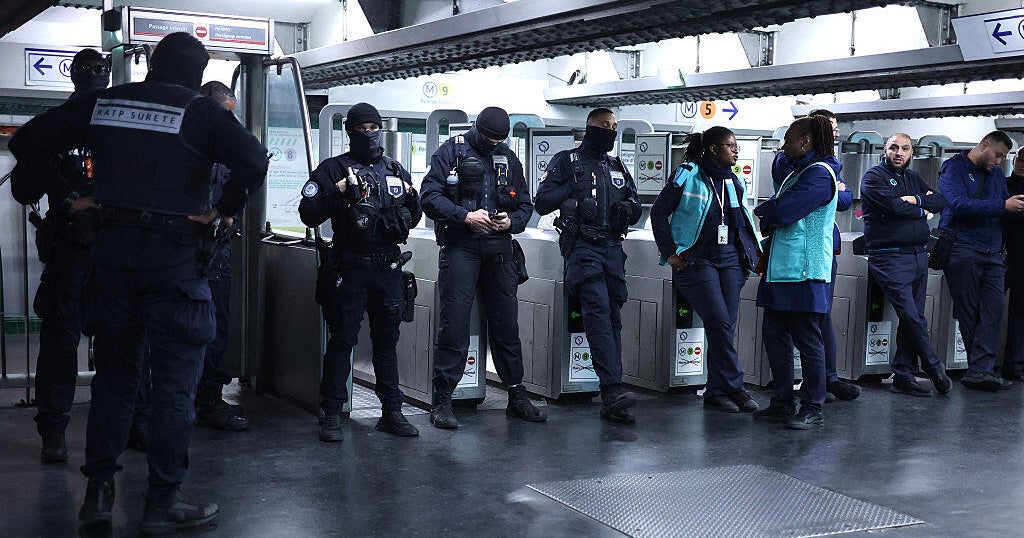
French authorities have extended overnight curfews and increased police presence across several cities following a weekend of demonstrations that led to property damage and looting. Prime Minister Sébastien Lecornu announced Tuesday that a "massive" police deployment is planned for October 24, following an admission by Interior Minister Laurent Nuñez that authorities had lost control in some areas during Saturday's protests.
The unrest began in mid-September with high school students and teachers in Paris suburbs protesting classroom overcrowding, deteriorating buildings, and teacher shortages. The movement has since expanded to include trade unions and "Yellow Vest" activists, who are citing rising living costs and high fuel prices as primary grievances.
Justice Minister Gérald Darmanin reported that more than 2,500 people were in police custody by Monday evening. The weekend violence included the burning of a historic town hall in Limoges and the looting of thousands of businesses. In response, President Emmanuel Macron stated the government would address protesters' demands for school reform while punishing those responsible for criminal acts, whom he identified as radical far-left groups and criminals.
The unrest affects residents and commuters in major urban centers like Paris and Lyon, where movement is now restricted by overnight curfews in areas such as the Place de la République and the Les Halles shopping district. Students and teachers continue to face issues of overcrowded classrooms and staffing shortages, though the Ministry of National Education has authorized hiring several hundred additional staff and deploying 3,000 substitute teachers to high-need schools.
The economic context includes France’s national debt, which reached nearly 3.6 trillion euros (119% of economic output) at the end of June. The government is currently attempting to reduce the deficit from a projected 5.4% this year to 5.0% by 2027. Interest payments on national debt are projected to rise by 12 billion euros next year, reaching a total of 91.2 billion euros.
Politically, the government lacks a majority in the French parliament, which has complicated the passage of budgets. This legislative difficulty persists as the country prepares for presidential elections in April 2027 to choose a successor to President Macron, who is term-limited. The next major event is a scheduled demonstration on October 24.