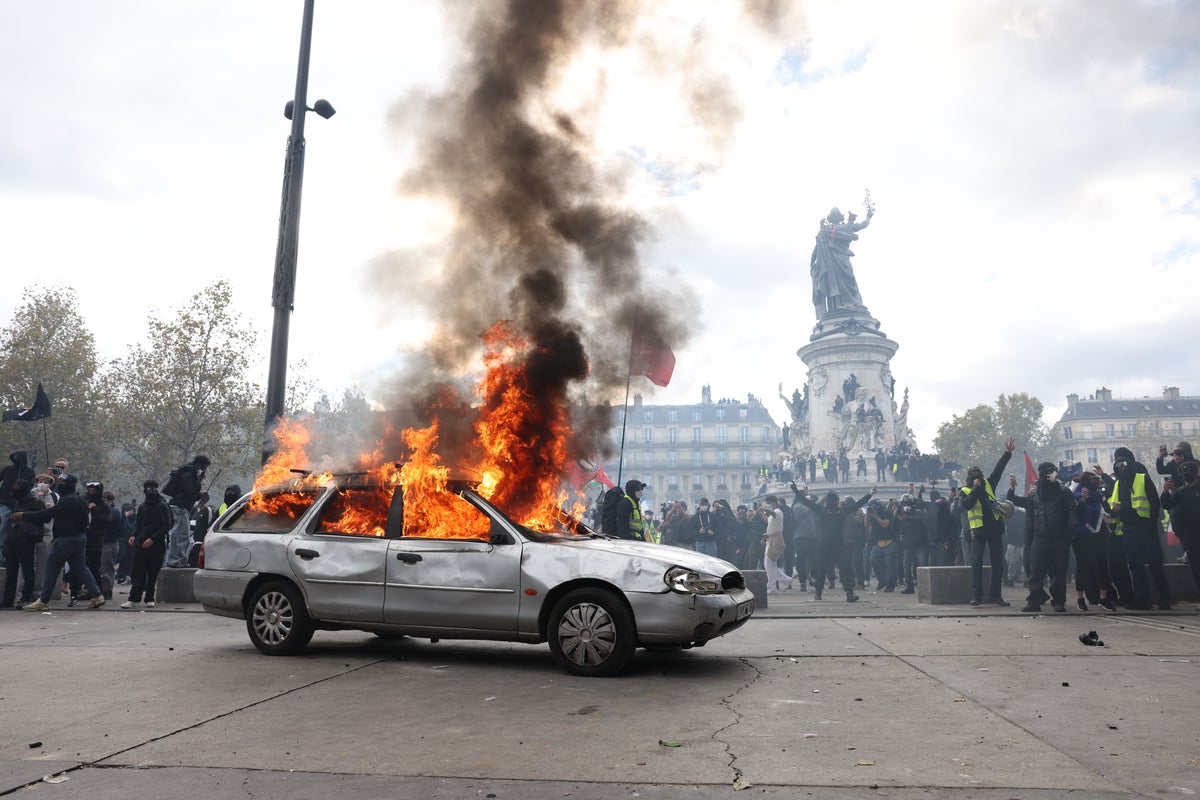
French Prime Minister Sebastien Lecornu announced on Monday, October 19, that localized curfews would be implemented in several regions following a weekend of nationwide protests. The restrictions come as authorities respond to demonstrations involving an estimated 800,000 people—though government figures cited 550,000—who marched to demand economic reforms and improvements to public services. While many participants protested peacefully on Saturday, October 17, some groups engaged in looting, attacked police vehicles, and targeted public buildings.
The weekend unrest followed student-led protests regarding school conditions that began last month. The current demonstrations have focused on the rising cost of living, economic inequality, and declining public services. Prime Minister Lecornu attributed the violence to what he termed "criminal elements" and the "ultra-left," and he indicated that a state of emergency for the capital remains a possibility if security conditions do not stabilize.
In Paris, police established a curfew around the Place de la Republique and Les Halles starting Monday night. Additionally, authorities in Lille, Douai, Wattignies, and Denain implemented an 8 p.m. to 6 a.m. curfew for minors for two nights. In the south, Marseille officials banned all public gatherings, while Nice Mayor Eric Ciotti signed an order for a minor-specific curfew in the city center. Cost-of-living protests were also reported in Milan and Lisbon over the weekend.
The measures affect residents across several of France’s largest metropolitan areas. The specific curfew orders for minors in northern cities like Lille and Denain directly restrict young residents between 8 p.m. and 6 a.m. In Paris, the localized curfews at Place de la Republique and Les Halles affect major transit and commercial hubs.
For the general public, these orders result in changes to daily life, including the closure of businesses and a ban on public assembly in designated zones. International travelers are also impacted, as countries including China, Italy, Germany, and the Netherlands have issued travel warnings. Local commerce has seen disruption; for example, the Lille and Marseille football clubs closed their official retail stores due to the risk of vandalism and looting.
The unrest has led to more than 2,000 arrests nationwide, with 855 occurring in Paris. Italian Prime Minister Giorgia Meloni is scheduled to approve an emergency decree on Tuesday, October 20, to address similar unrest in Milan. In France, the "17octobregiletjaune" movement has called for new demonstrations on Saturday, October 24, and labor unions have announced a new round of strikes and rallies for November 5.