The Plain Record

Neutral daily news — clear headlines, complete facts.

National

Glacial Collapse Linked to Deadly Flash Flooding in Nepal

Scientists report that a magnitude 5.2 glacier collapse likely triggered the flash flood in Nepal that killed hundreds and left over 1,000 missing.

Published August 27, 2026 at 3:36 PM EDT

The short answer

Scientists report that a magnitude 5.2 glacier collapse likely triggered the flash flood in Nepal that killed hundreds and left over 1,000 missing. Preliminary investigations indicate that a glacial collapse caused the flash flood that struck Nepal on Wednesday.

Glacial Collapse Linked to Deadly Flash Flooding in Nepal

The Facts

Who
Scientists from the U.S. Geological Survey and the International Centre for Integrated Mountain Development (ICIMOD), geoscientist Jakob Steiner, and the victims of the flood.
What
A deadly flash flood caused by a glacial collapse in Nepal.
When
Wednesday, August 26, 2026
Where
The Langtang region and surrounding river valleys in Nepal.
Why
A magnitude 5.2 glacier collapse likely dammed a river, causing a sudden surge of water that destroyed infrastructure and caused significant loss of life.

Timeline of what happened

Key dates and decisions, in the order they occurred.

  1. April 25, 2015

    Devastating avalanches hit Langtang region during earthquake

  2. June 20, 2023

    ICIMOD report warns of accelerating glacial melt impacts

  3. 2024

    Ice and rock avalanche occurs in the region

  4. 2025

    Glacial lake flood strikes same valley affected by 2026 event

  5. June 25, 2026

    Satellite imagery records baseline state of Langtang Lirung valley

  6. August 26, 2026

    Glacial collapse and flash flood occur in Nepal

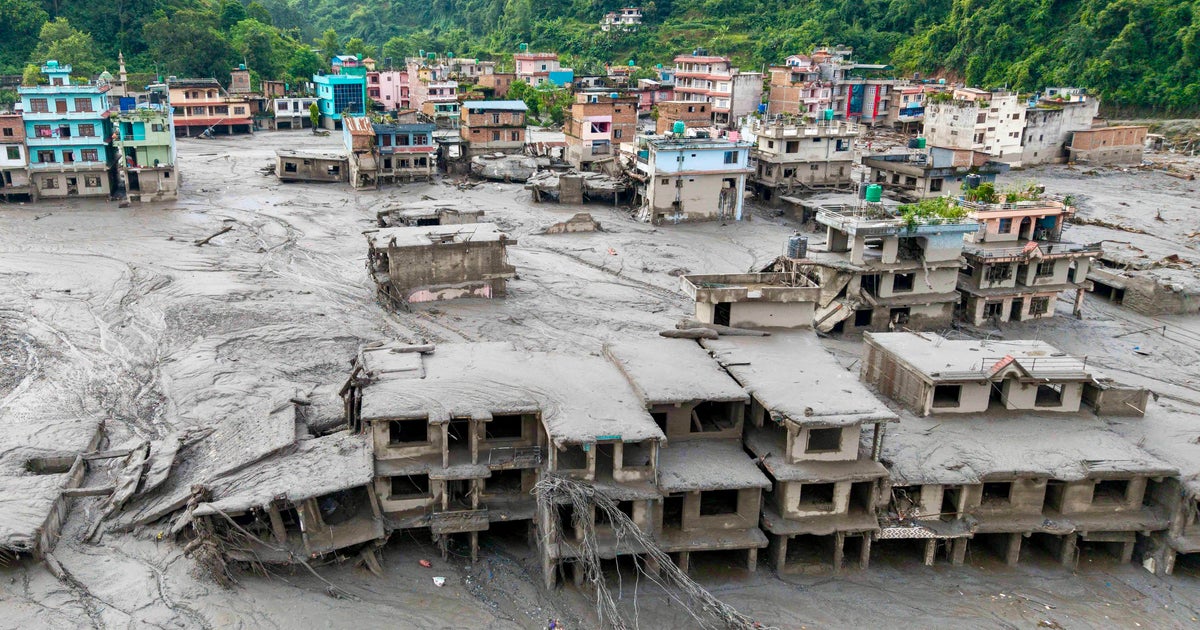
Preliminary investigations indicate that a glacial collapse caused the flash flood that struck Nepal on Wednesday. According to the U.S. Geological Survey, a magnitude 5.2 glacier collapse occurred when a lower section of a glacier broke off, which scientists suggest may have dammed a river before sending a surge of water and debris downstream. The disaster resulted in hundreds of confirmed deaths and left over 1,000 people missing, including foreign tourists and pilgrims.

The Hindu Kush Himalaya region contains the largest volume of ice on Earth outside the polar regions. Data from the International Centre for Integrated Mountain Development (ICIMOD) indicates that glaciers in this area are melting at an accelerated rate, with ice-loss rates doubling since 2000. Scientists noted that the region is warming significantly faster than many other parts of the world, though they stated it is too early to draw a direct link between global warming and this specific event.

Researchers found that water levels in affected rivers rose by as much as 9 meters (29.5 feet) within 30 minutes. Satellite imagery showed the detachment of a mass of ice from the Langtang Lirung mountain peak, which researchers believe plunged into the Lhende Khola river. The resulting surge destroyed hydropower dams, roads, buildings, and bridges. Jakob Steiner, a geoscientist at the University of Graz, noted that the affected valley contained approximately 10% of Nepal's power production capacity.

Individuals in these mountain communities face a "new normal" where sudden surges in water levels leave only minutes for evacuation. According to ICIMOD, approximately 78% of the glacier area in this region is highly exposed to warming, which weakens rock faces and permafrost, increasing the likelihood of rockfalls and avalanches. Izabella Koziell, deputy director general of ICIMOD, noted in 2023 that the loss of livelihoods for people in the region—who represent nearly a quarter of the world's population—could lead to mass migration as they seek safer places to live.

Moving forward, scientists are calling for stronger early warning systems and better cross-border information sharing. While current global policies put the Earth on a path to warm by about 2.8 degrees Celsius by the end of the century, U.N. reports project the loss of up to 50% of the world's glaciers (excluding Greenland and Antarctica) by 2100 even at 1.5 degrees of warming. Local officials and international stakeholders are now tasked with coordinating disaster risk reduction strategies as they continue to search for the more than 1,000 people still missing from Wednesday's flood.

Summaries are written by The Plain Record to state the facts of a story plainly and without political slant. See our editorial standards, or report a correction.

← Back to the front page

Questions readers ask

What happened: Glacial Collapse Linked to Deadly Flash Flooding in Nepal?

Preliminary investigations indicate that a glacial collapse caused the flash flood that struck Nepal on Wednesday. According to the U.S. Geological Survey, a magnitude 5.2 glacier collapse occurred when a lower section of a glacier broke off, which scientists suggest may have dammed a river before sending a surge of water and debris downstream.

Who is involved?

Scientists from the U.S. Geological Survey and the International Centre for Integrated Mountain Development (ICIMOD), geoscientist Jakob Steiner, and the victims of the flood.

When did this happen?

Wednesday, August 26, 2026

Where did this happen?

The Langtang region and surrounding river valleys in Nepal.

Why does this matter?

A magnitude 5.2 glacier collapse likely dammed a river, causing a sudden surge of water that destroyed infrastructure and caused significant loss of life.