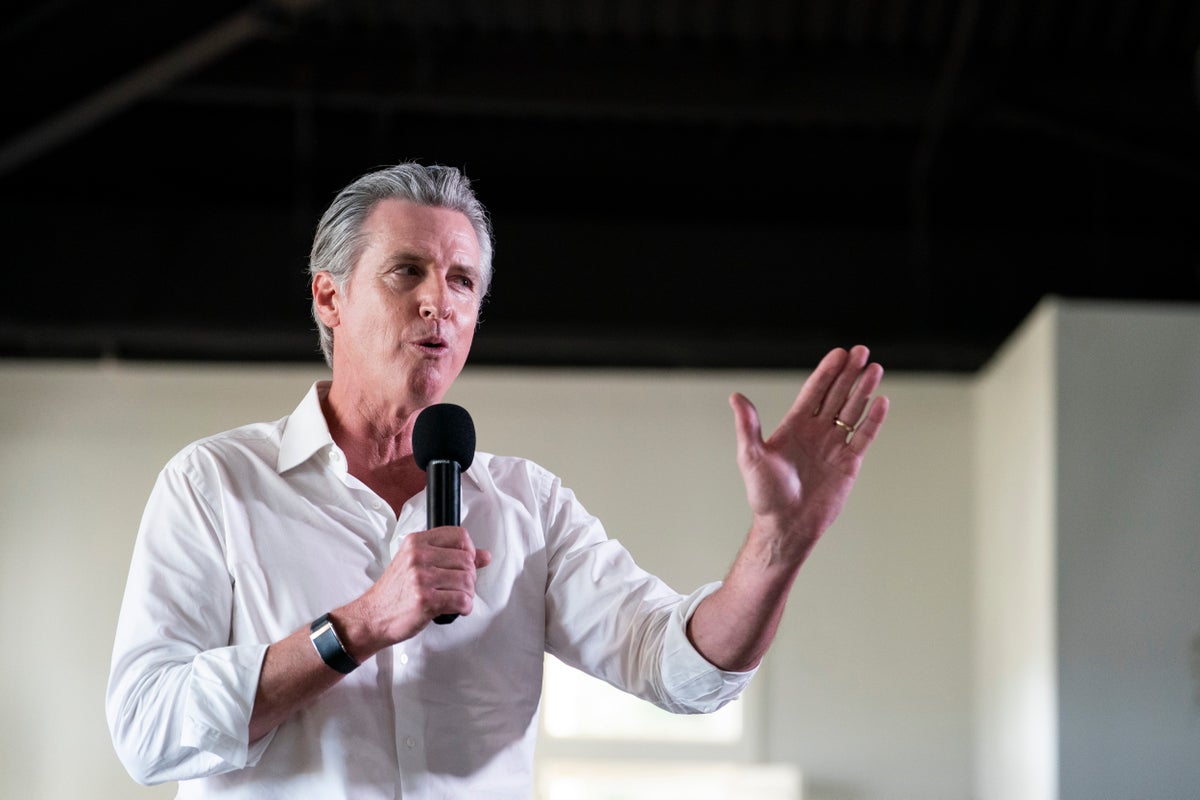
California Governor Gavin Newsom stated he will not seek the Democratic nomination for president in 2028 if former Vice President Kamala Harris enters the race. During an interview with CNN conducted in Montana, Newsom said that running against a fellow California Democrat would split their shared political base and create a disadvantage for both candidates. The governor’s comments come as he evaluates a potential bid for the White House in the next election cycle.
Newsom previously endorsed Harris in 2024 after President Joe Biden withdrew from that year’s race. In his recent remarks to CNN, Newsom characterized a primary contest between himself and Harris as "mutual assured destruction" that would benefit other candidates. He also noted that his final decision would depend on the support of his wife and four children, mentioning that his teenage son has expressed a desire for him to spend more time at home rather than campaigning.
Recent polling indicates a competitive field for the 2028 Democratic nomination. A Bowling Green State University/YouGov survey of likely voters released in September 2026 showed Harris with 17% support and Transportation Secretary Pete Buttigieg at 16%. Newsom and Representative Alexandria Ocasio-Cortez were tied at 14% each. On the Republican side, the poll found Vice President JD Vance leading with 44% support, followed by Secretary of State Marco Rubio at 21%.
The scale of this impact involves the tens of millions of voters represented by the Democratic Party across all 50 states. In the most recent polling, the support levels for the top four potential Democratic candidates—Harris, Buttigieg, Newsom, and Ocasio-Cortez—are separated by only three percentage points, ranging from 14% to 17%. For individual donors, these early declarations signal where to direct political contributions, which often total hundreds of millions of dollars over a four-year cycle, or roughly several dollars per active voter when distributed across the primary period.
A primary without a competing Newsom and Harris would prevent a split in California’s significant fundraising networks and delegation. If both were to run, voters in their home state would see a concentrated campaign effort involving both figures simultaneously, potentially affecting state-level policy priorities and legislative focus. The next steps in the 2028 cycle include formal candidate declarations and the commencement of primary debates, though specific dates for these events have not yet been established. The full interview detailing Newsom's position is scheduled to air on Tuesday, September 15, 2026.