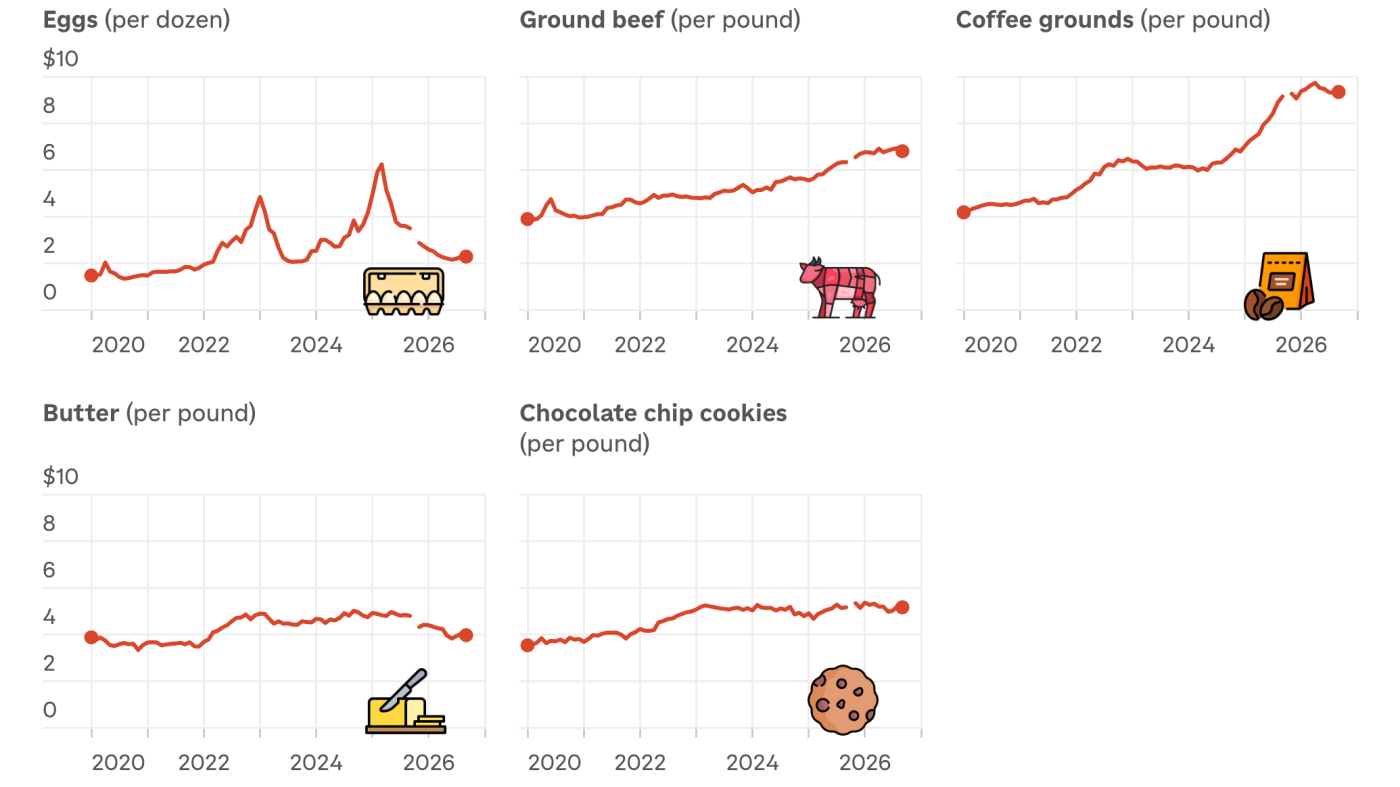
Grocery prices in the United States have continued to rise overall during President Trump’s second term, though costs for specific items have fluctuated due to international conflict, weather, and trade policy. While price inflation slowed in 2023, Agribusiness Professor Ricky Volpe of Cal Poly San Luis Obispo stated that current price increases are compounding previously high levels reached during the pandemic and 2022.
Current market data from the Bureau of Labor Statistics and industry reports show divergent trends among staples. Ground beef reached $6.79 per pound last month, an 85% increase over the last decade, while egg prices dropped to $2.27 per dozen last month after reaching a record $6.23 in March of the previous year. Factors including avian flu, drought-impacted cattle herds, and global supply chain shifts have contributed to these varying retail costs.
The Trump administration has implemented several policy changes aimed at food costs, including the removal of tariffs on certain goods like coffee last fall and the allowance of more tariff-free ground beef imports. However, other policies, such as tariffs on foreign packaging materials, have increased the cost of items like egg cartons. Additionally, energy price increases linked to the war with Iran and labor costs have applied upward pressure on retail prices.
The scale of these changes is driven by both domestic and international factors. U.S. cattle herds have reached a 75-year low due to drought and rising fuel costs, while coffee yields in Brazil and Vietnam have been reduced by rainfall and mold. These supply constraints mean that even when the federal government removes tariffs, as it did for coffee last fall, consumers may not see immediate relief in their grocery bills. Small business owners, such as bakery operators, report that their costs for labor, insurance, and high-quality ingredients remain elevated, leading them to raise prices for consumers to maintain their operations.
Looking ahead, the direction of food prices will depend on several variables, including the success of biosecurity measures against future avian flu outbreaks and the impact of new dietary guidelines. Health Secretary Robert F. Kennedy Jr. recently introduced guidelines encouraging the consumption of fats like butter, which averaged $3.96 per pound in September—a 17.3% decrease from last year due to high domestic milk production. As the Trump administration continues to adjust trade and import policies, the Bureau of Labor Statistics will continue to release monthly data tracking whether these measures offset the rising costs of labor and energy.